Out on the fields
Today was fossicking day. We drove out of town to visit a few of the mining sites scattered across the fields.
*Opal field country. Flat, dry, and full of holes.*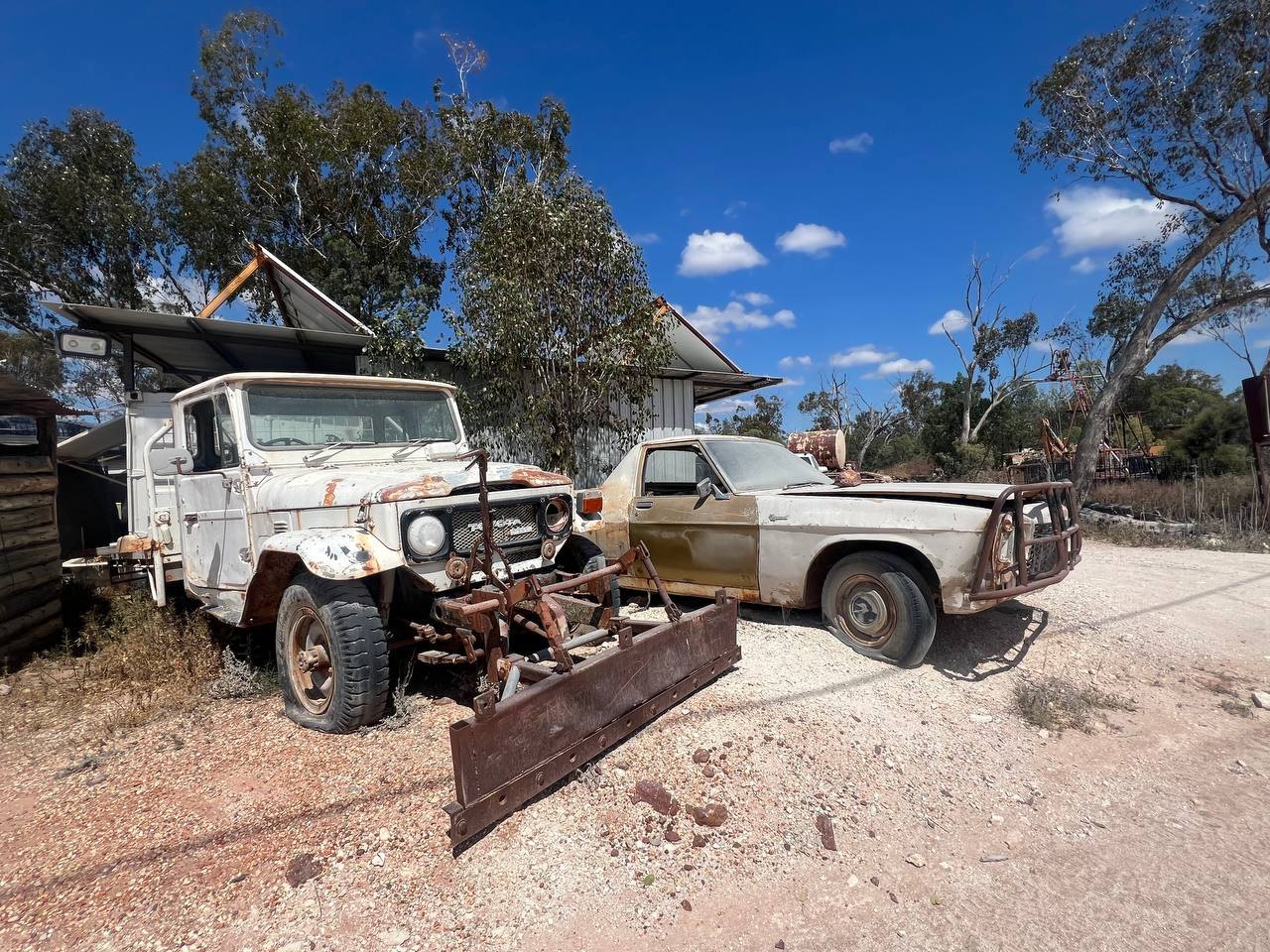 Local transport out on the fields, plough blade included.
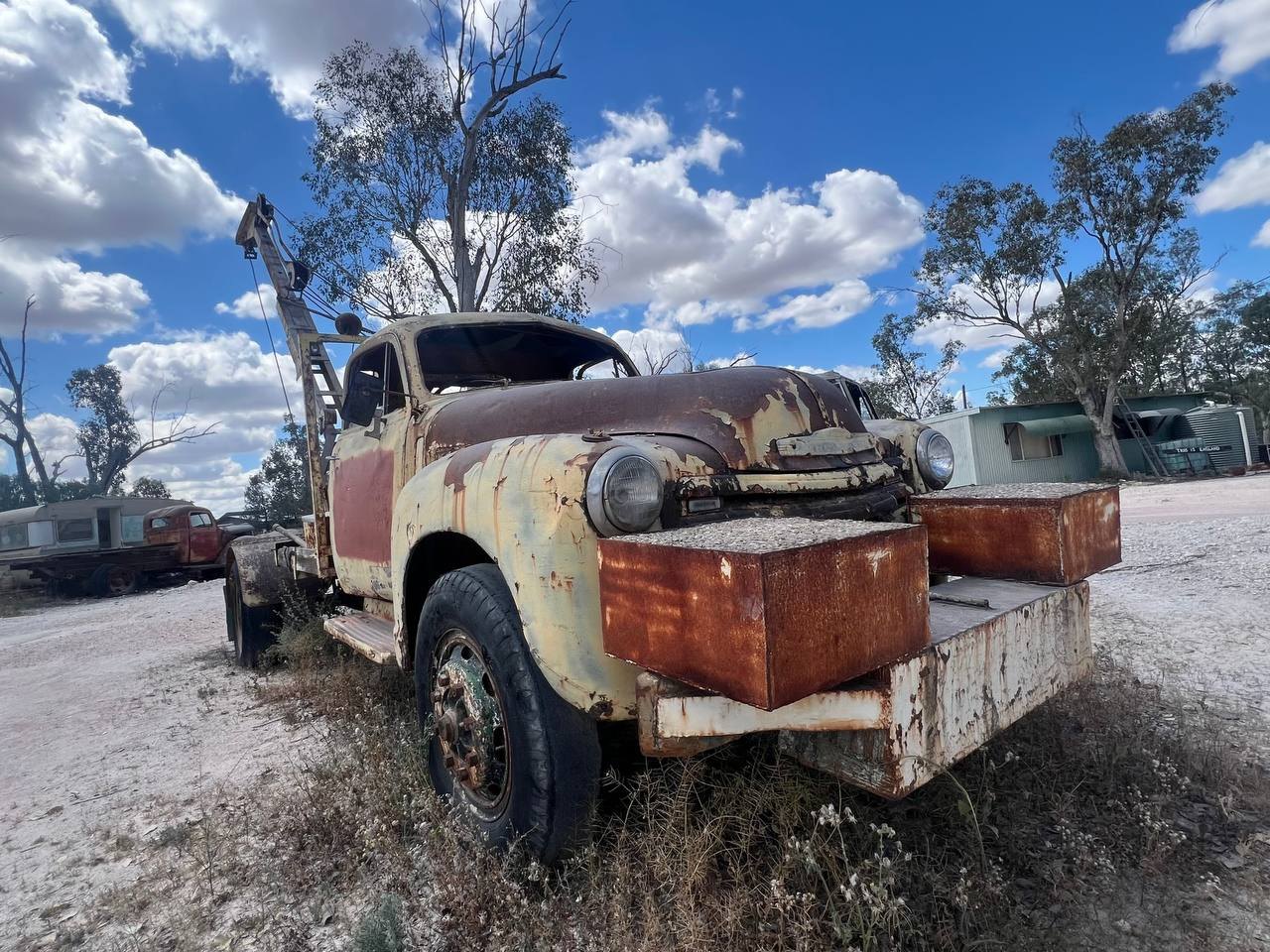 Same yard. An old tow truck, long retired.
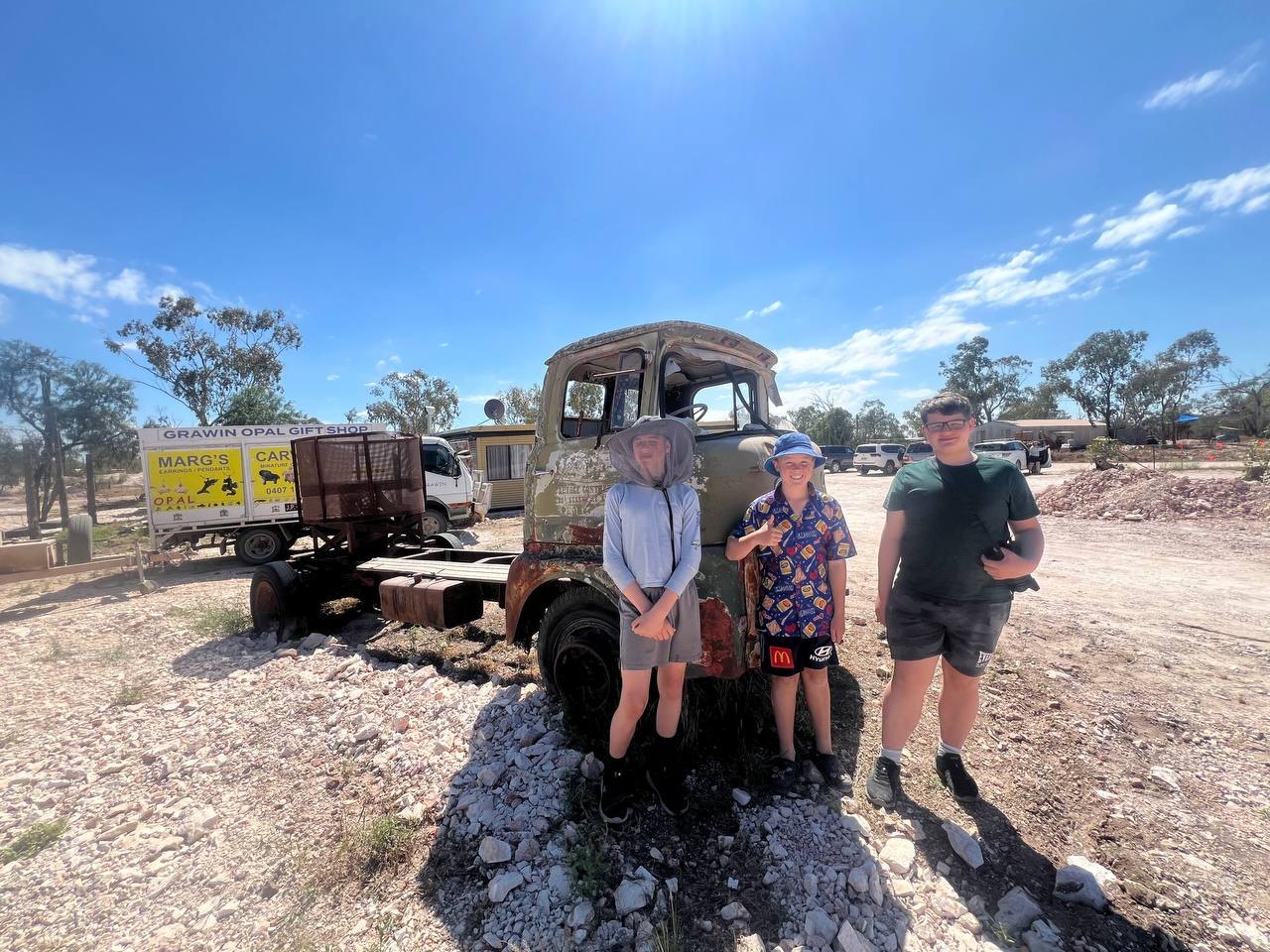 The Grawin Opal Gift Shop.
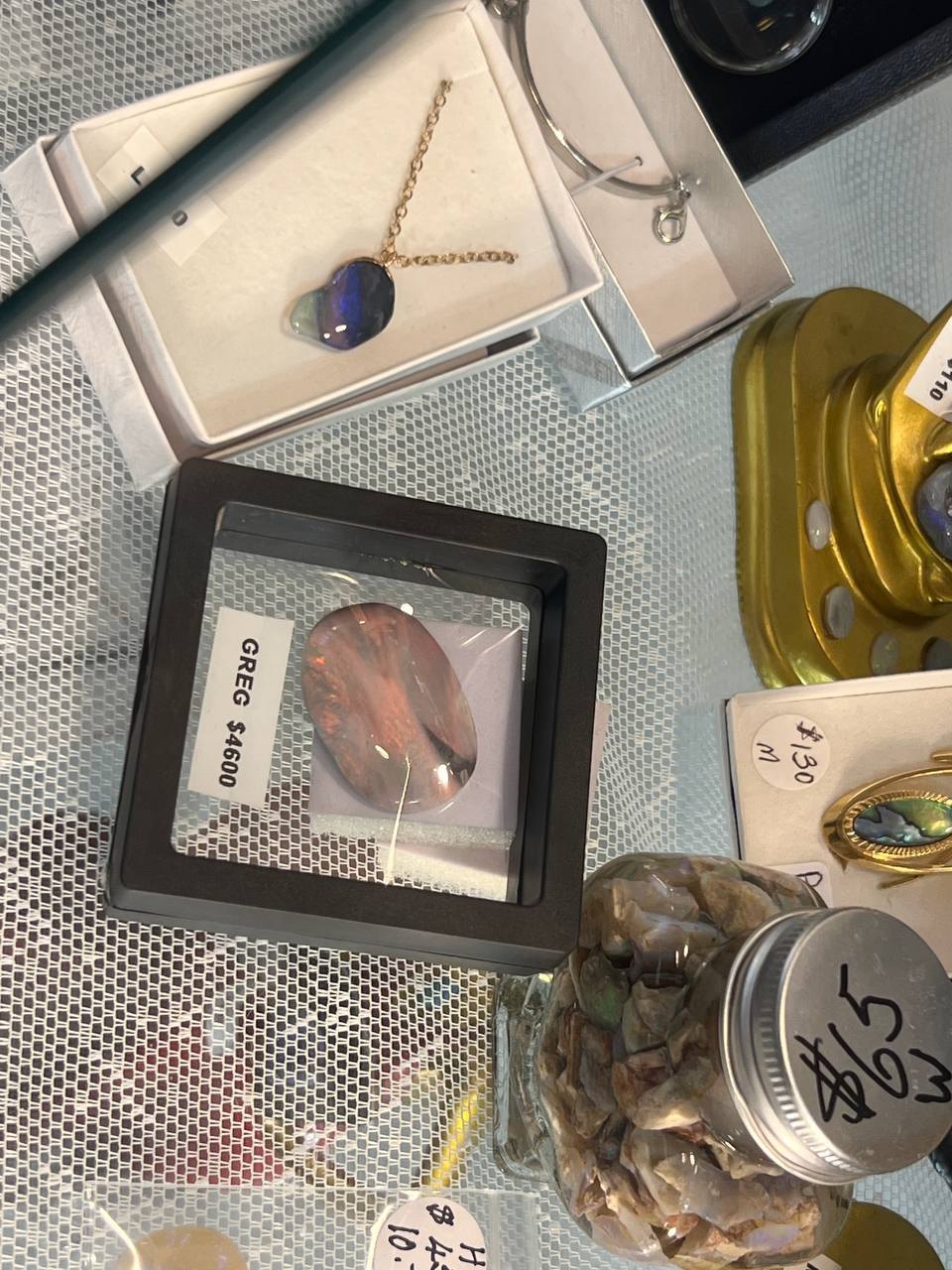 The price list at the gift shop. The big stone is $4,600. The $5 jars moved faster.
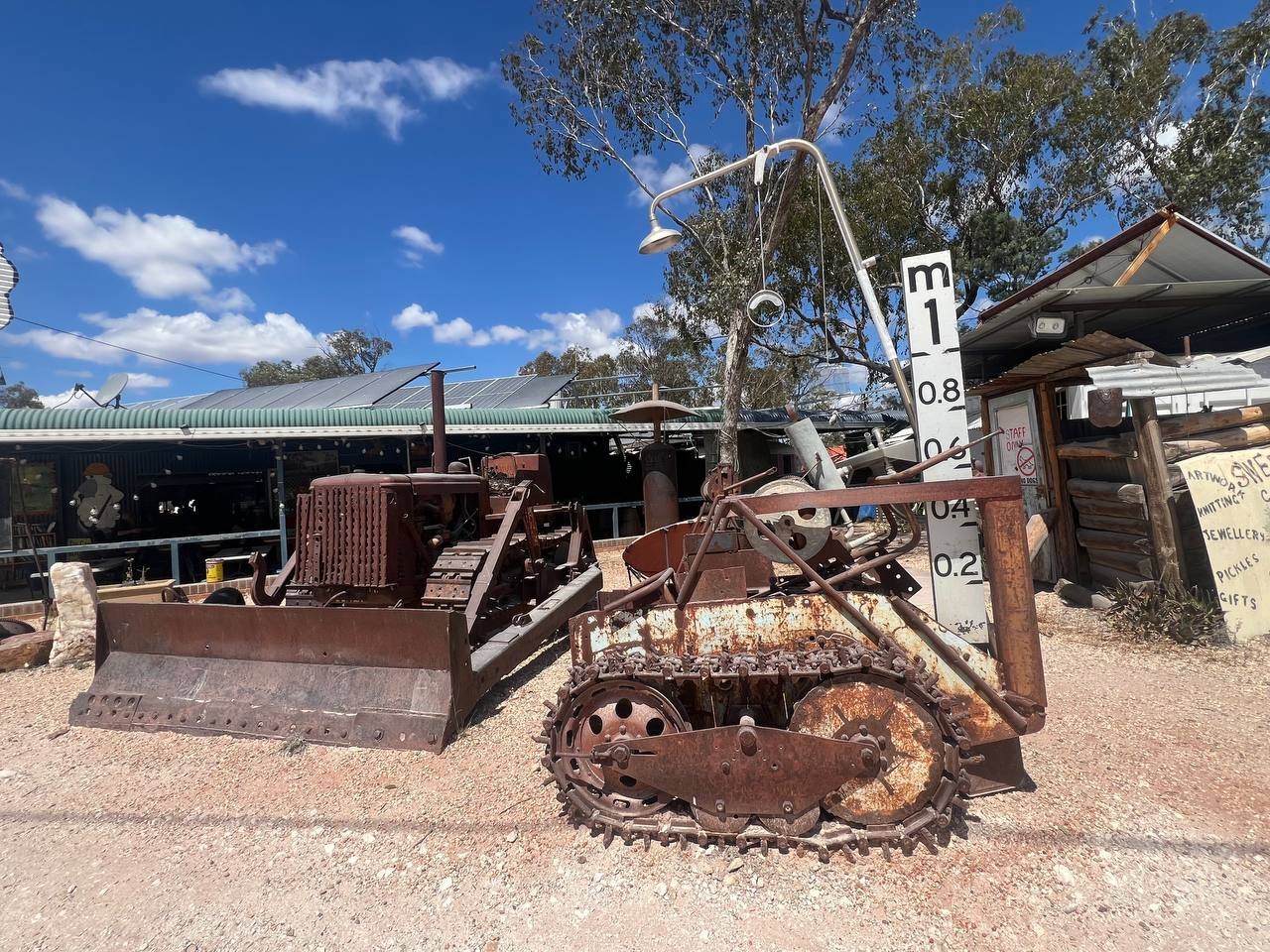 More of the retired fleet. The shed sells artwork, jewellery, pickles, and gifts.
Lots of fossicking was performed. Lots of potch, but not much colour. Potch is common opal, the plain grey or white material with no play of colour in it. The fields are mostly made of the stuff, and it is worth approximately nothing. Colour is the whole game.
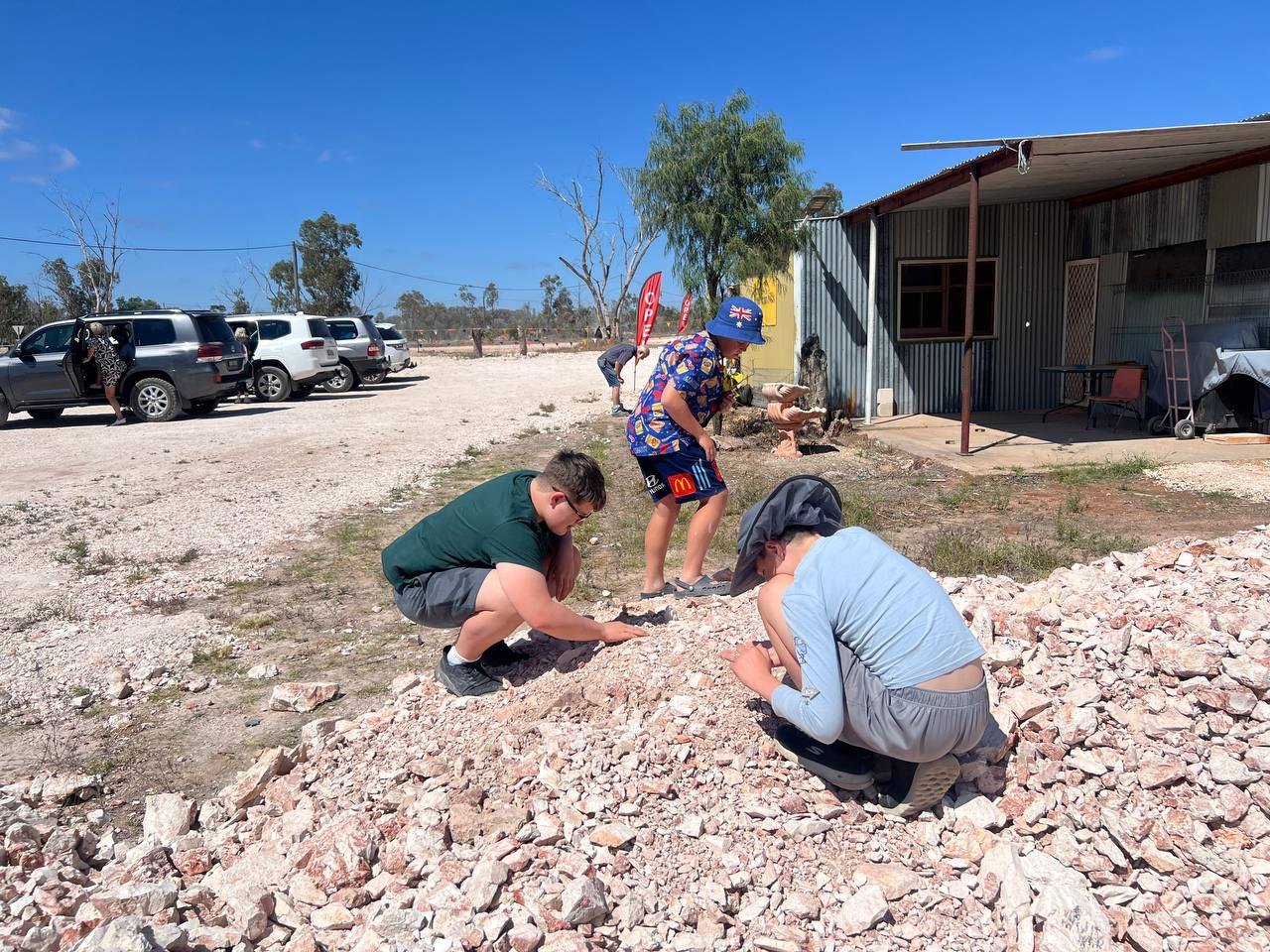 Noodling the mullock heaps. Low yield, high enthusiasm.
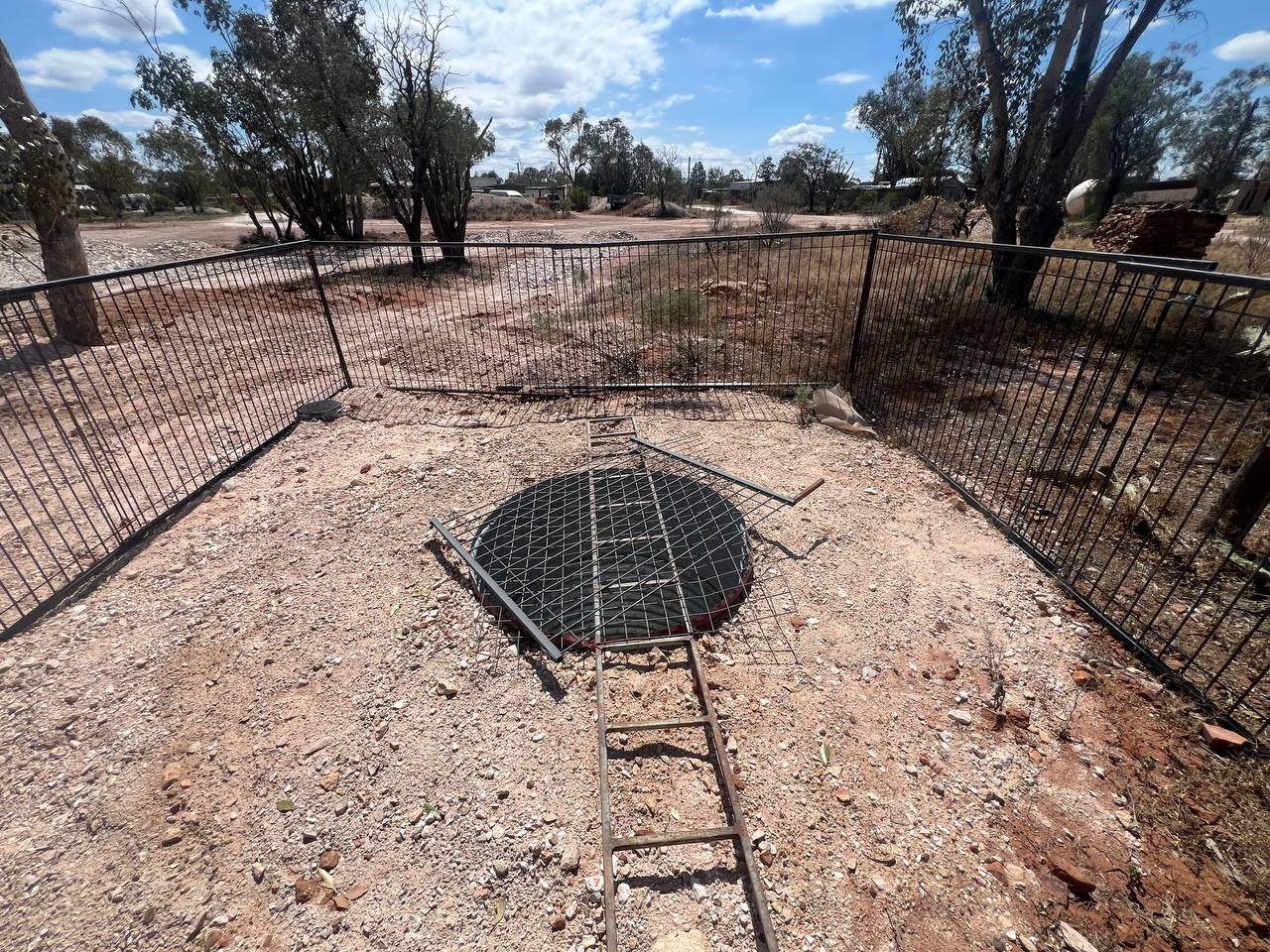 An opal claim, fenced and grated. The ladder goes down to the workings.
How mining works here
Opal mining at the Ridge runs on mineral claims. A miner starts with an opal prospecting licence, which lets them drill test holes with a nine-inch auger over designated prospecting areas. If the ground looks promising, they peg and register a mineral claim. Inside the Lightning Ridge Mineral Claims District a claim is limited to 2,500 square metres, a square 50 metres by 50, so the fields end up as a dense patchwork of little pegged claims, each with its own shaft, its own mullock heap, and usually a cluster of rusty machinery slowly returning to the earth.
Claims have to be worked to be kept, safety courses are mandatory before you set foot on one, and disputes over boundaries are a local spectator sport.
Out on the remoter fields, the Grawin, Glengarry, and the Sheepyards, 70 or 80 kilometres from town, the miners live in what can only be described as shanty towns: caravans, corrugated iron shacks, old buses, and whatever else keeps the sun off. No town water, no town power. What they do have is pubs. The Glengarry Hilton and the Club in the Scrub are bush institutions.
*The road out to the fields. Seventy kilometres of this.*The Sheepyards even have their own war memorial, and it has a properly outback origin story. The community used to hold its Anzac services at the Sheepyard Hotel, until the publican, worried that if he fell off his perch the pub would become a private place, told the local veterans to find somewhere permanent. Three veterans and a miner sat down, chose a spot by the dam at Lake Beard, and the Sheepyard and Community War Memorial was built there in 2002. It is a circle of natural ironstone rocks covered in dedication plaques for every conflict from the First World War on, gathered around a stone cenotaph, with three flagpoles, military hardware from various conflicts including a large propeller mounted on the rocks, and a Lone Pine grown from a Gallipoli seedling. Norman Jones, a Vietnam veteran whose family has not missed a war since before the Boer War, told the ABC that more than 500 people now attend the Anzac Day service, and that ten thousand names a year pass through the visitors book. Not bad for a place you cannot find on an electronic map.
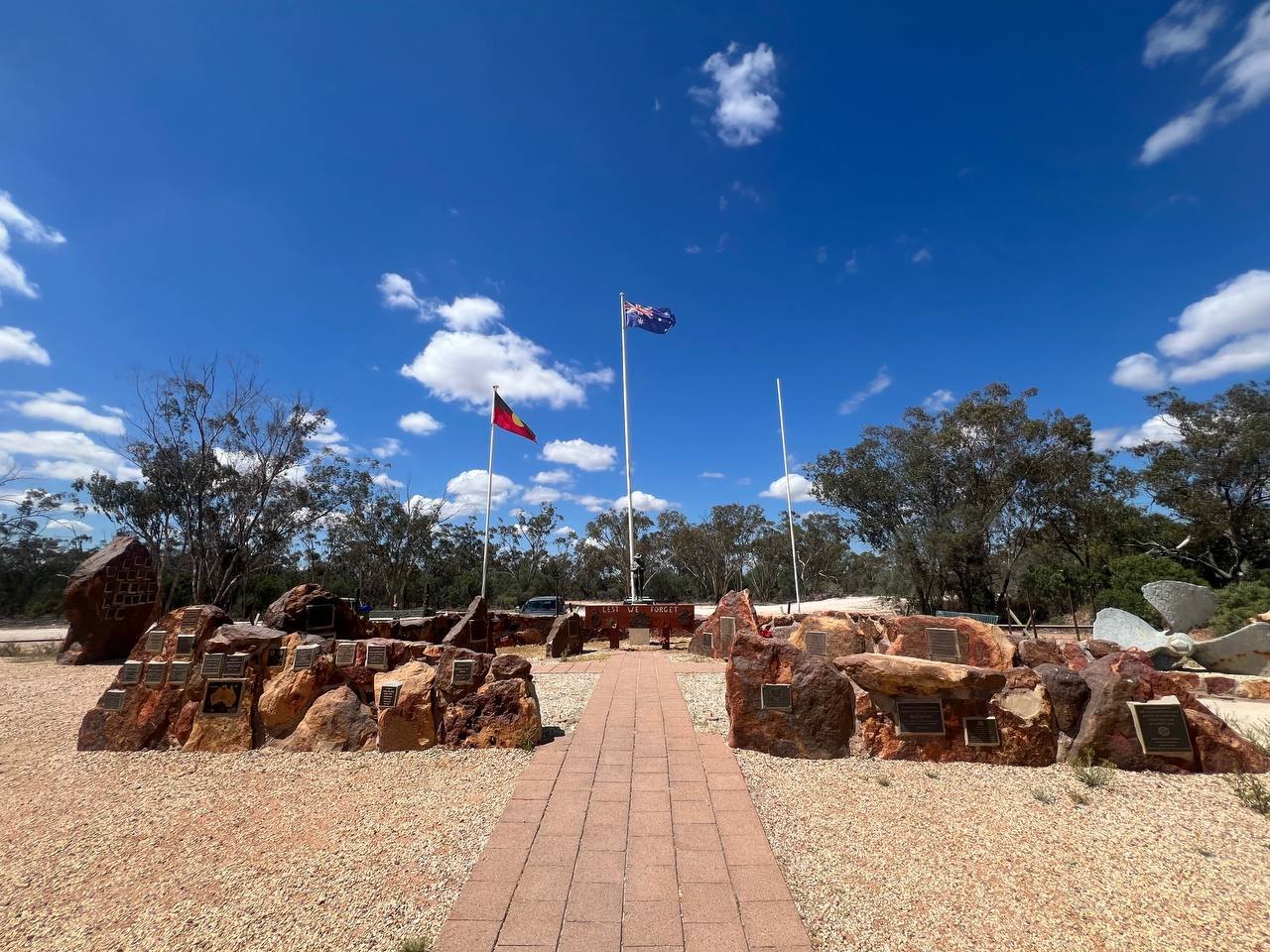 The memorial at Lake Beard: ironstone, plaques for every conflict, and a propeller from the collection of military hardware.
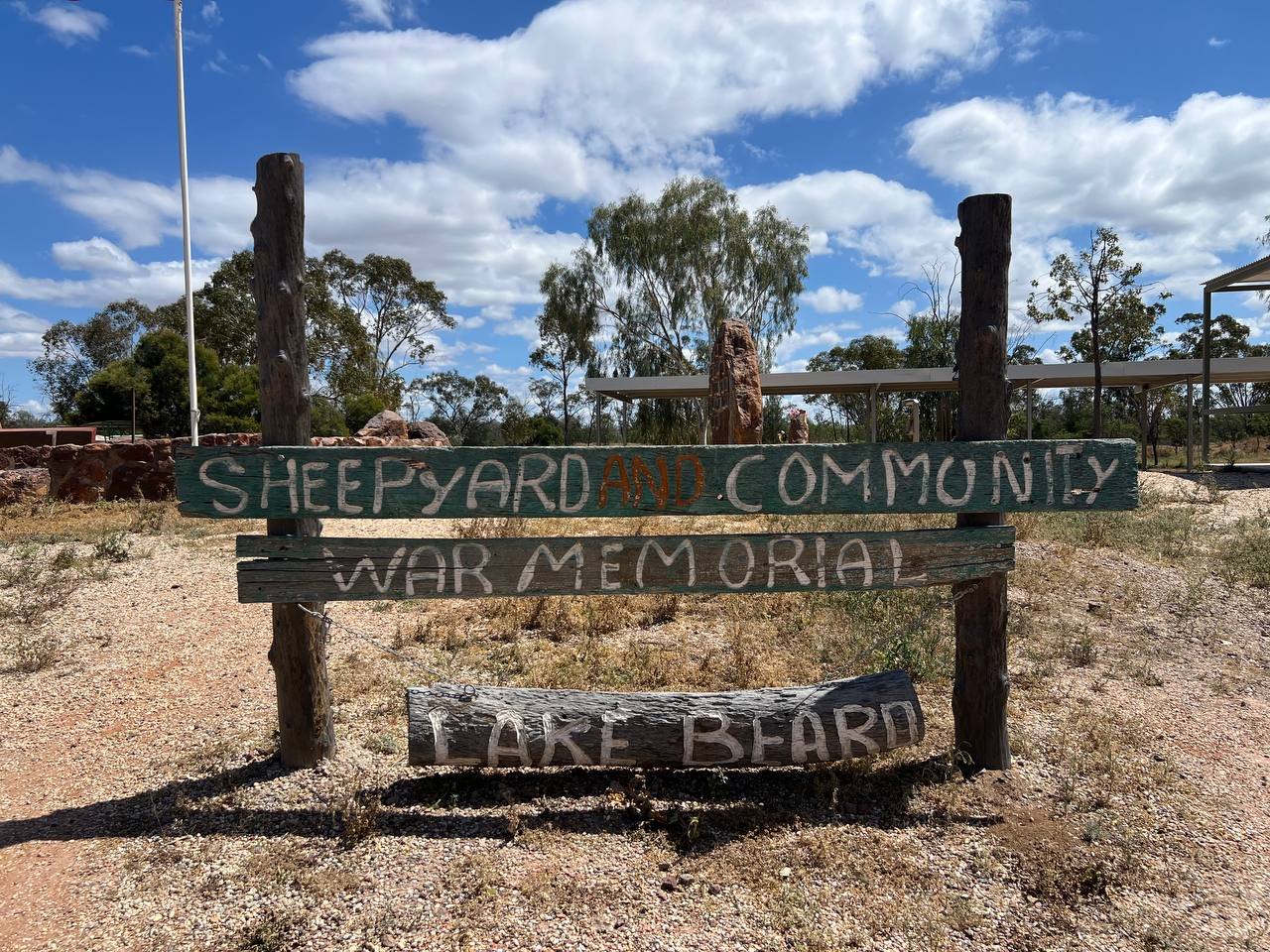 The sign at Lake Beard. Handmade, like everything else out here.
From the memorial we called in at the Sheepyard Inn, a corrugated iron pub with a longhorn skull over the door and a sheep mascot in a hard hat.
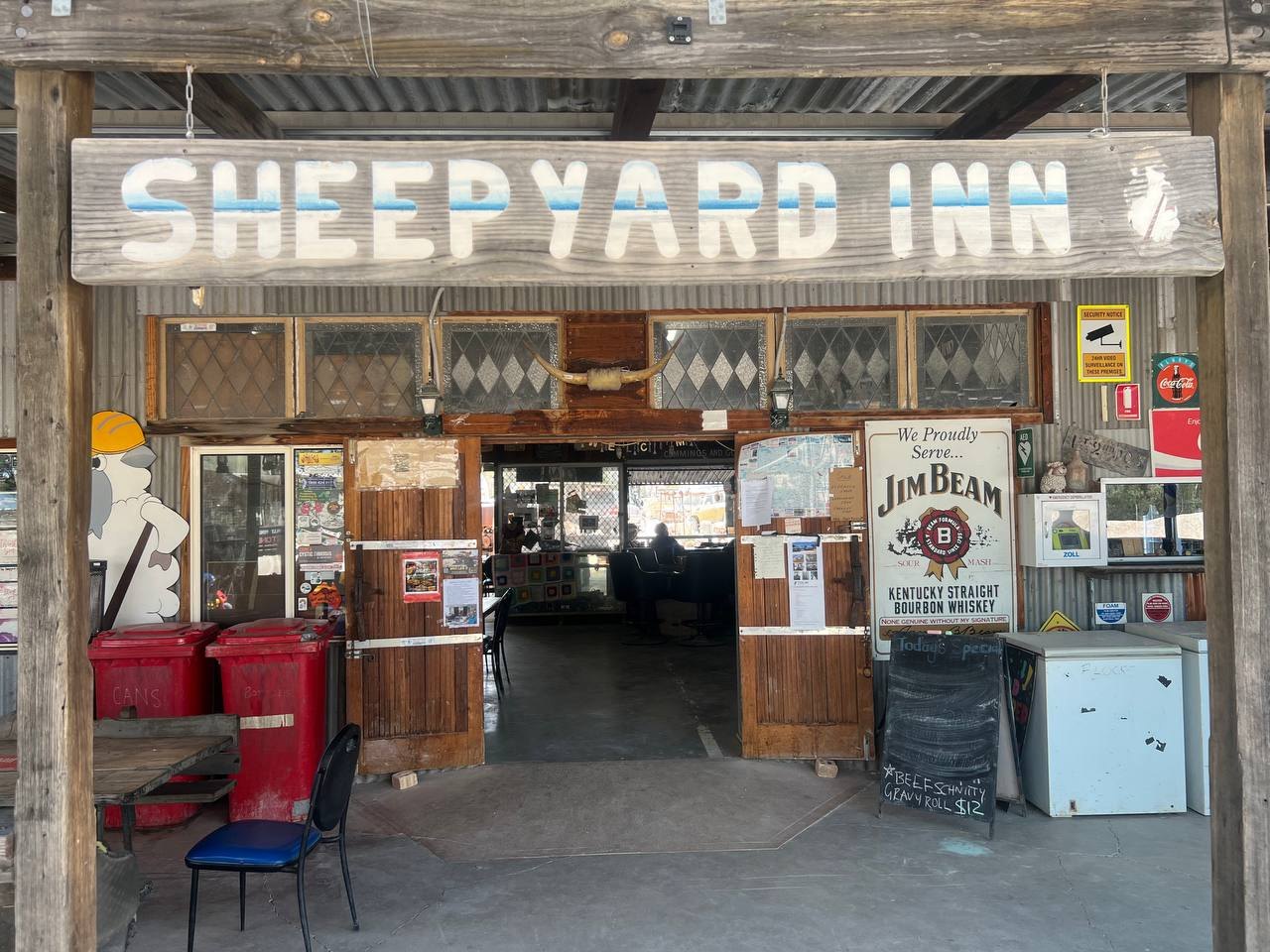 The Sheepyard Inn. The beef schnitty gravy roll is $12.
Lunch was just up the road at the Glengarry Hilton, ironically named.
Mine tour and the sights
Back in town we did a walking mine tour, visited a house built out of bottles, and drove out to the castle, which wasn't open.
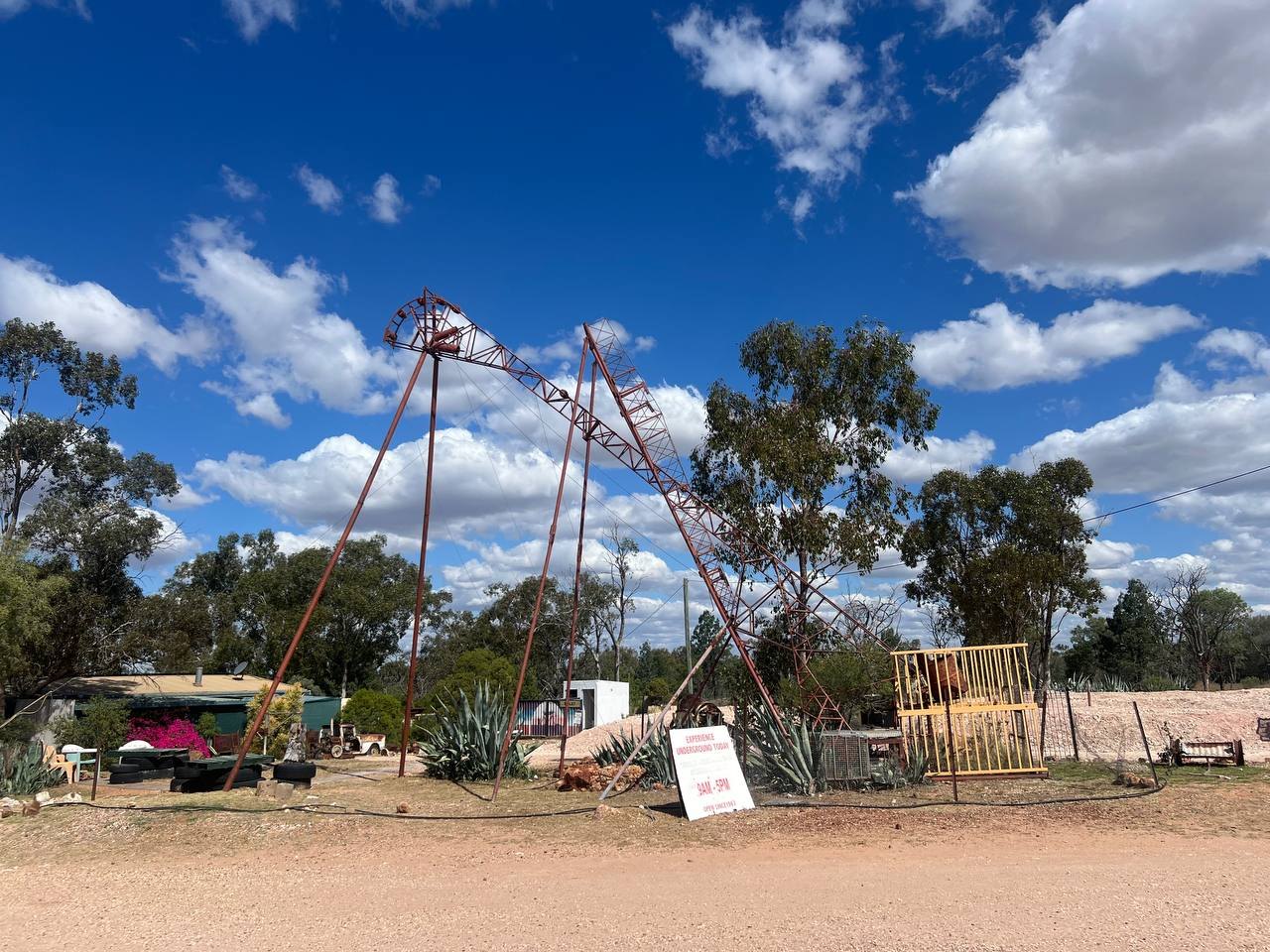 Headframe and hoist gear above the mine.
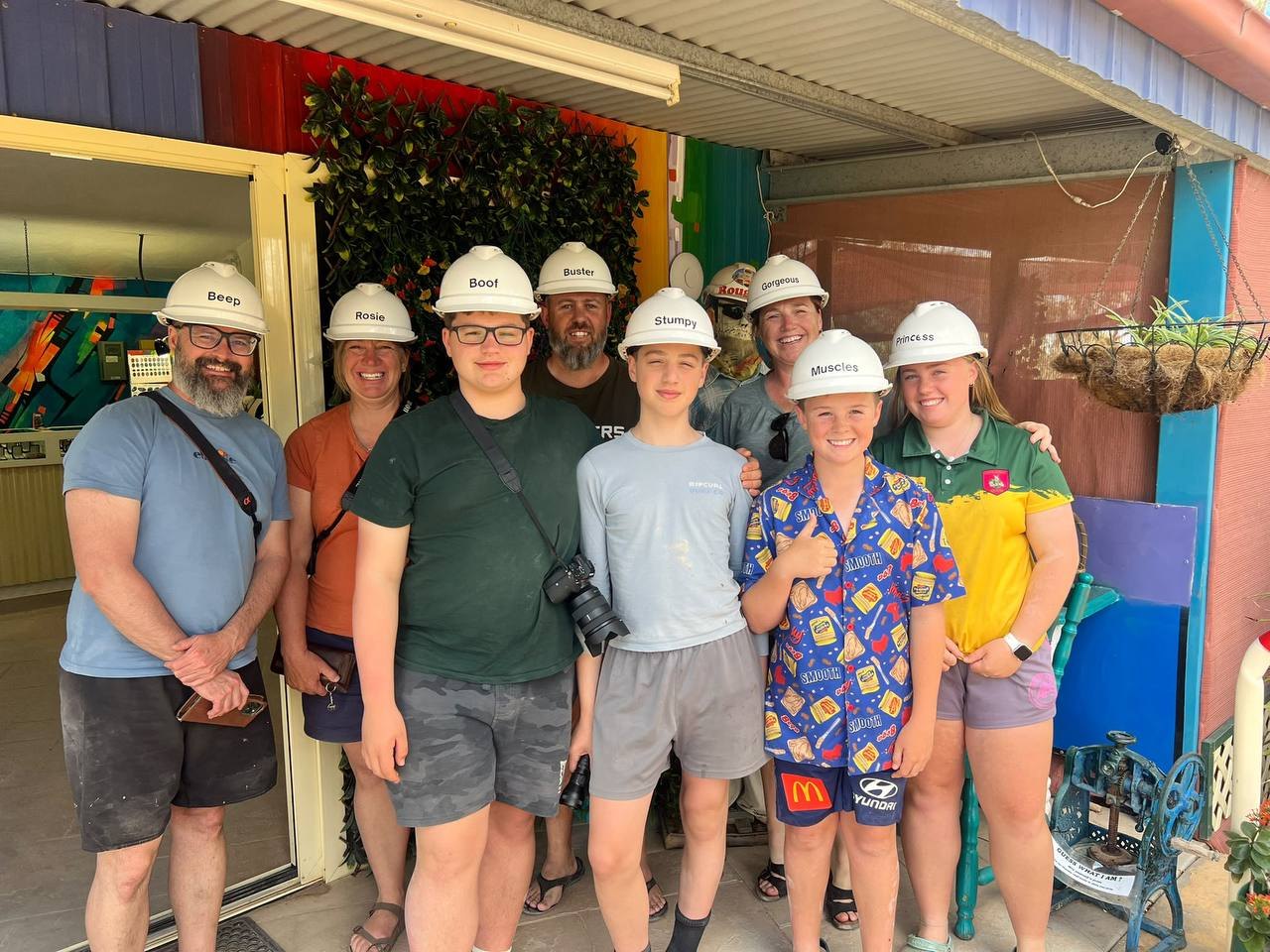 The full touring party, kitted out. The hats read Beep, Rosie, Boof, Buster, Stumpy, Gorgeous, Muscles, and Princess.
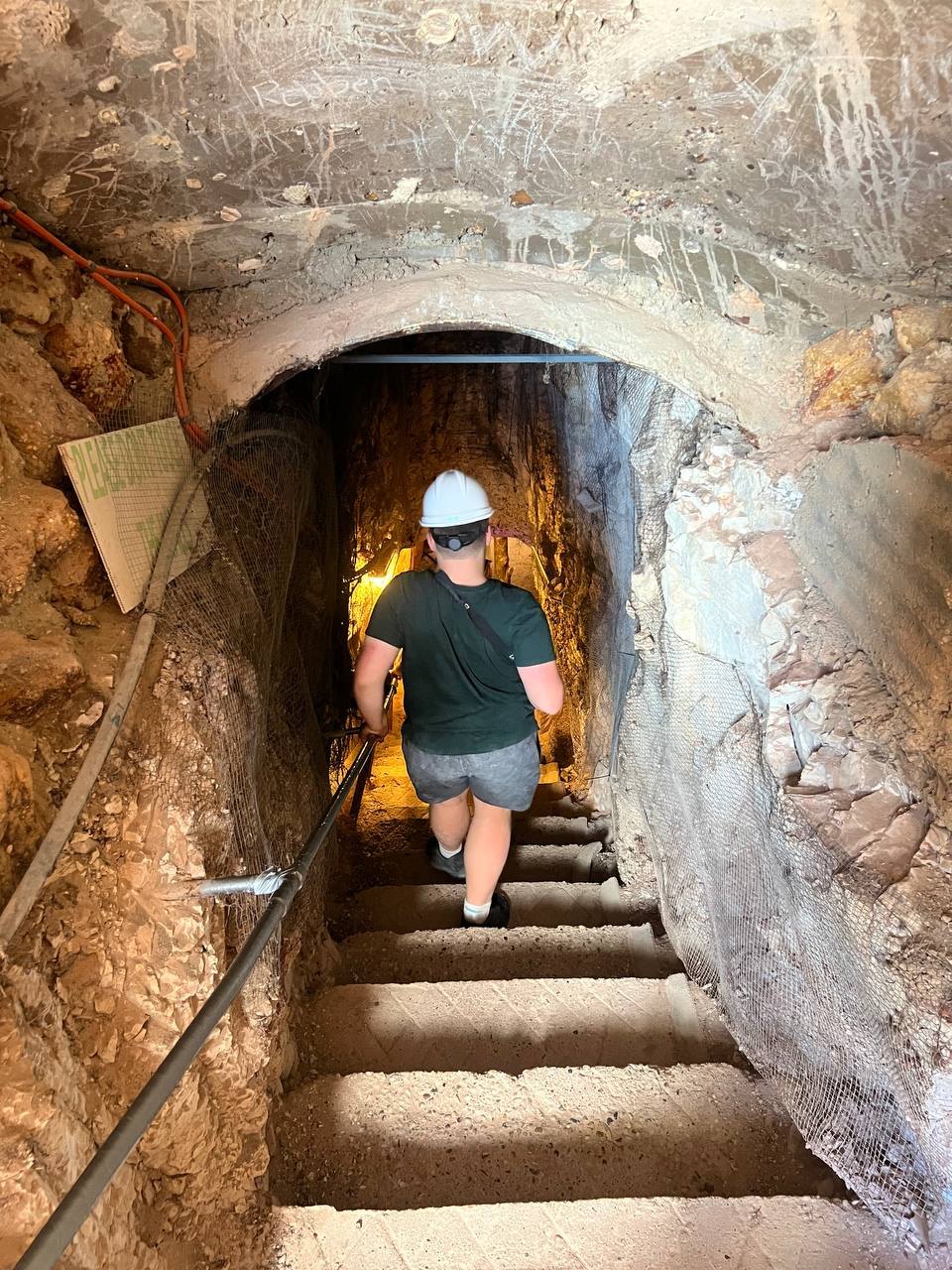 The way down.
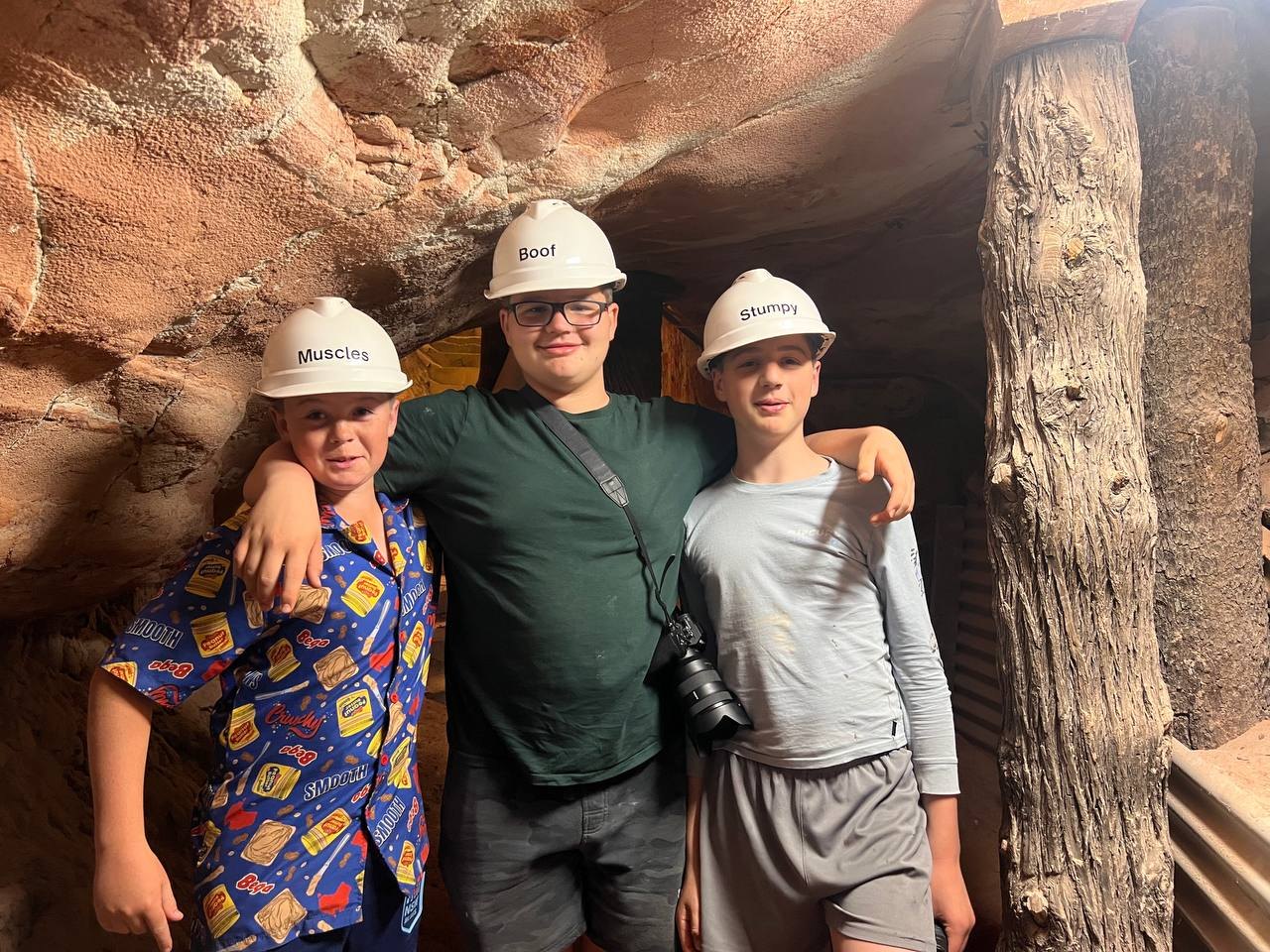 Underground. The hats say Muscles, Boof, and Stumpy.
The bottle house turned out to be the Bottle House Mining Museum, and it is exactly what the name says: a building whose walls are made of hundreds of glass bottles set in mortar.
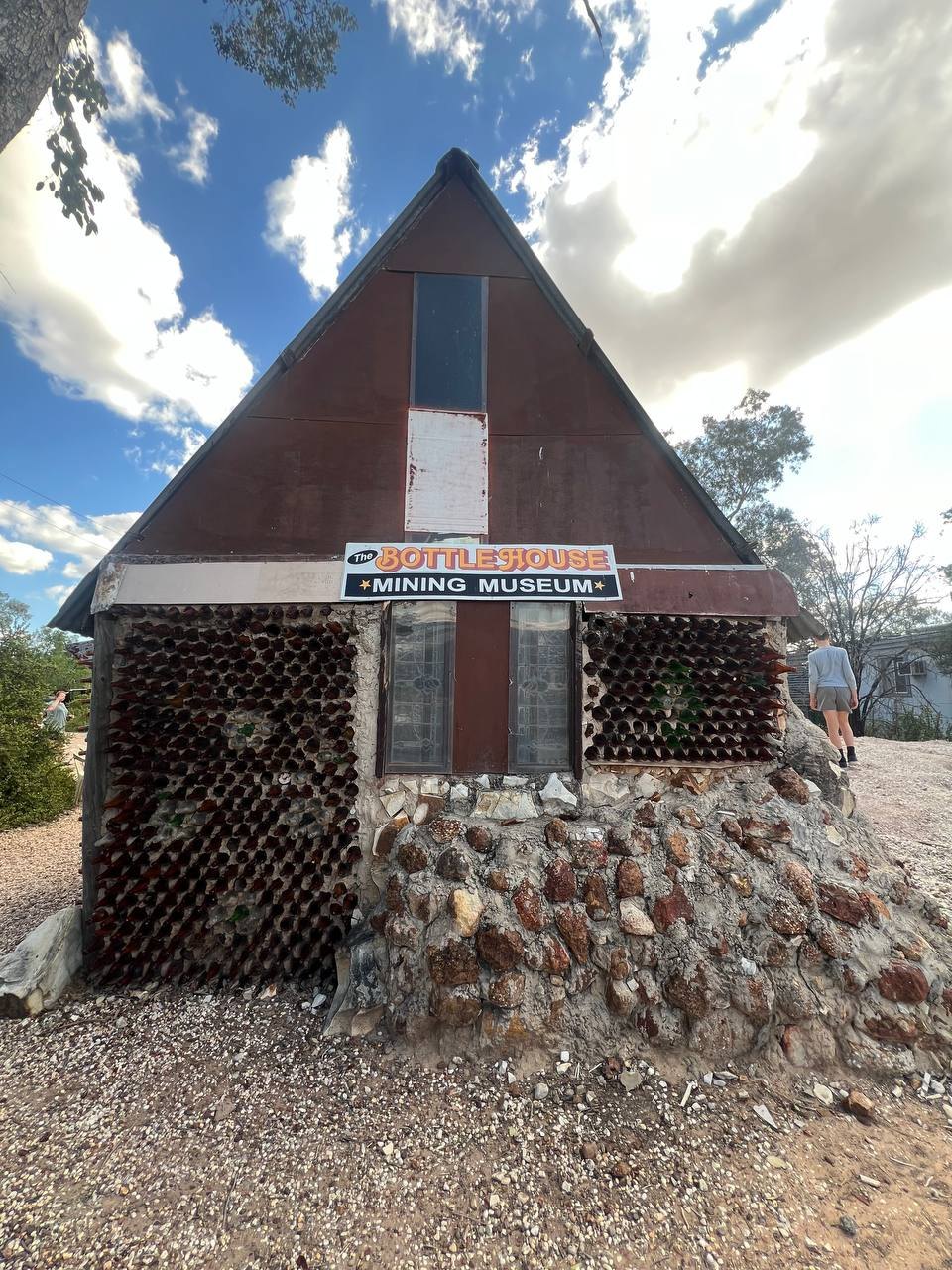 The Bottle House Mining Museum. Recycling, outback style.
The castle is Amigo's Castle, a 15-metre stone structure hand-built over decades by one man, Vittorio Stefanato, known locally as Amigo, who laid every stone himself with makeshift scaffolding. It remains unfinished, which feels appropriate.
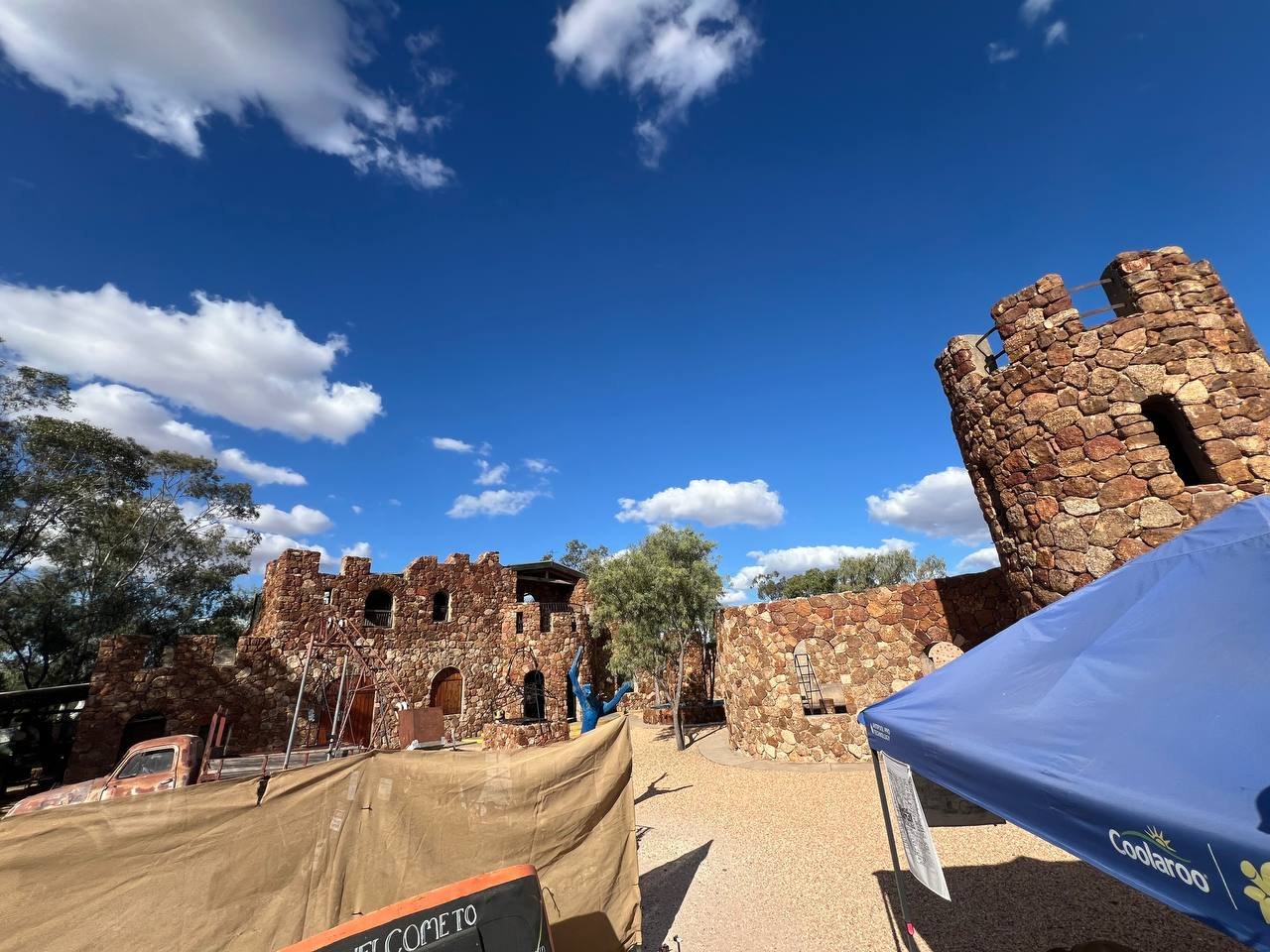 Amigo's Castle. Closed, but imposing from the fence.
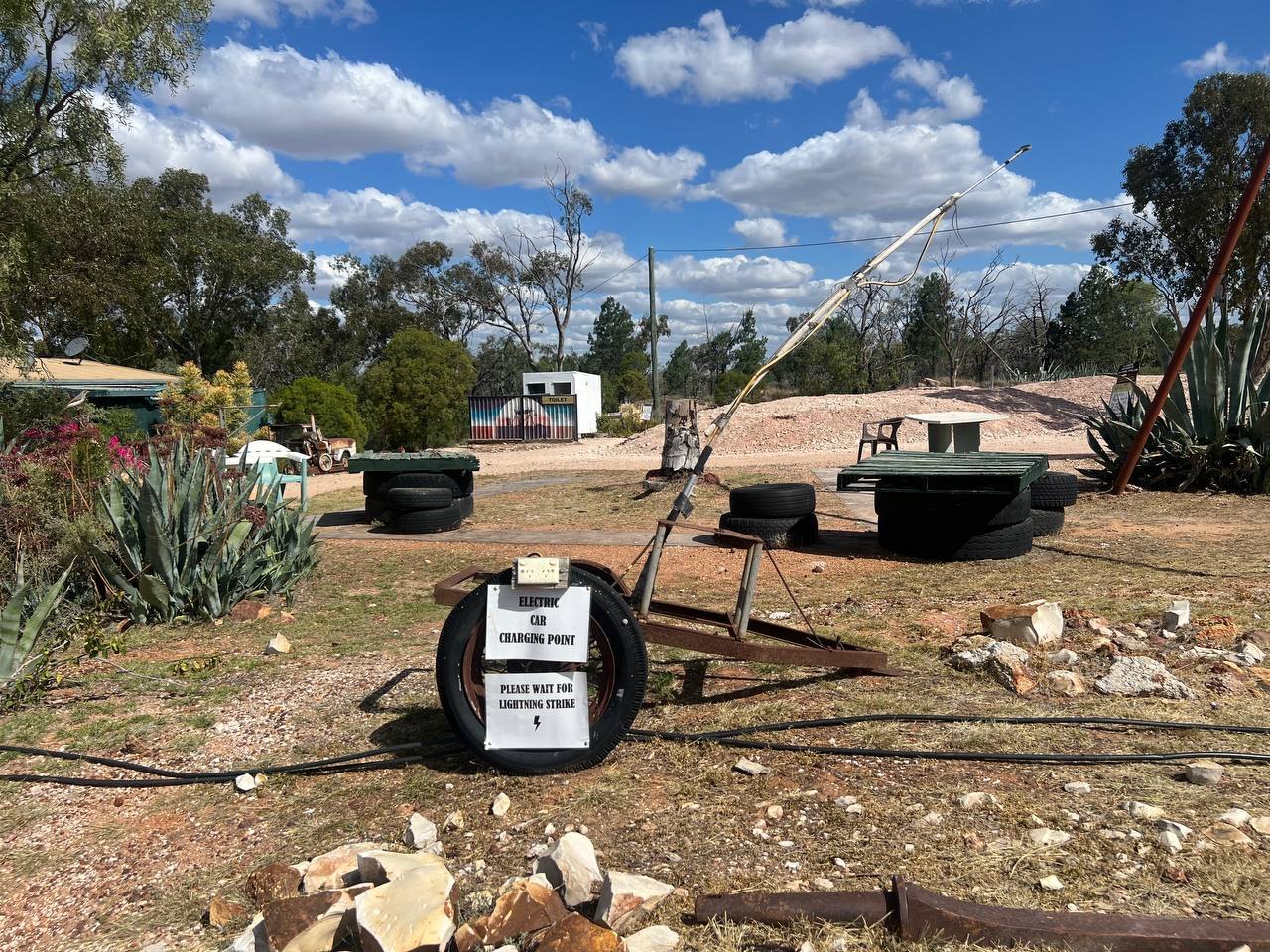 Electric car charging point, Lightning Ridge style.
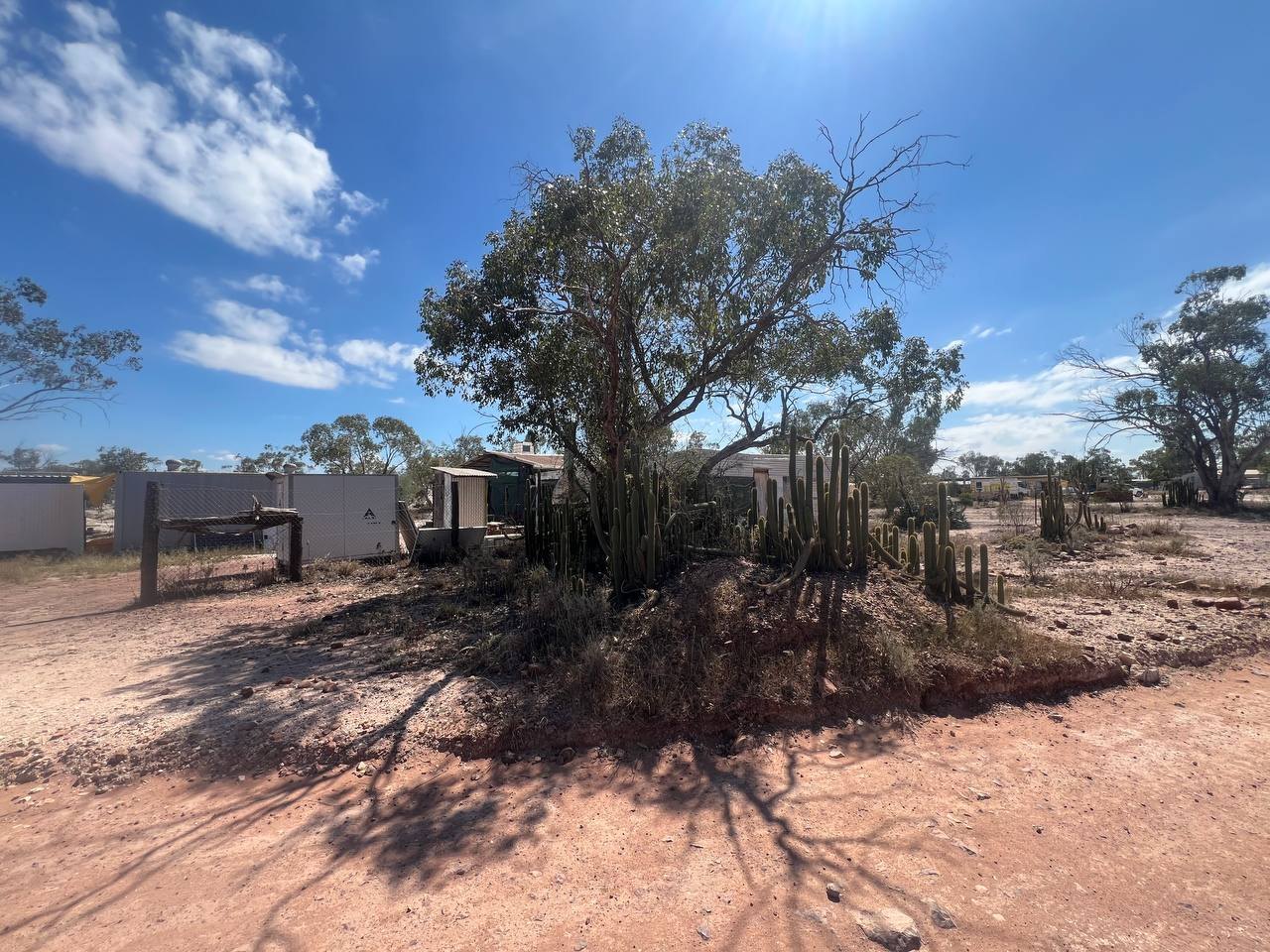 A serious cactus collection, getting exactly the climate it wants.
Sunset
Late in the day everyone drove up to the Sunset Lookout, a rocky hilltop out of town, to watch the sun go down over the fields. Somebody has built a stone labyrinth up there, because of course they have.
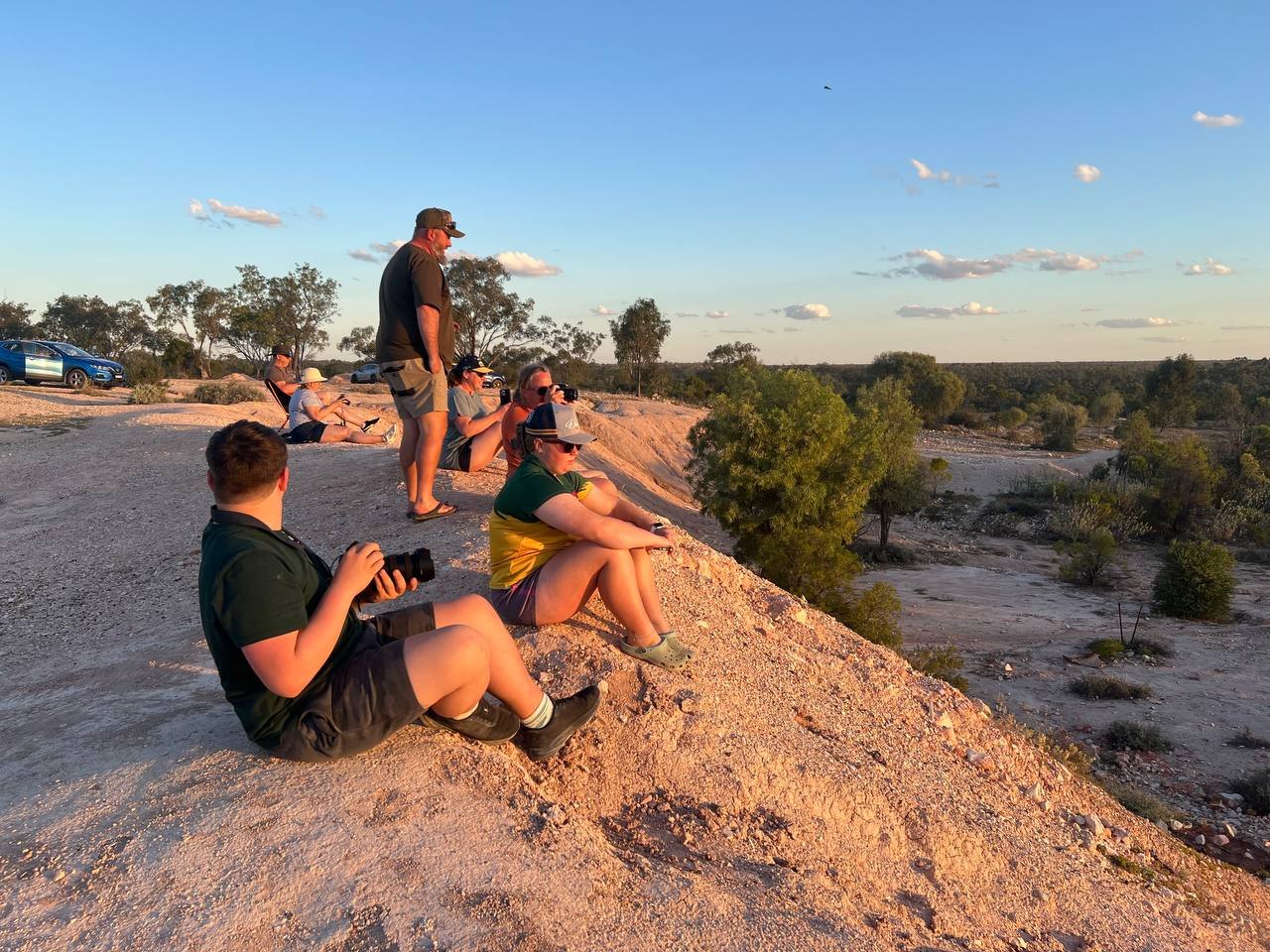 The sunset shift assembles.
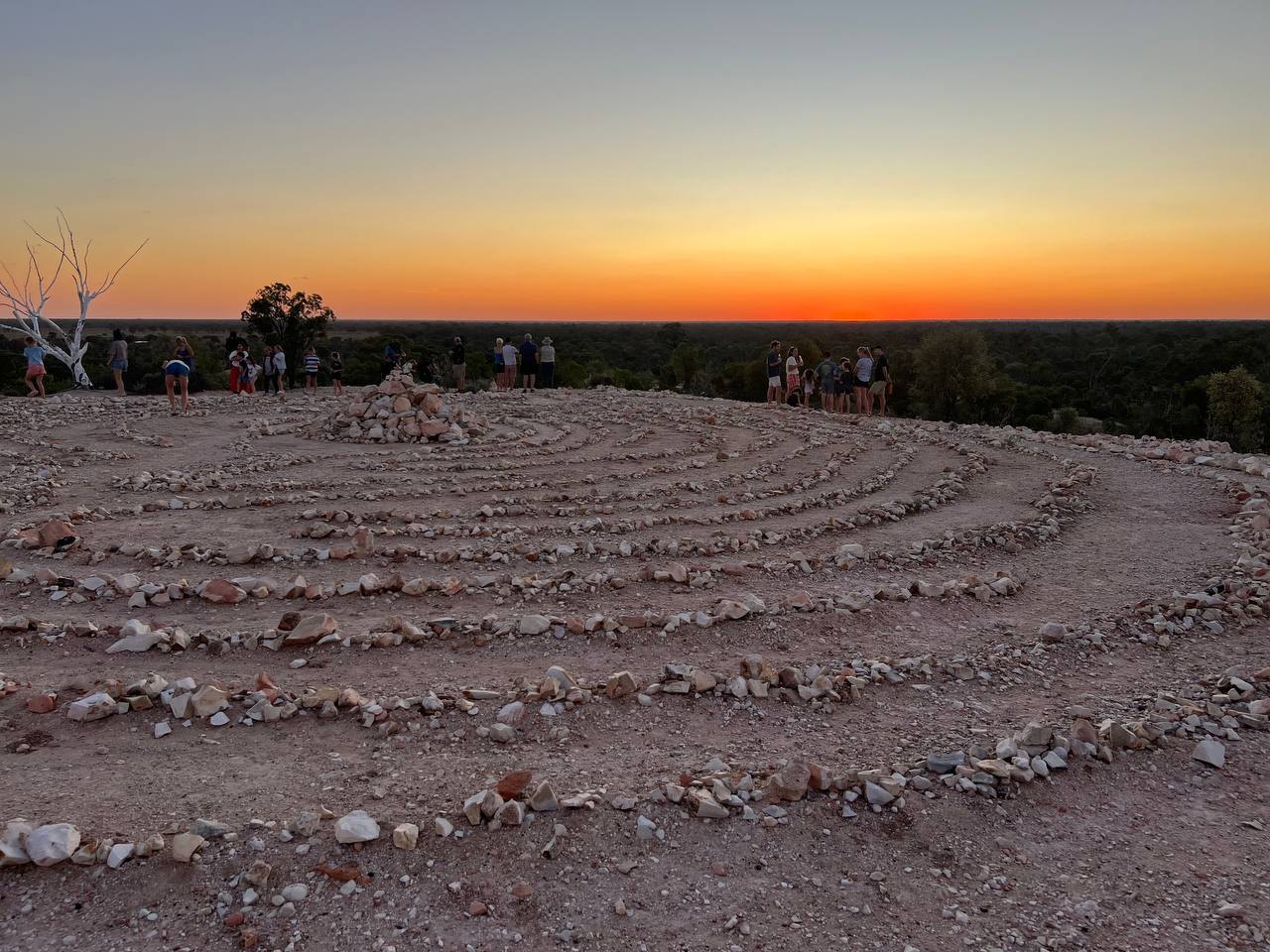 The hilltop labyrinth.
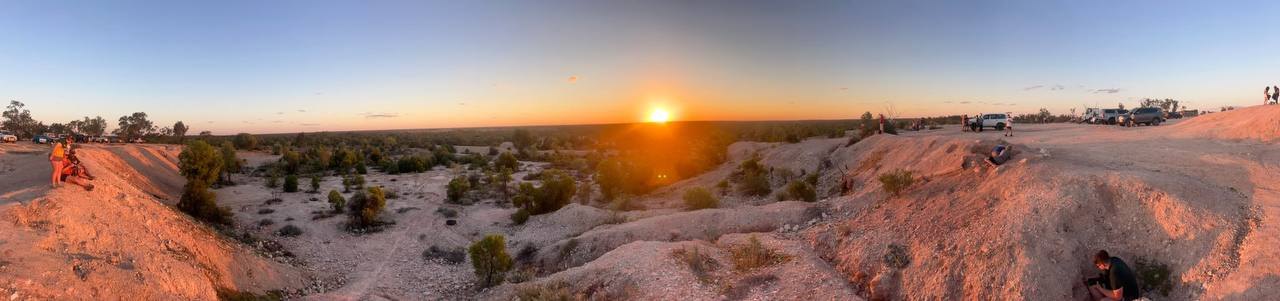 The fields at sunset.
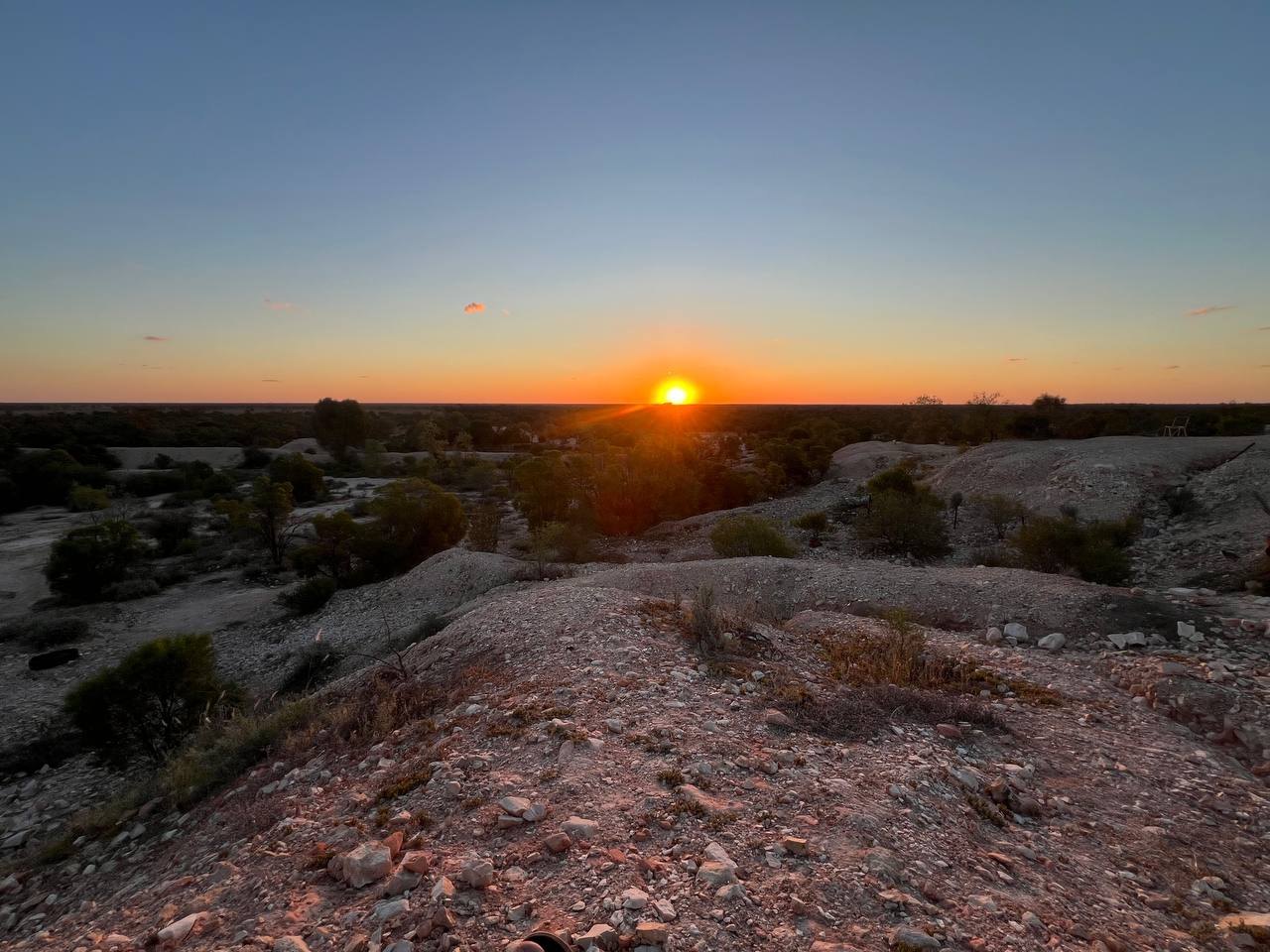 Flat as far as it gets.
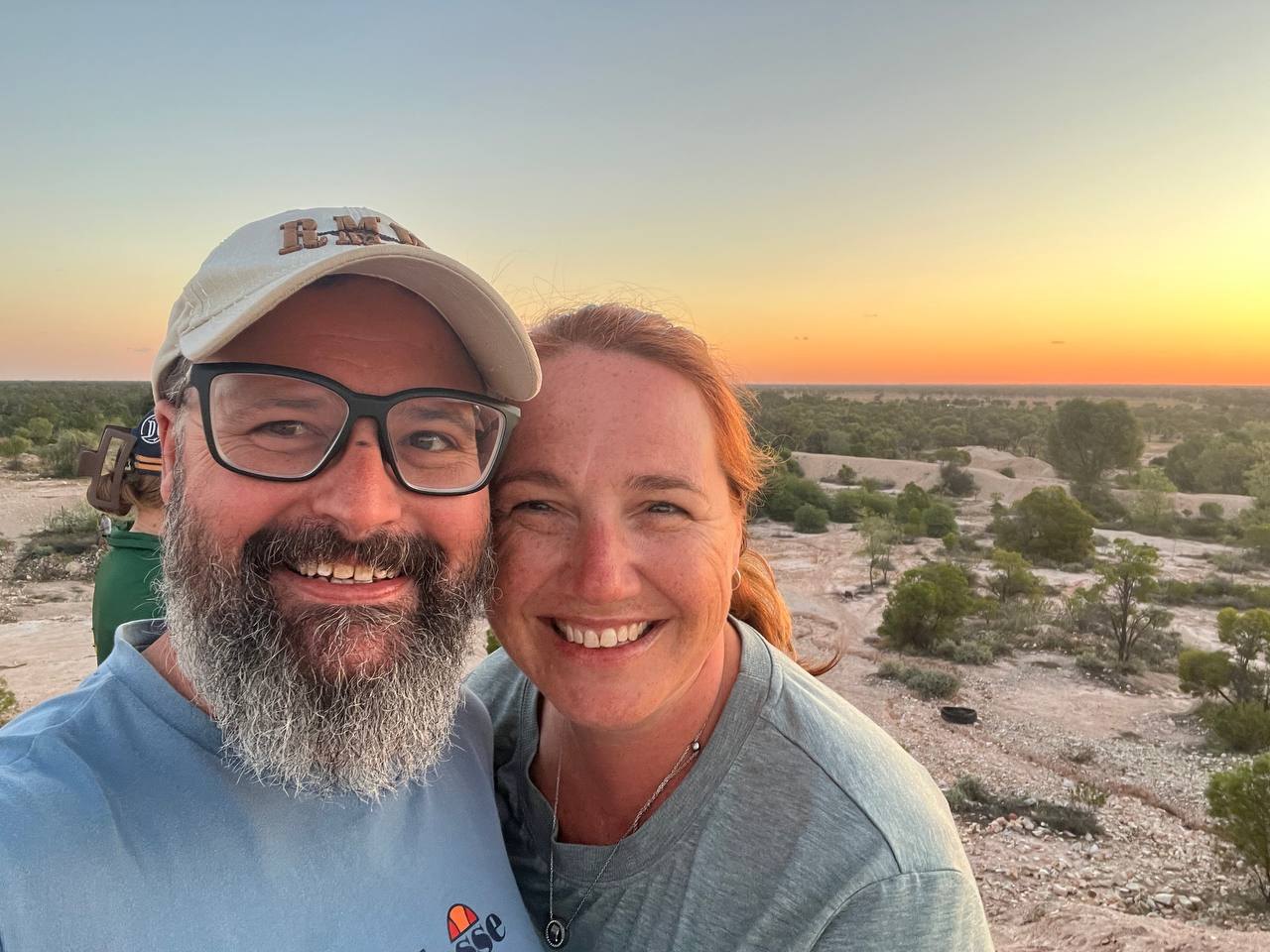 Proof of attendance.
We finished the day with a game of pool at a pub back in town. The name of the place escapes us.
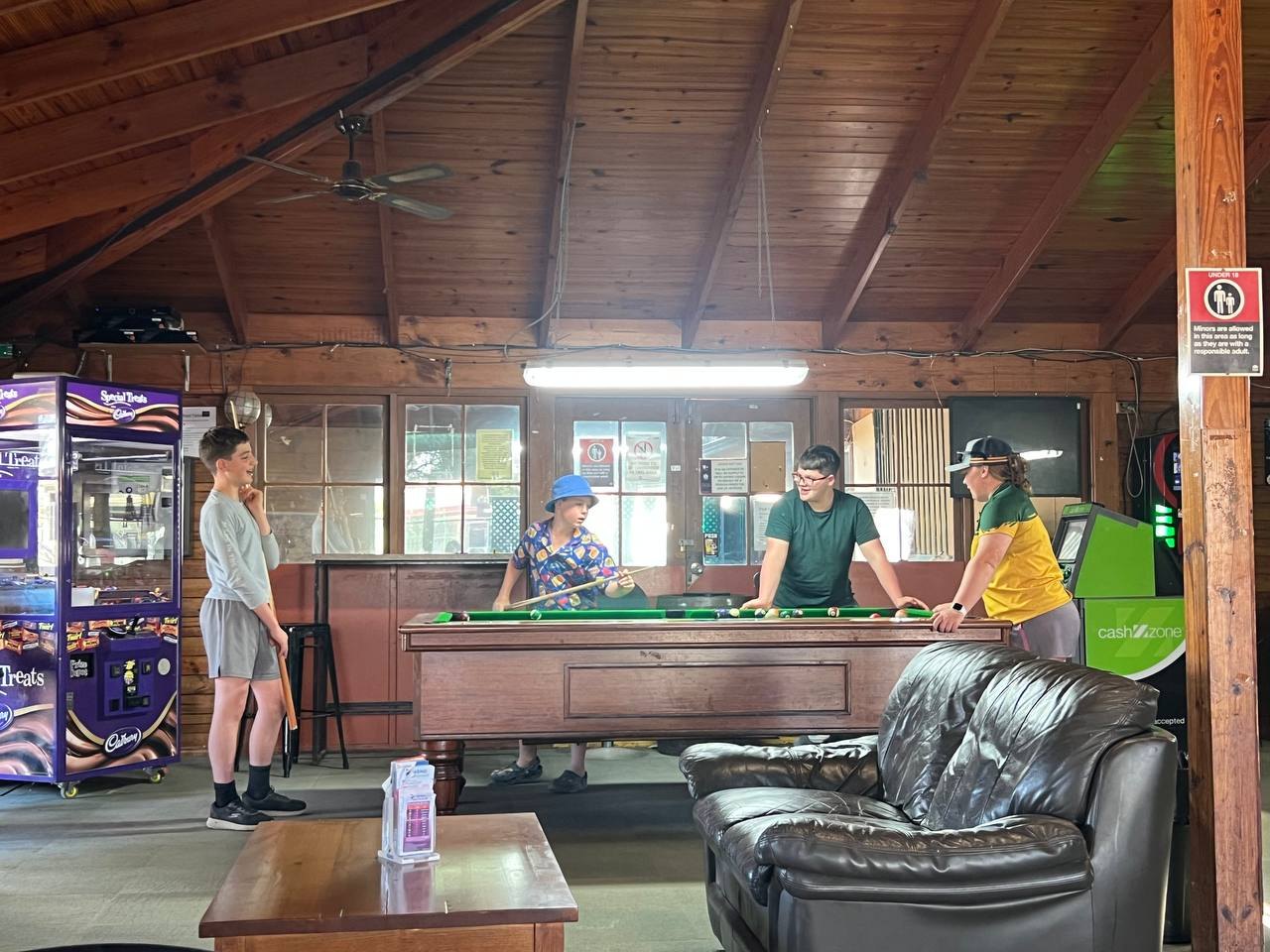 Pool at the pub. Under 18s welcome with a responsible adult, and we had several.
Diesel watch
Diesel prices hit a new high today. Narrabri's 301.9 cents a litre did not last long as the trip record.
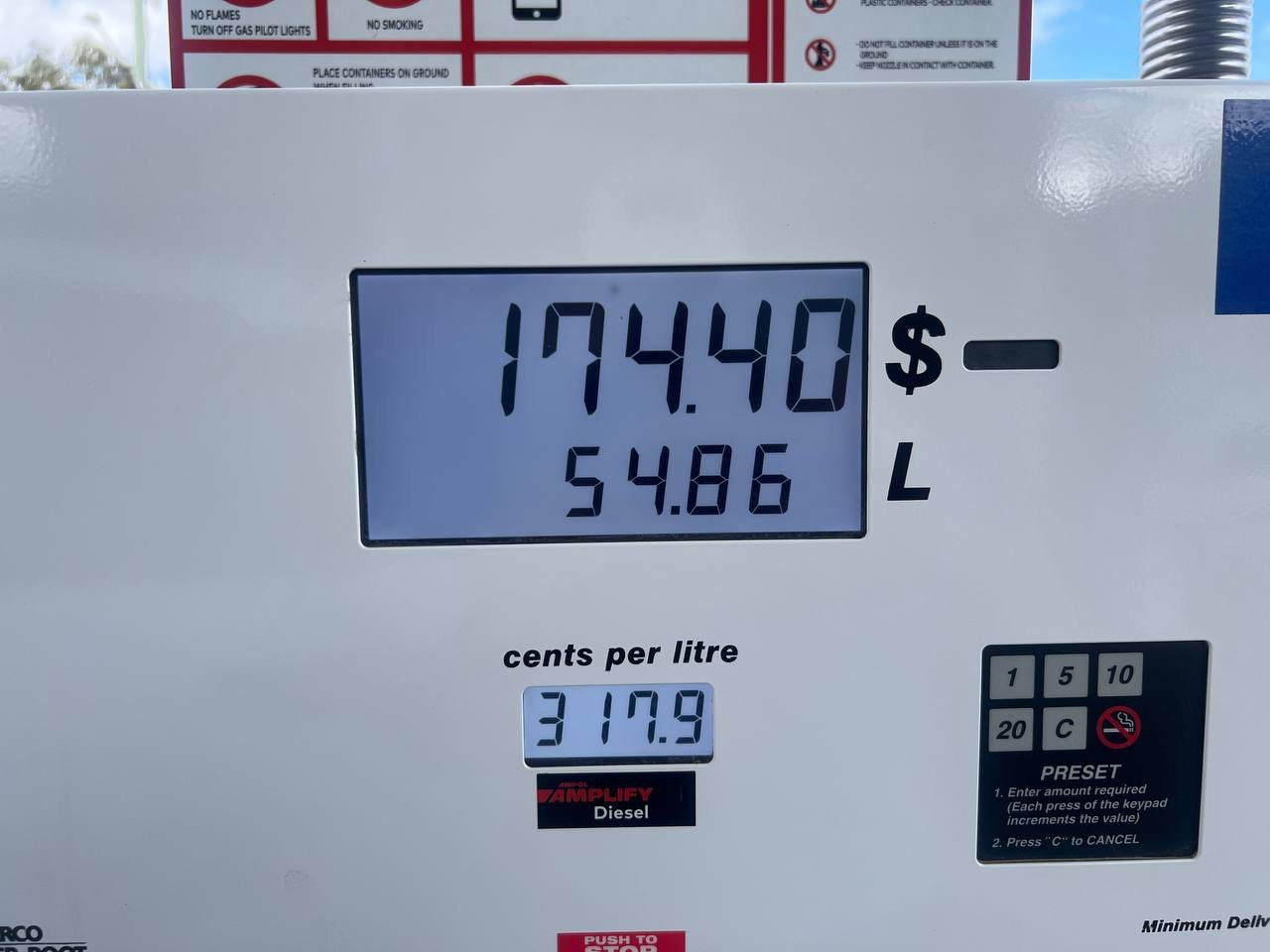 A new record: $174.40 for 54.86 litres at 317.9 cents a litre.
Also, the front of the car now looks like something out of Mad Max.
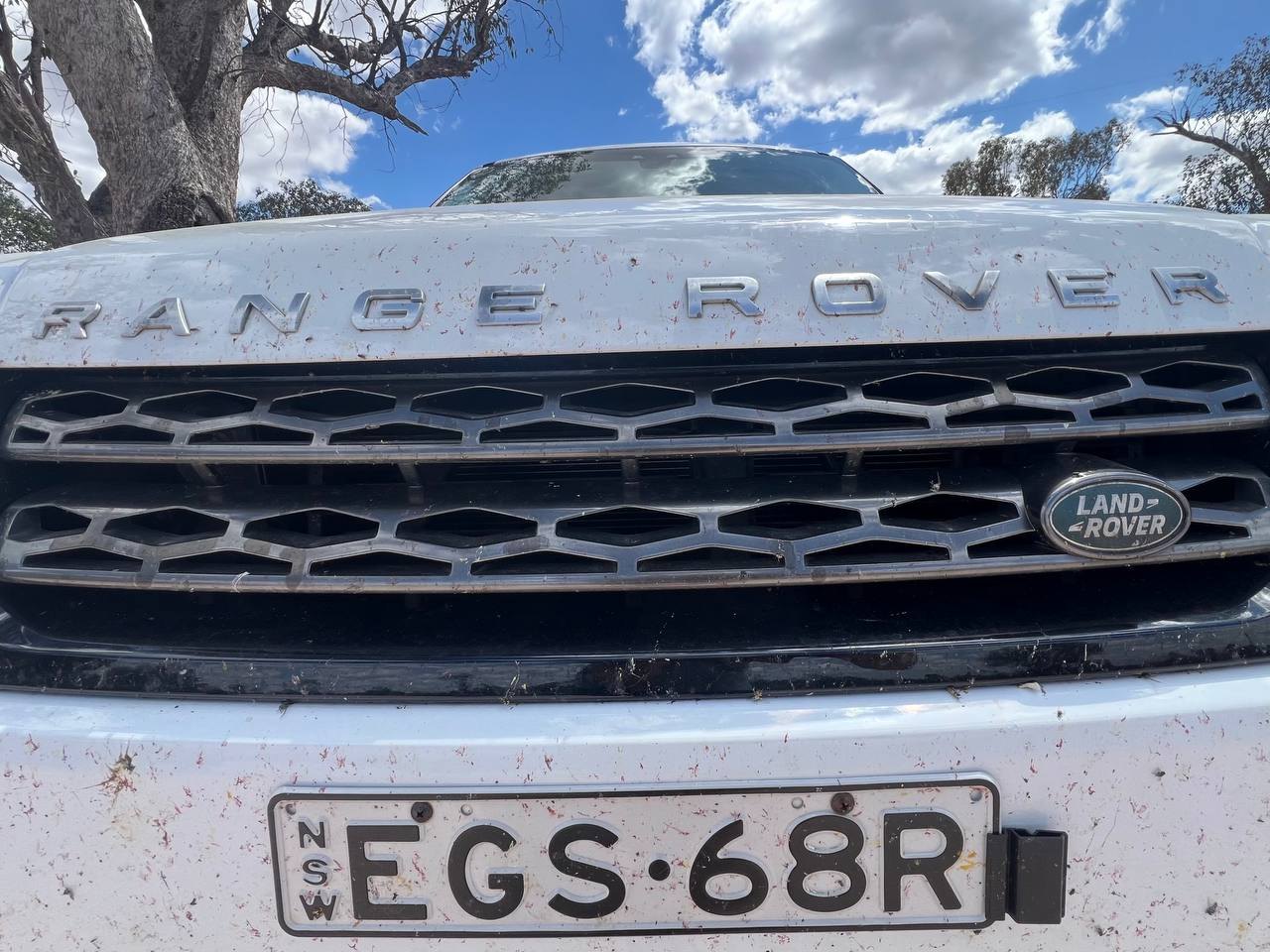 The Mad Max look, achieved entirely through insects.
Two nights at the Ridge done. Tomorrow we point south, towards Bourke.