A prosperous town
Rain on the roof overnight, which is a fine sound to fall asleep to, and a blustery morning: too windy to even think about putting the awning out. So a slow start, then into town to the visitor information centre. Broken Hill has a genuinely interesting history, and it wears its prosperity on its sleeve. The man at the information desk told us Broken Hill was the third richest mineral site in the world, that they have been mining here for 140 years, and that the new mine will probably keep them going for another 200. Enthusiasm from the front desk, but the broad strokes check out.
A boundary rider named Charles Rasp picked up promising-looking rock on a broken-backed hill on Mount Gipps station in 1883, pegged a claim with six station mates (the Syndicate of Seven), and in 1885 they founded the Broken Hill Proprietary Company. BHP has done reasonably well since. The Line of Lode running through town became the largest single source of silver, lead and zinc in the world, and mining has run here continuously ever since. BHP itself left in 1939, but others took over, and there is serious work now on new deposits, including a cobalt project and a recently announced technique for reaching a lode under the city that was found decades ago but written off as too hard. The 200-year figure might be optimistic. The direction is not.
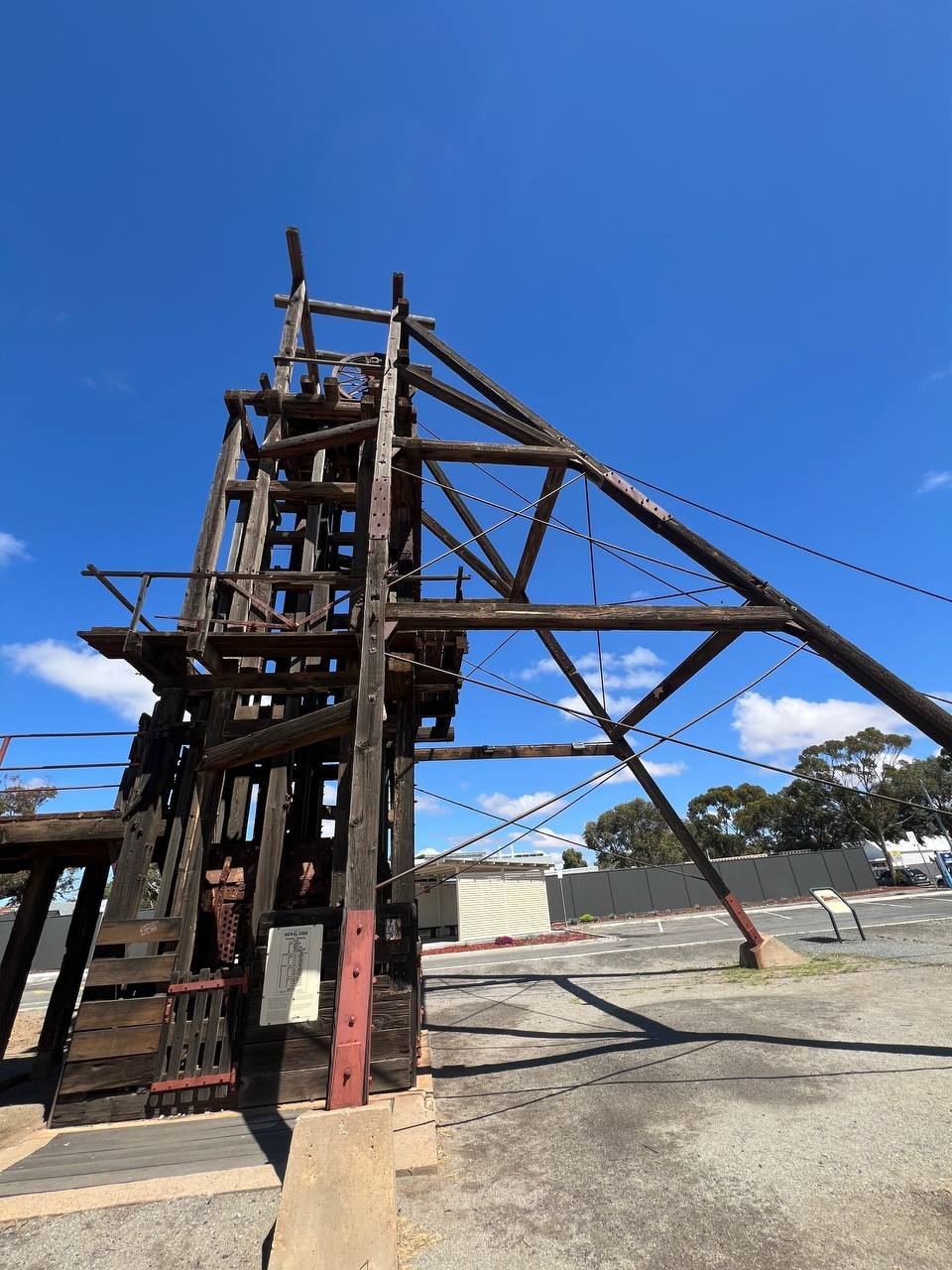 One of the old timber headframes, preserved near the visitor centre.
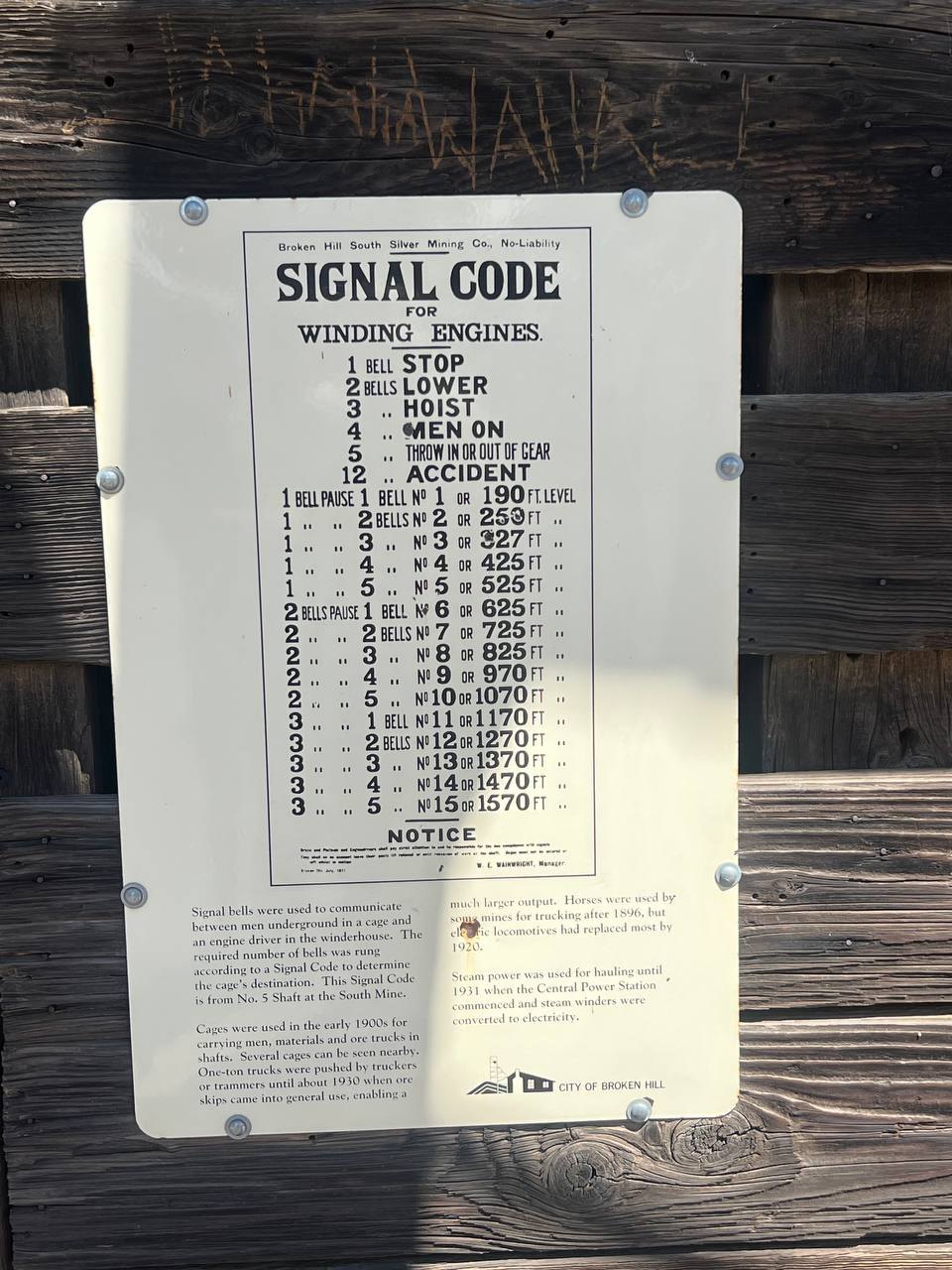 The signal code for the winding engines at the South Mine's No. 5 shaft. One bell stop, two lower, three hoist, twelve accident. Fifteen levels down to 1570 feet.
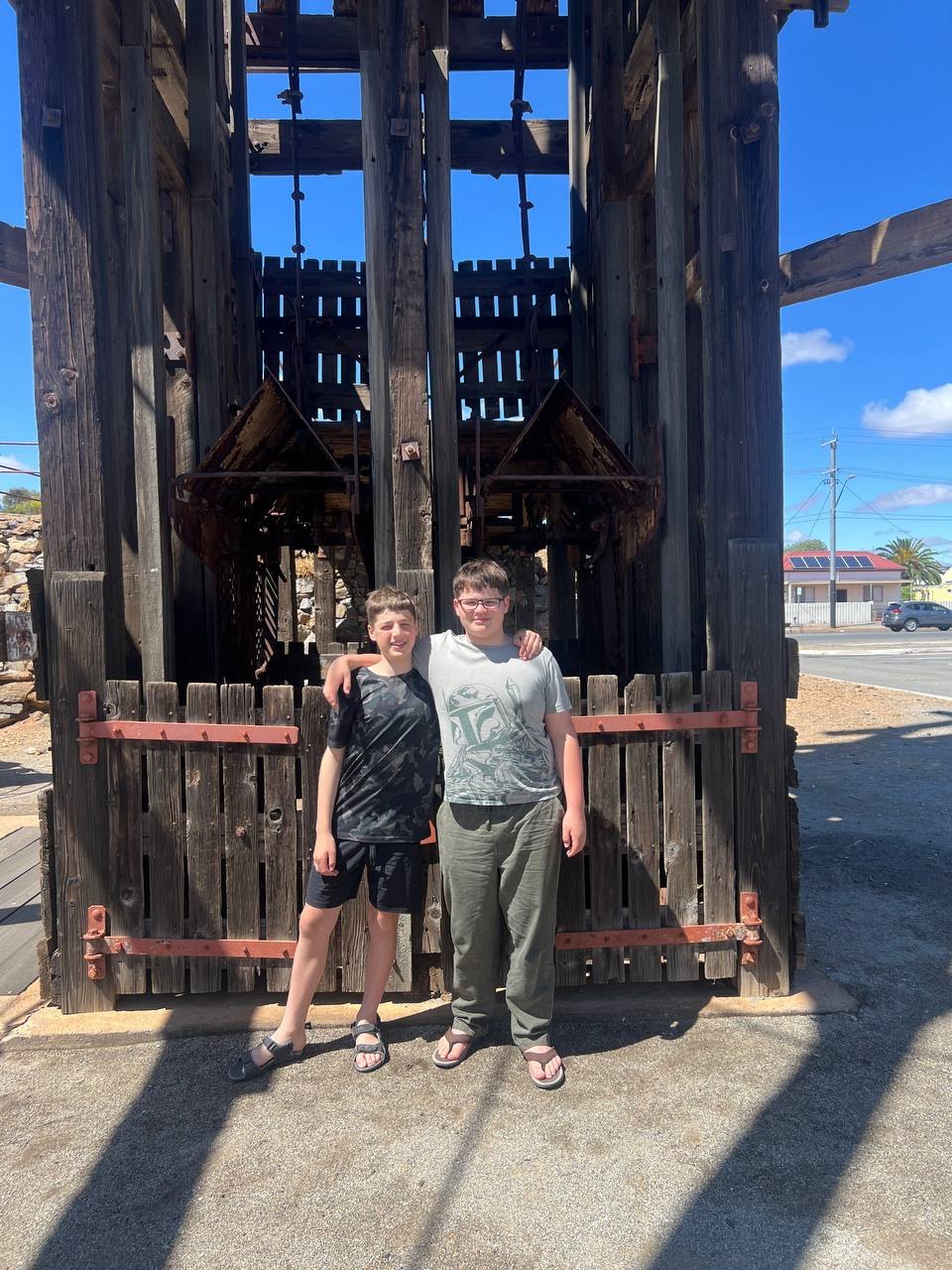 The boys, for scale.
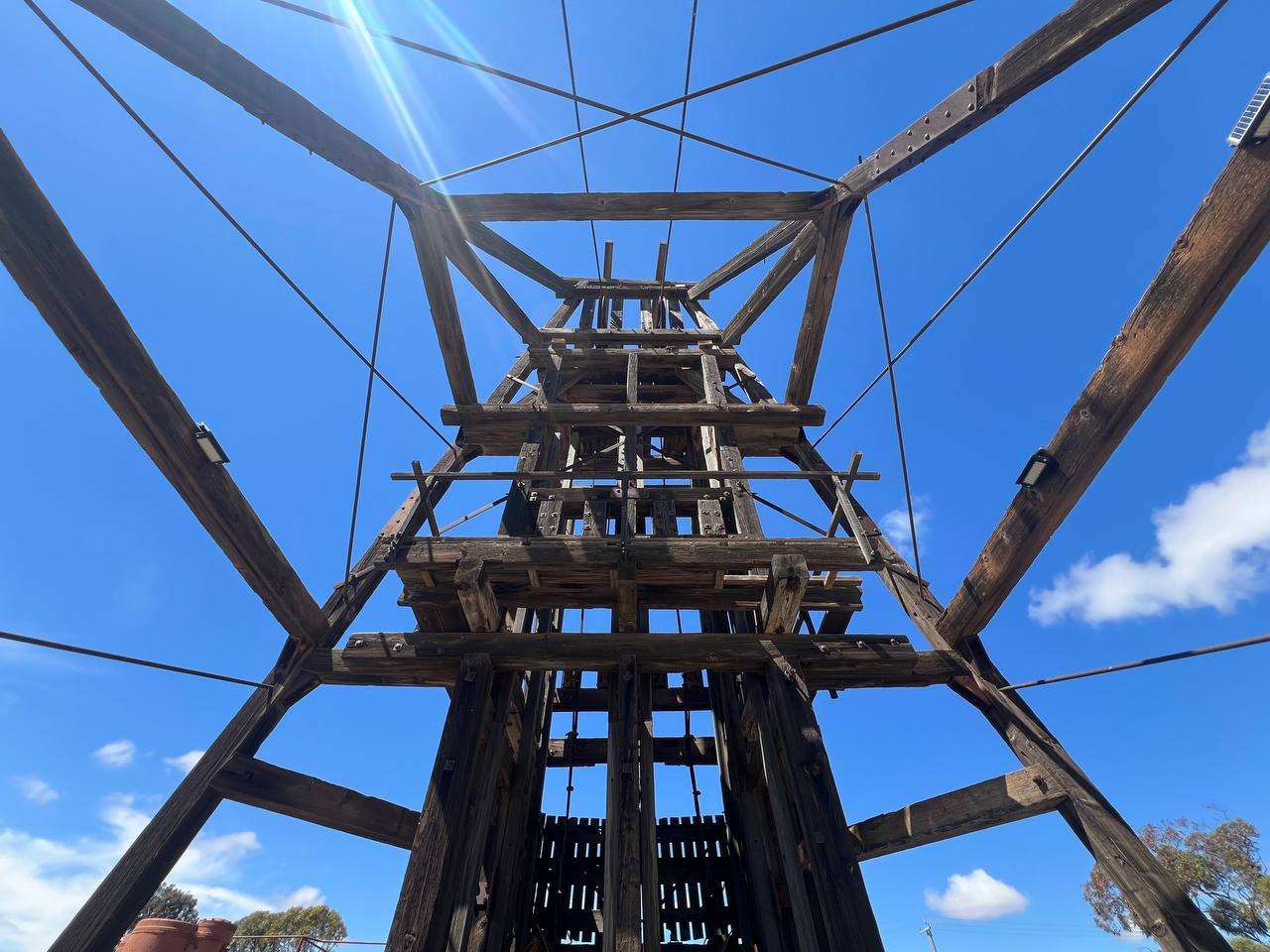 Looking up. All timber, cables and rivets.
Museum passports
The kids were issued with passports at the visitor centre, to be stamped at local museums and attractions around town. A clever bit of tourism engineering: suddenly everyone wants to go to museums. First stamp: the Sulphide Street railway museum.
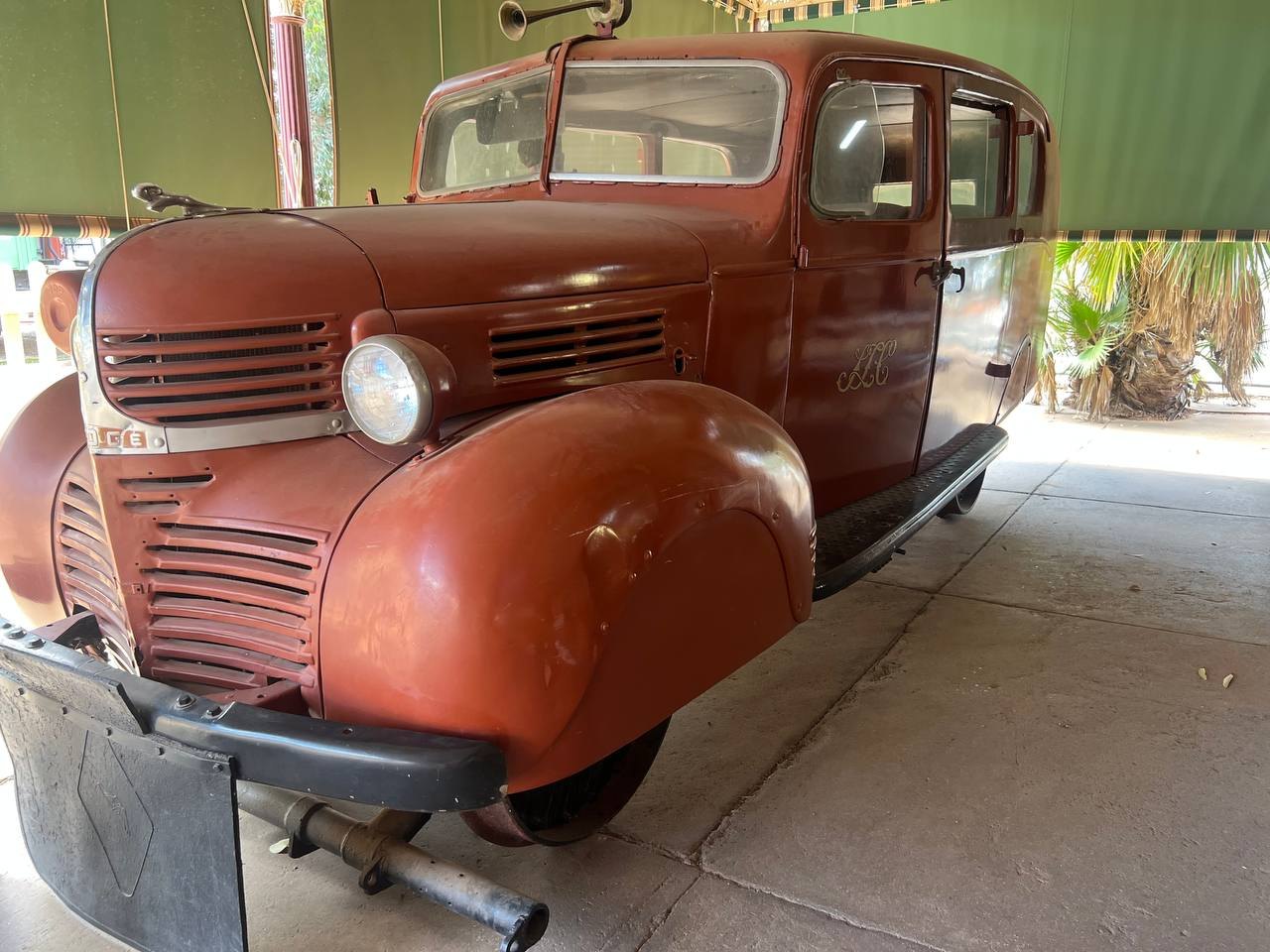 A well-patinated Dodge truck keeping the locomotives company.
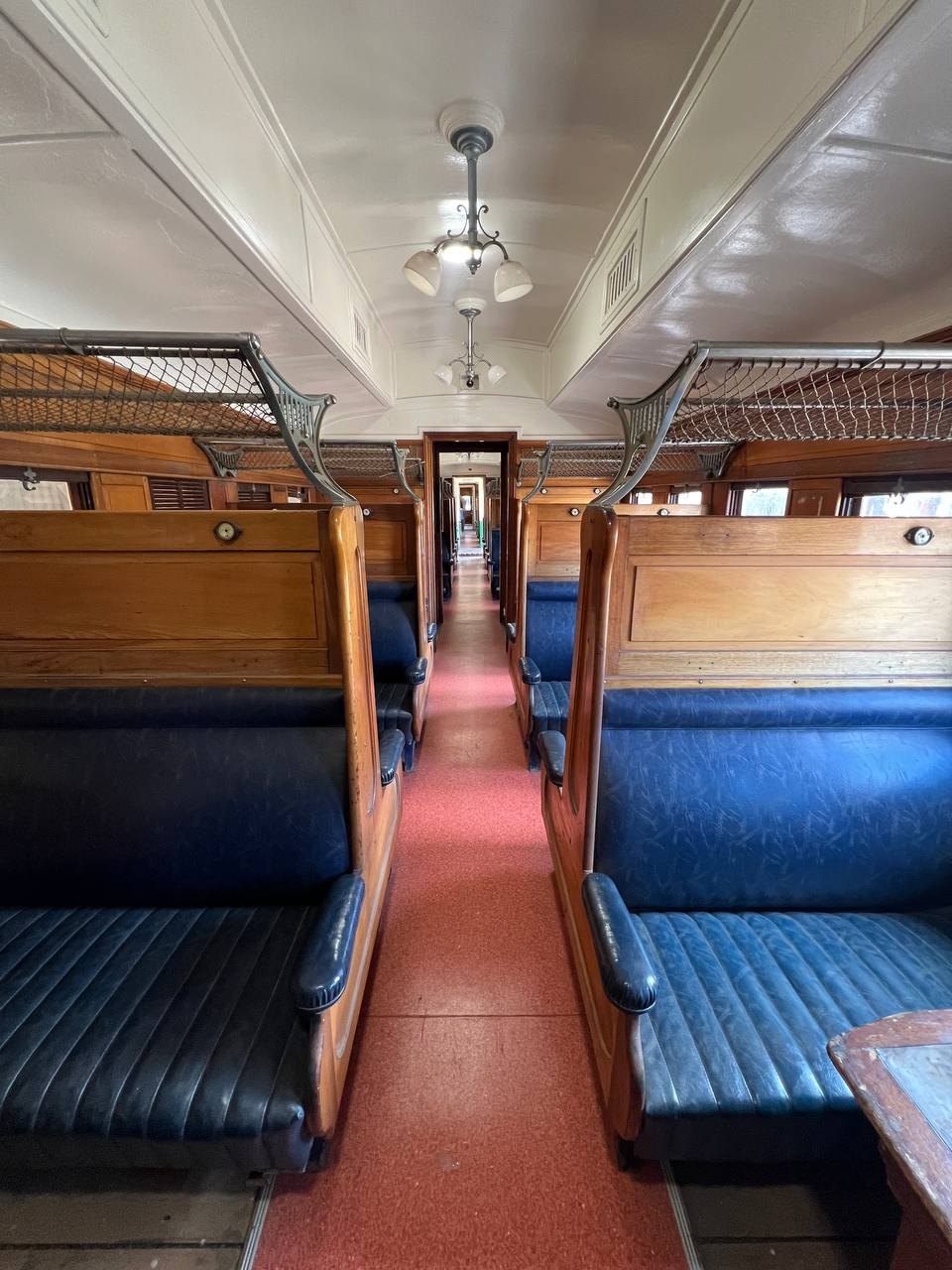 Inside a restored passenger carriage. Red carpet, polished timber, proper luggage racks.
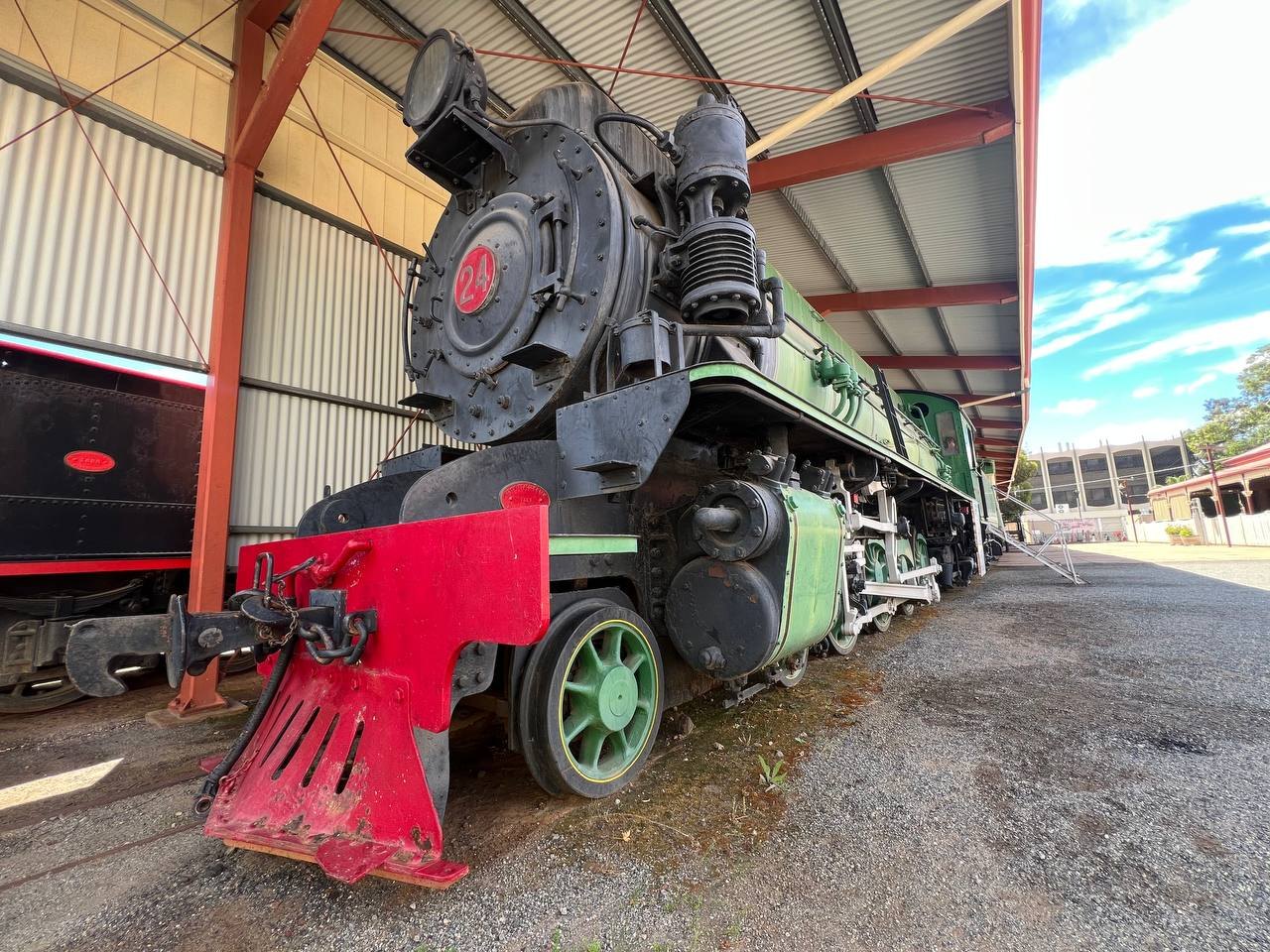 Locomotive 24 of the Silverton Tramway Company.
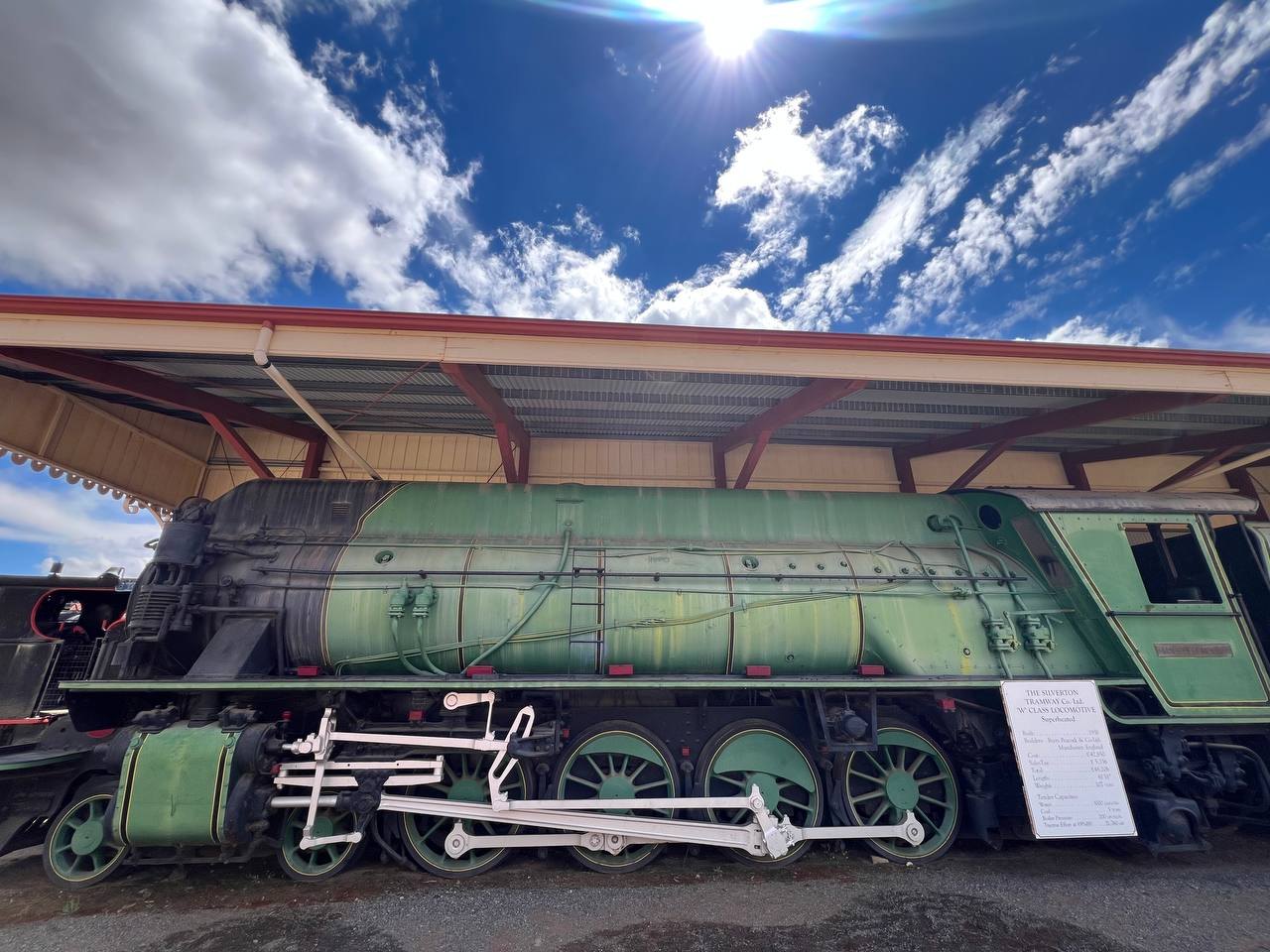 A W class engine, side on.
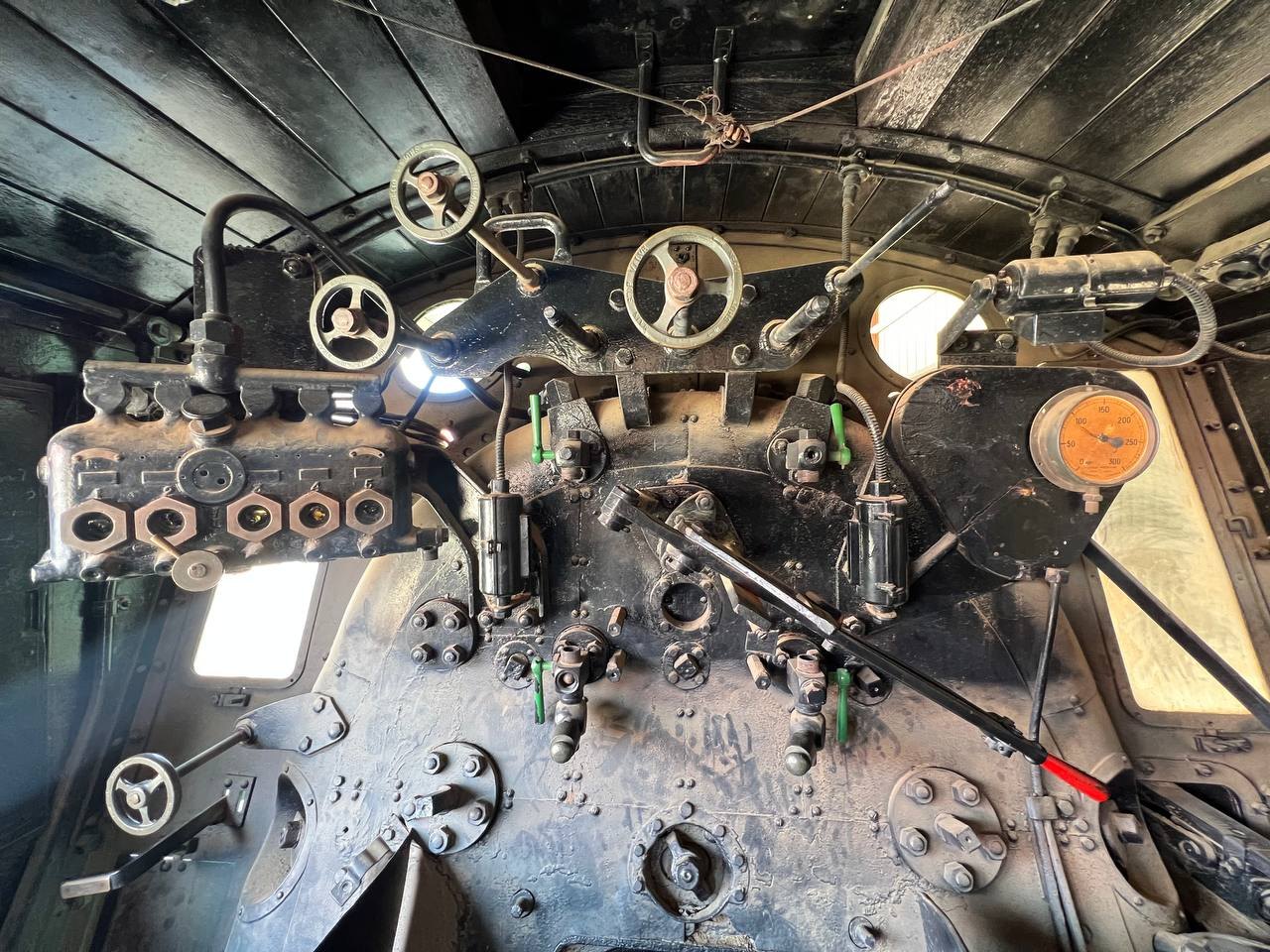 The office. Brass everything.
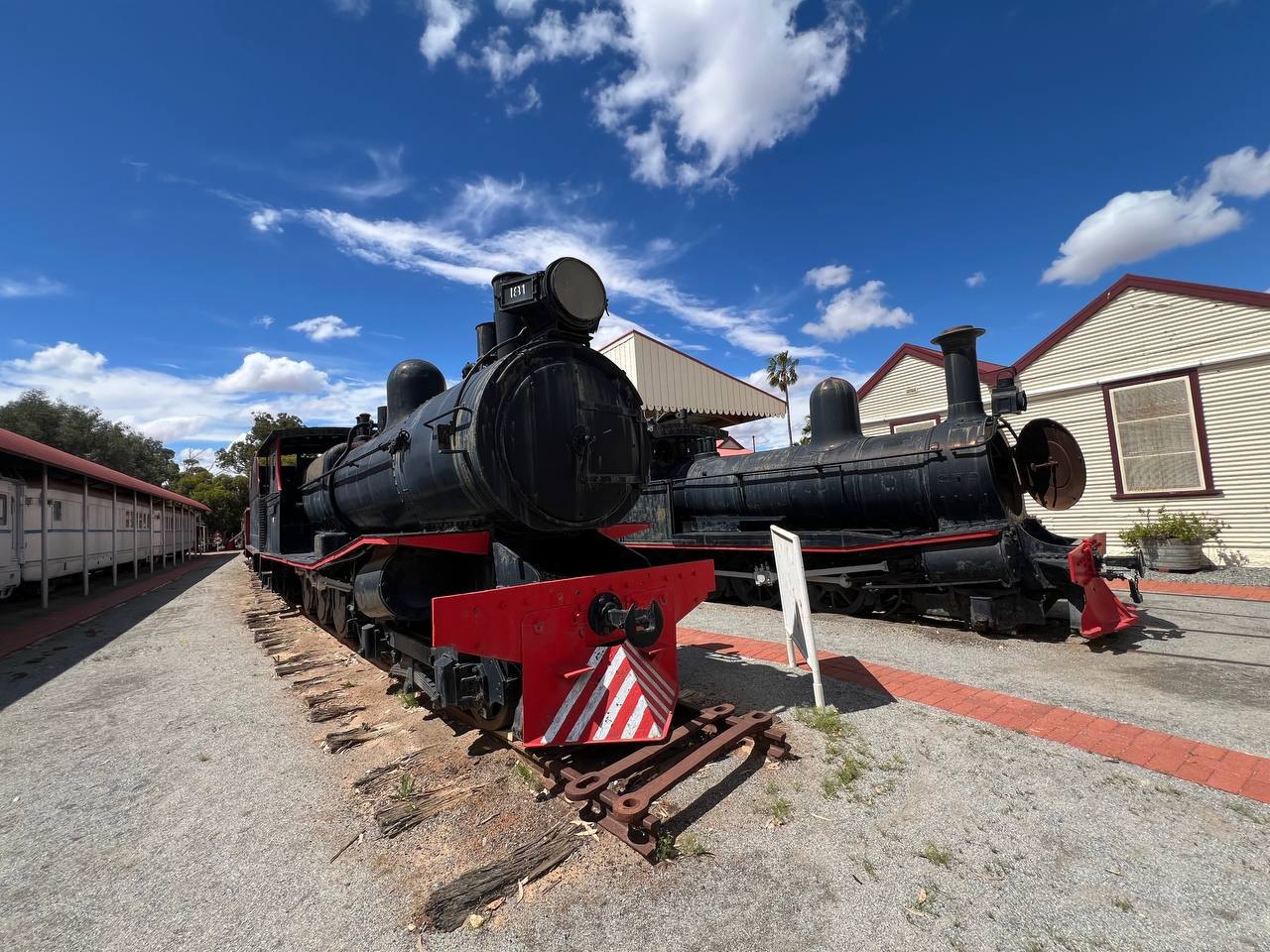 Number 161 out in the yard.
The Silverton Tramway was its own oddity: a private narrow-gauge line that ran from Broken Hill to the South Australian border at Cockburn from 1888, built because the NSW government would not fund a railway to serve a South Australia-leaning mining town. It carried silver, lead and zinc out, and everything else in, for 82 years.
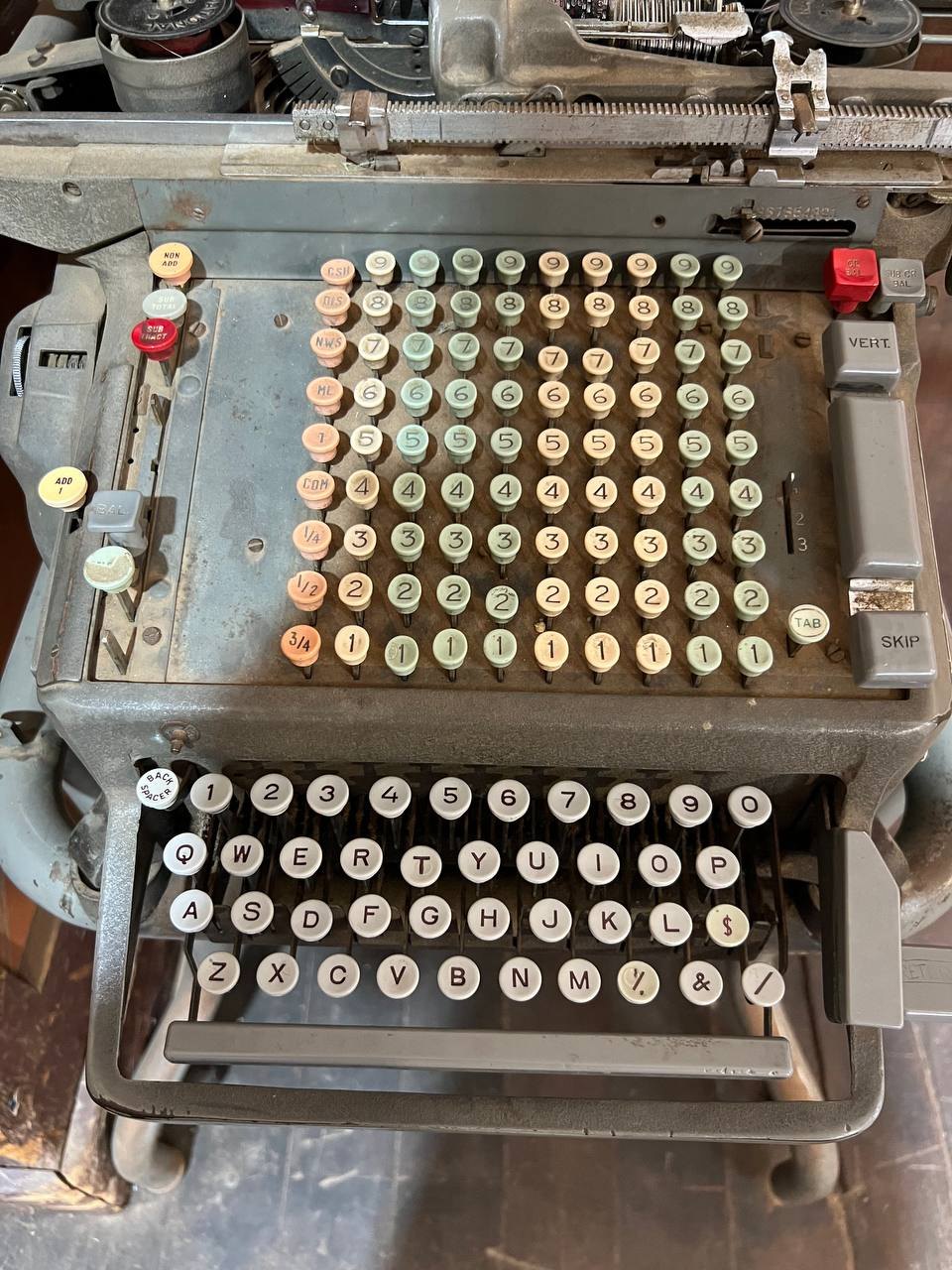 A bookkeeping typewriter: adding machine up top, typewriter below. The spreadsheet of its day.
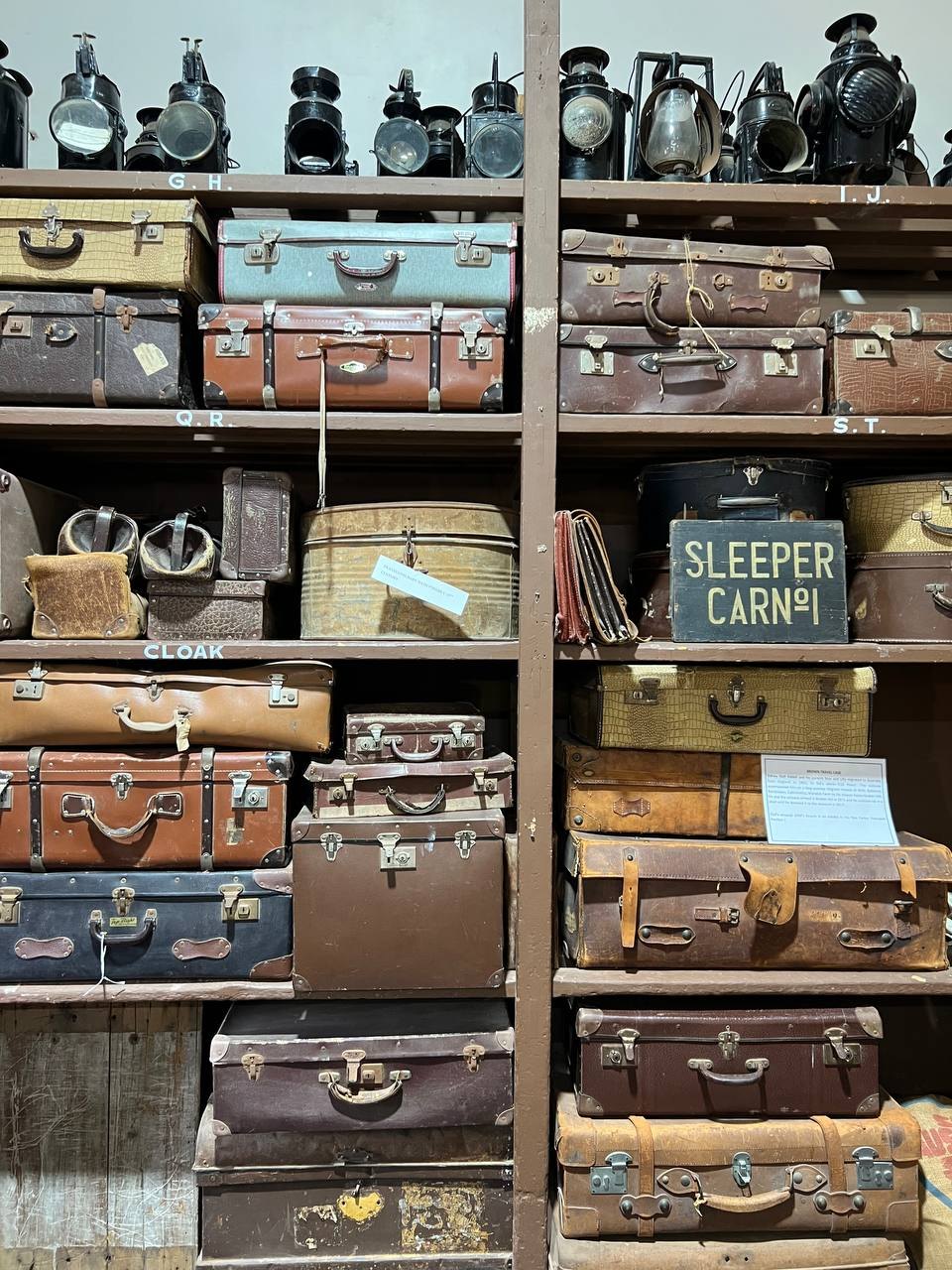 Luggage and lanterns. The cloak room of a hundred journeys.
Bells Milk Bar
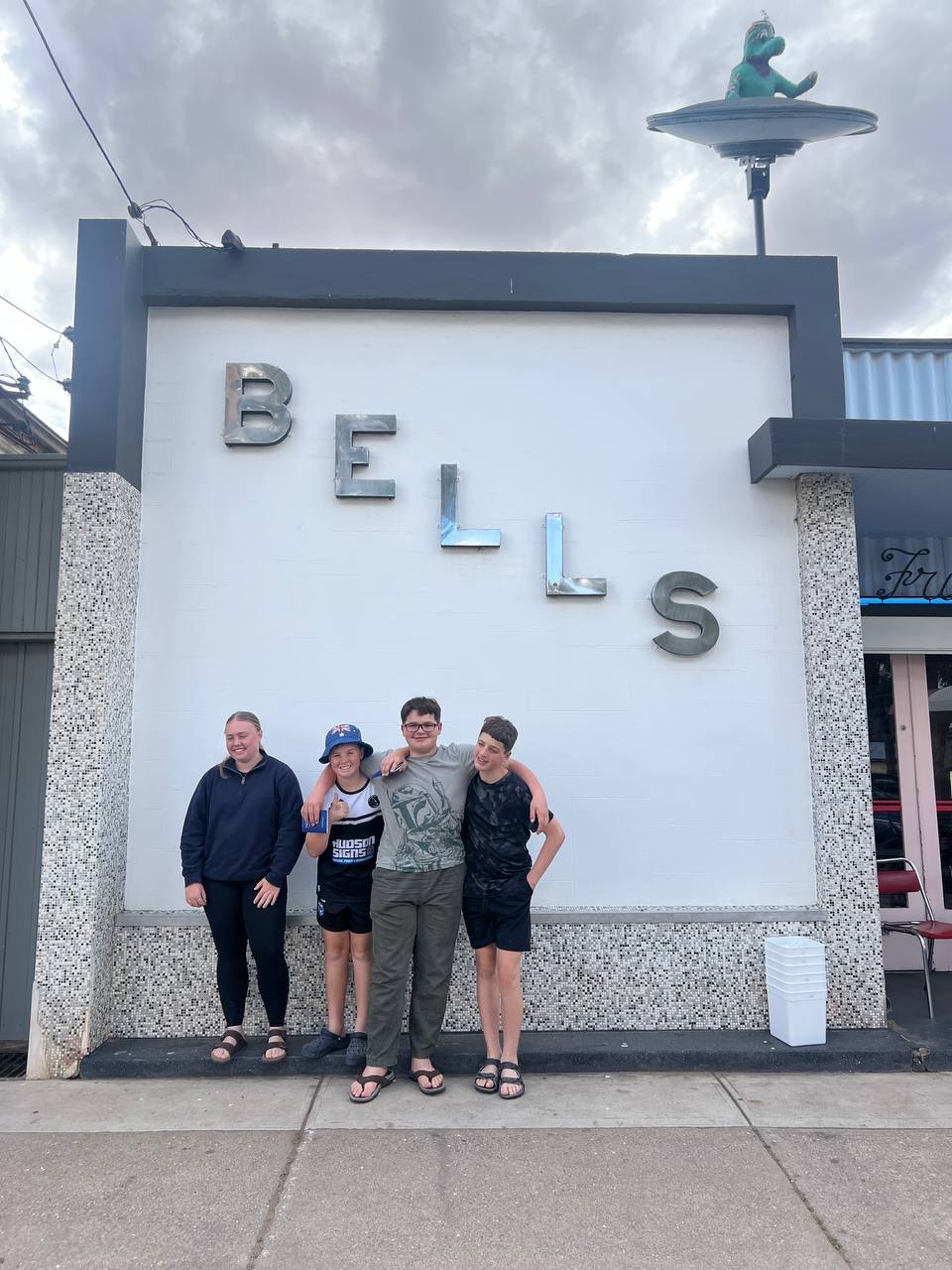 Stamp number two: Bells Milk Bar, complete with rooftop flying saucer.
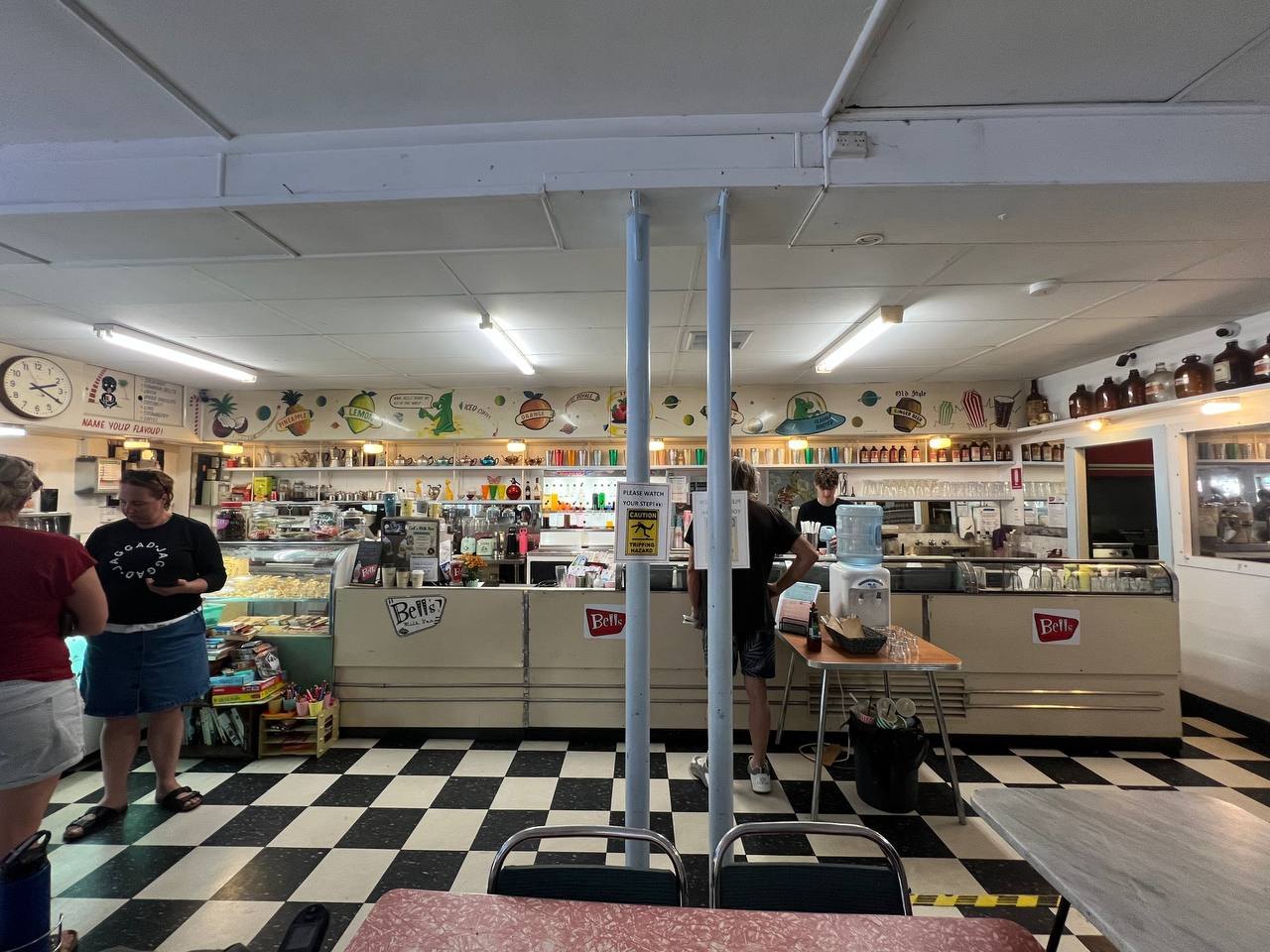 Inside, where the syrups and cordials are still made on site.
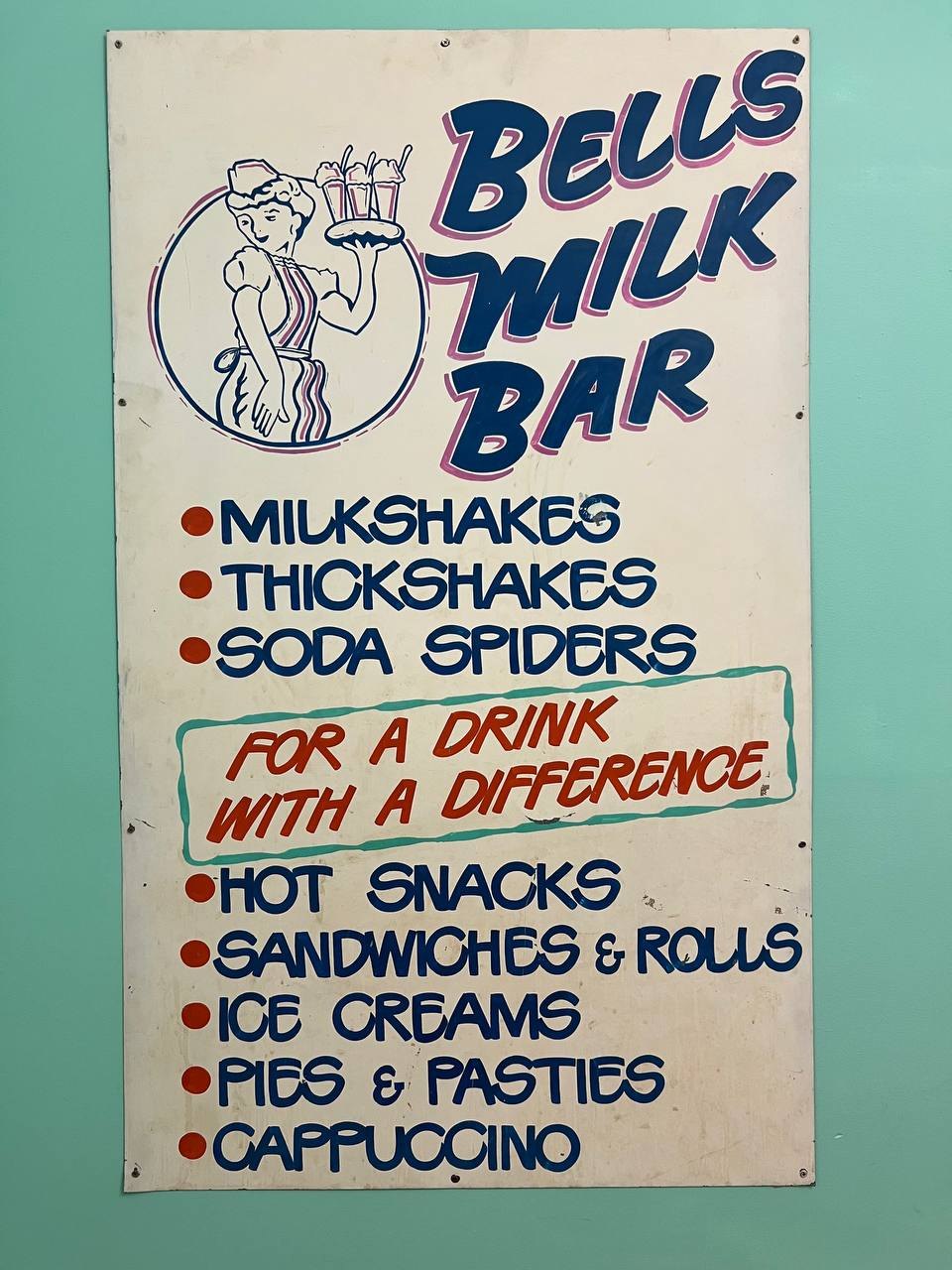 For a drink with a difference.
Bells started as a confectionery store in 1892, became a milk bar under Harold Bell in 1938, and has kept its 1950s interior largely intact, dancing fruit murals and all. Milkshakes all round, obviously.
Caravan maintenance, continued
The rest of the day was a scavenger hunt across town: a 300 amp fuse for the inverter, silicon for the water tank leak, and a replacement jockey wheel for the caravan, the old one having given up winding entirely. All found, and the fuse and jockey wheel were fitted when we got back. The inverter is alive again and the caravan has a wheel that winds. The silicon repair has to wait: the tank needs to be mostly empty before it can be sealed, so the job now is to use up water. Fortunately we are a family of four in the outback, and water has a way of getting used.
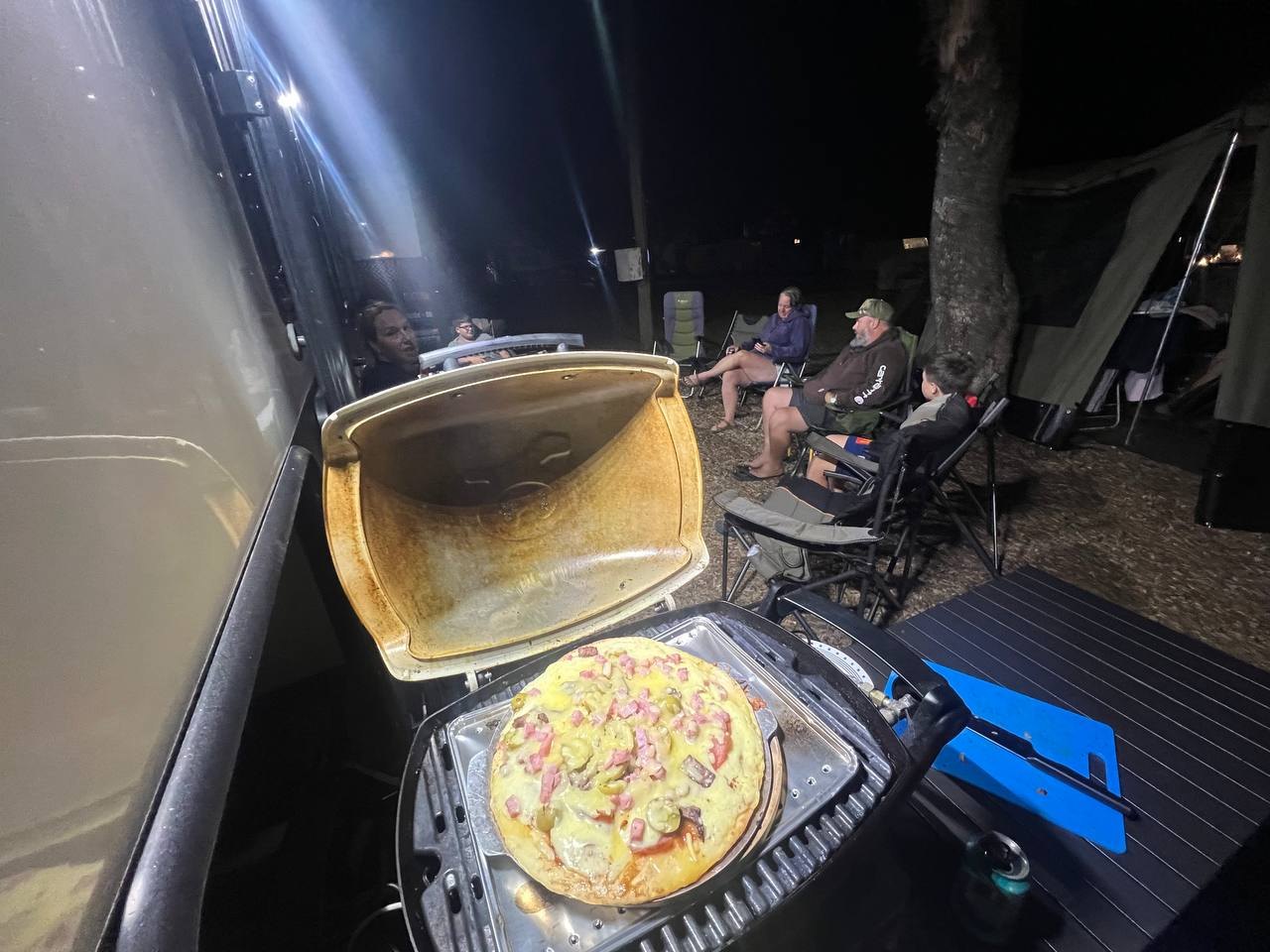 Pizzas on the Weber to finish the day. Camp oven cooking, outback edition.