Leaving Broken Hill
Packed up and pointed south. On the way out of town we stopped for the photo we missed on the way in: the big rusted-steel welcome sign, complete with mining silhouettes and a headframe. "Australia's first heritage listed city, established 1883", on Wilyakali country.
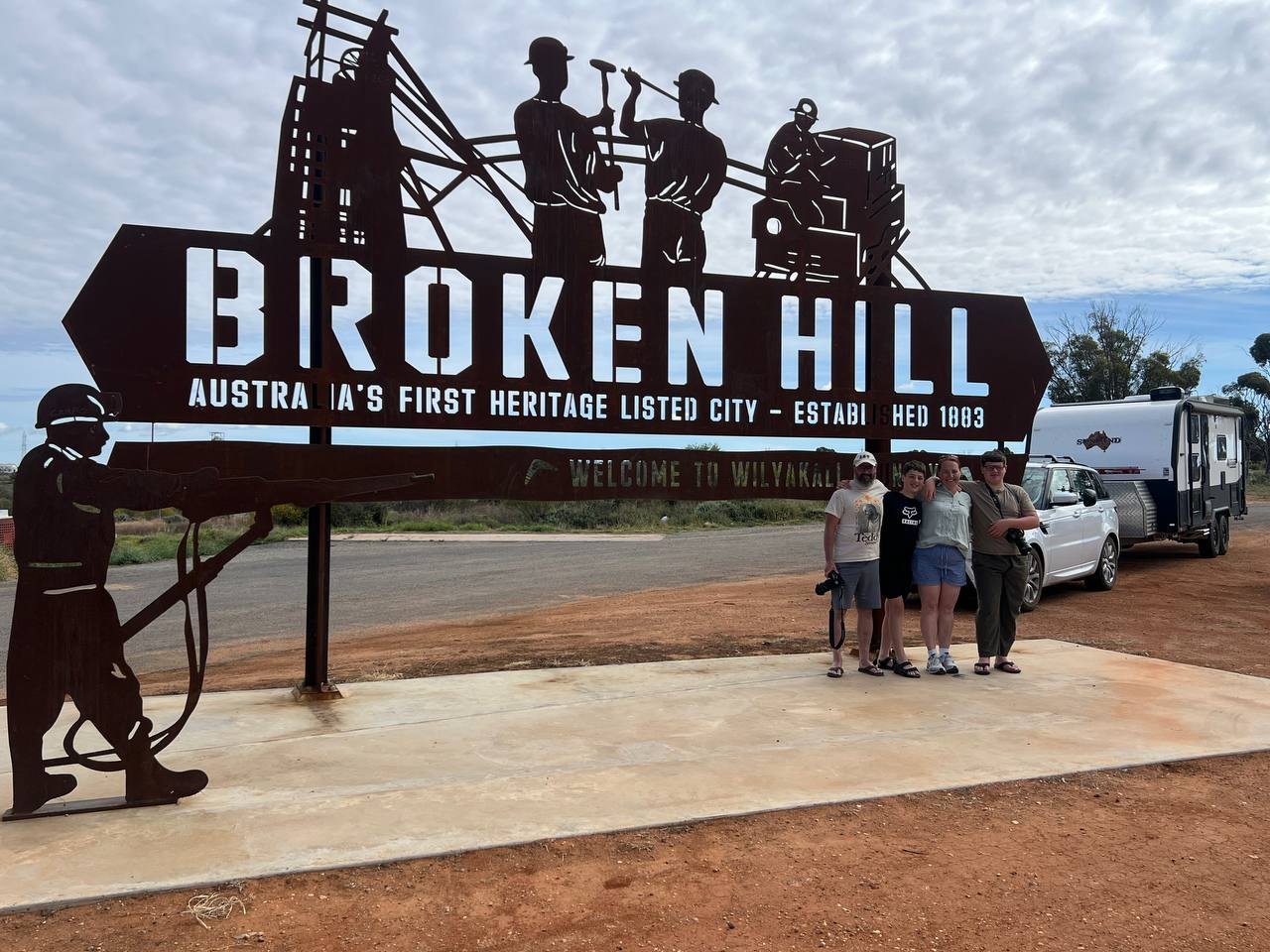 The sign we drove straight past on the way in.
Wentworth
First stop was Wentworth, where the Darling runs into the Murray. Three stops in town, starting with the giant blue yabby, Herbie, standing near the Pioneer Museum.
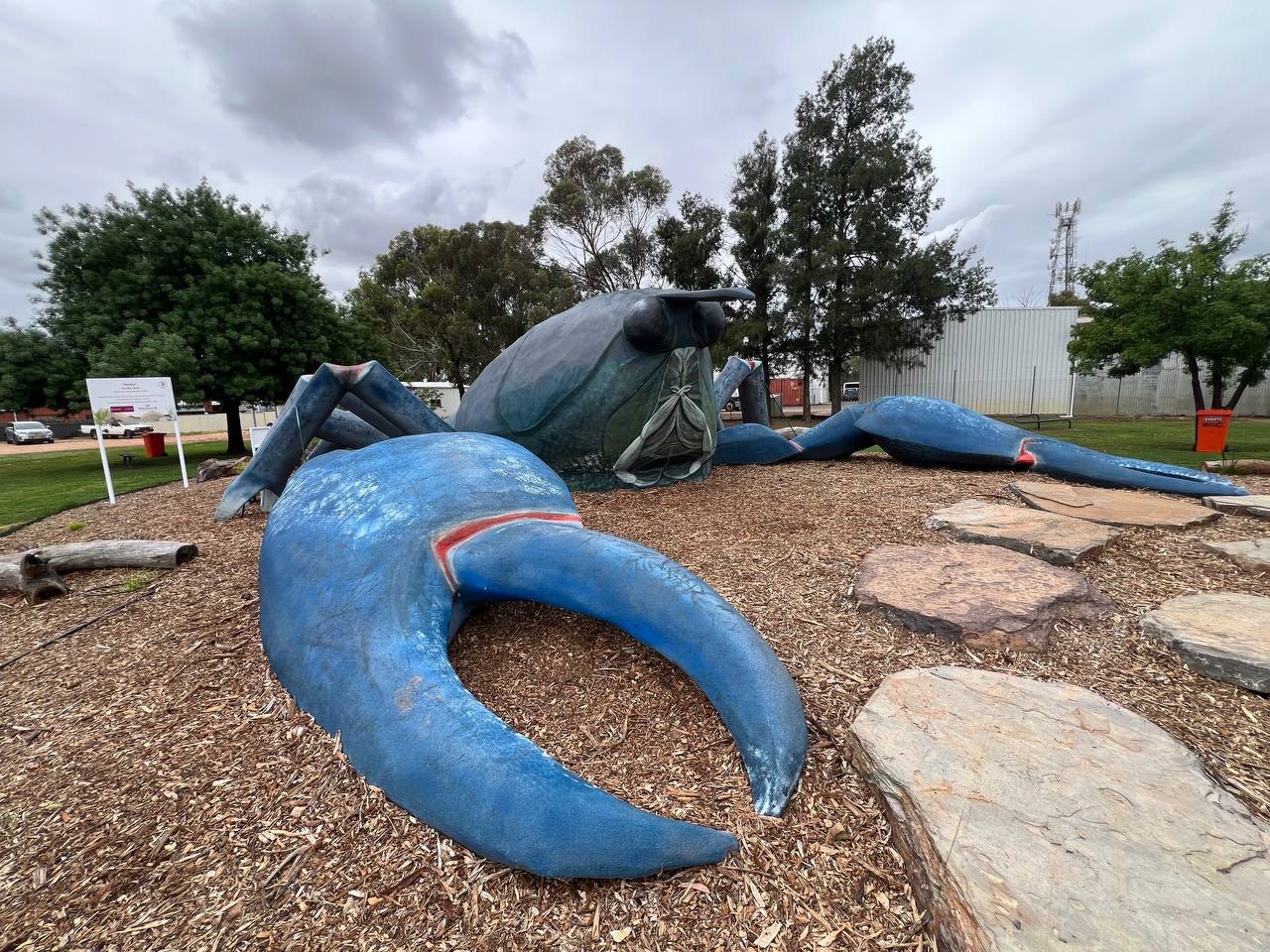 Herbie, the Big Yabby of Wentworth.
Stop two was lunch at the junction itself, where the green-brown Darling slides into the Murray. A family of wood ducks worked the grass beside us.
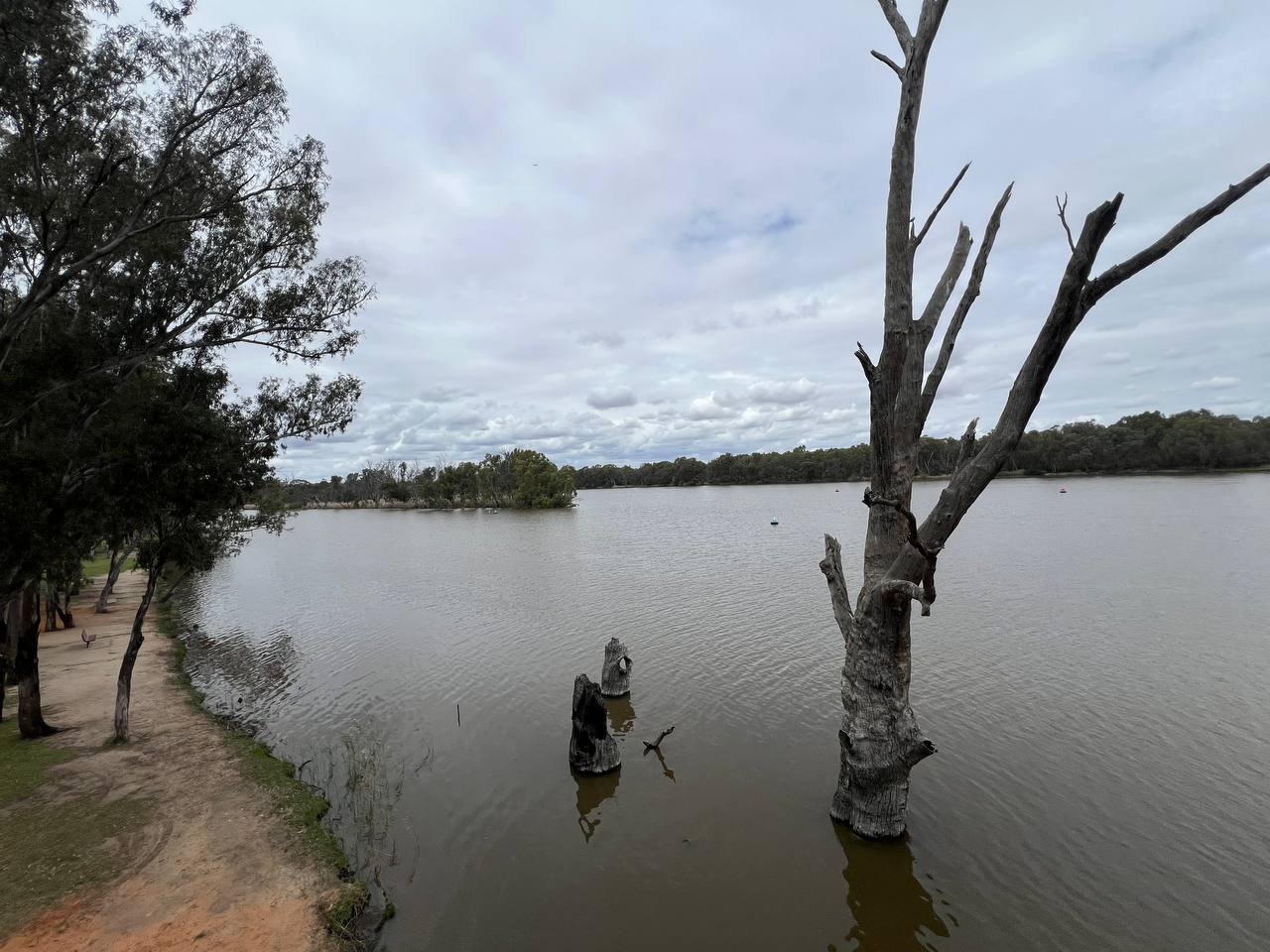 Where the Darling meets the Murray.
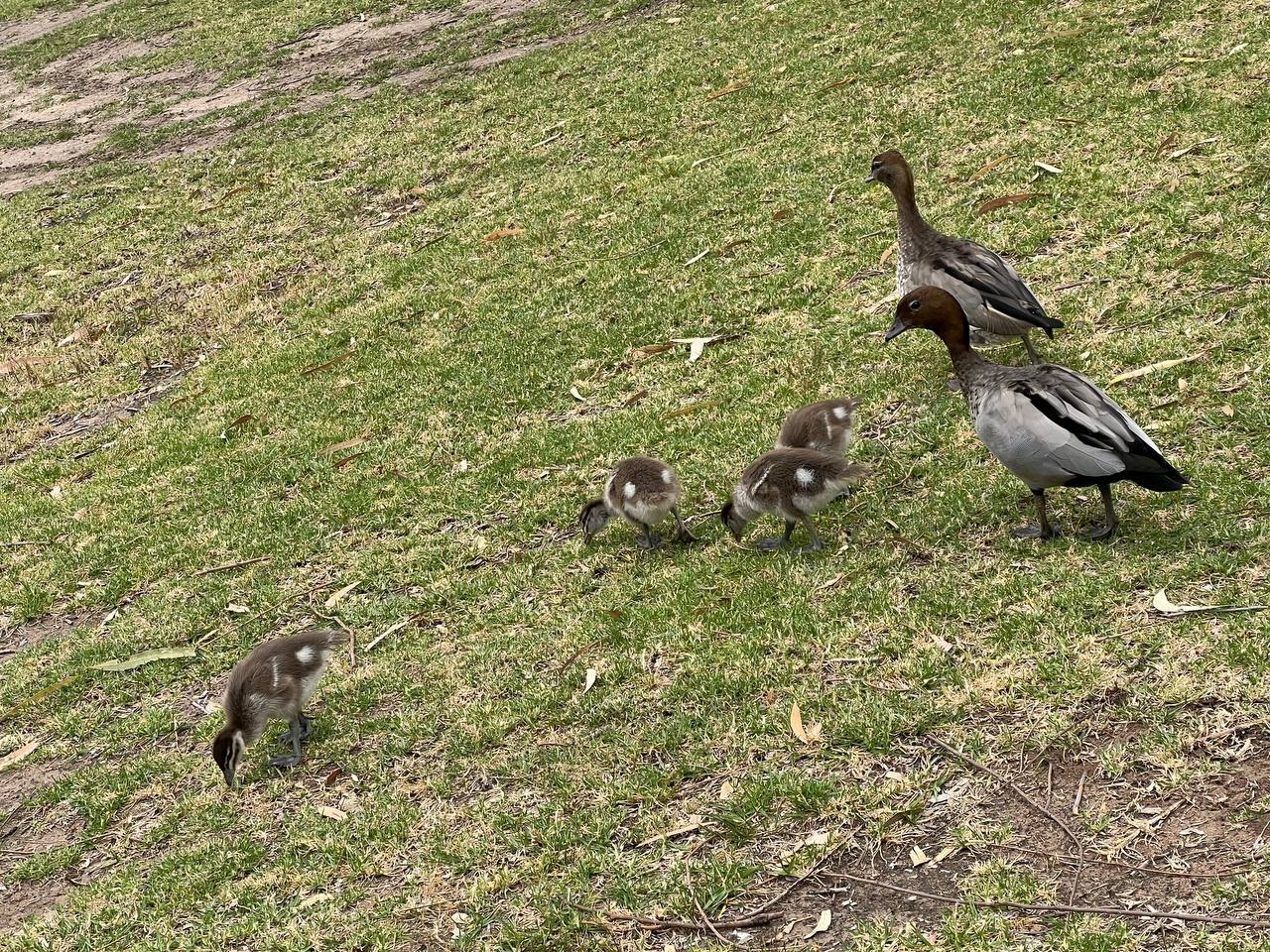 Lunch companions.
On the way out of town we stopped for the restored paddle steamer moored on the Darling and the collection of old machinery keeping it company.
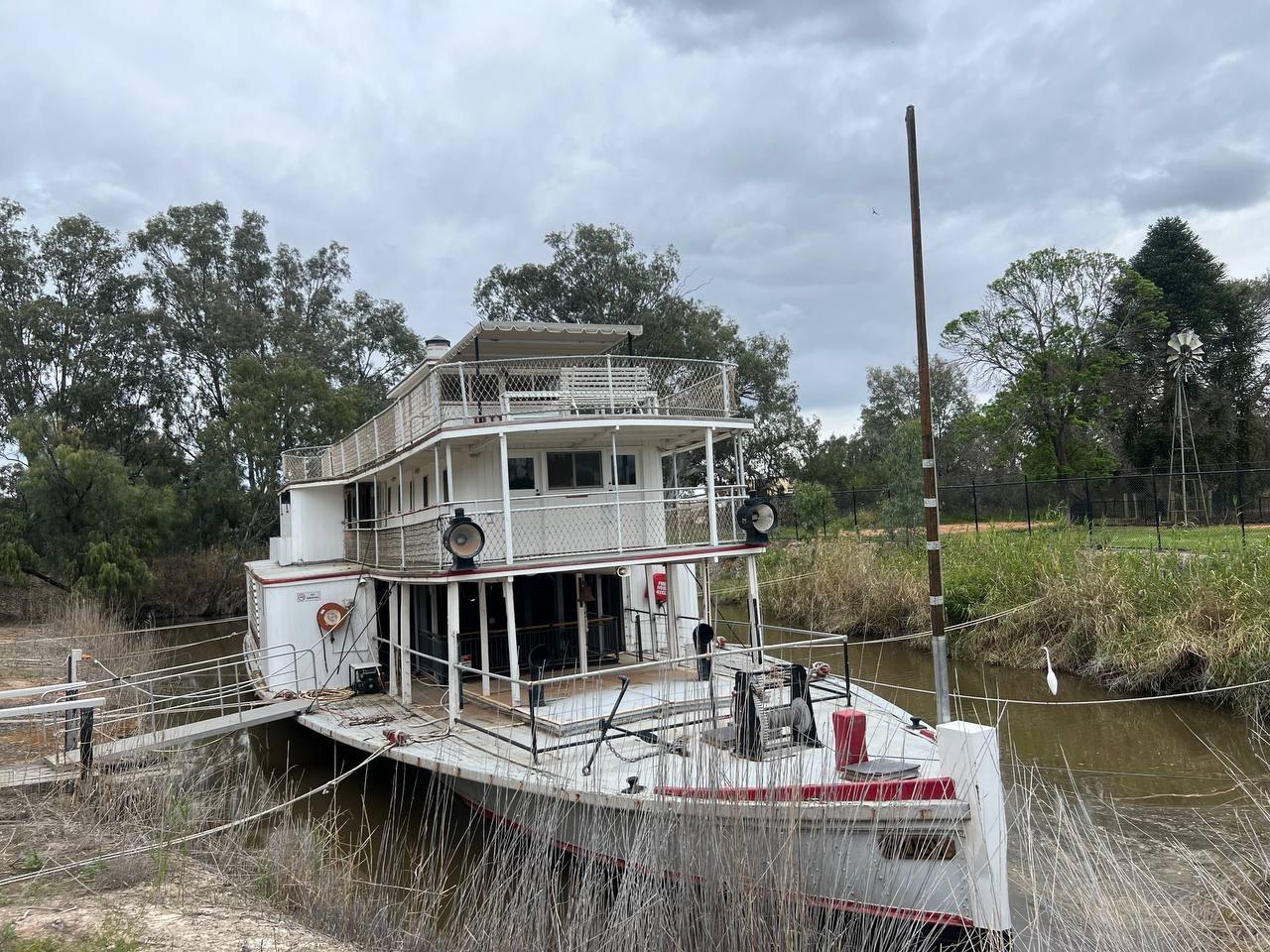 A restored paddle steamer, tied up on the Darling.
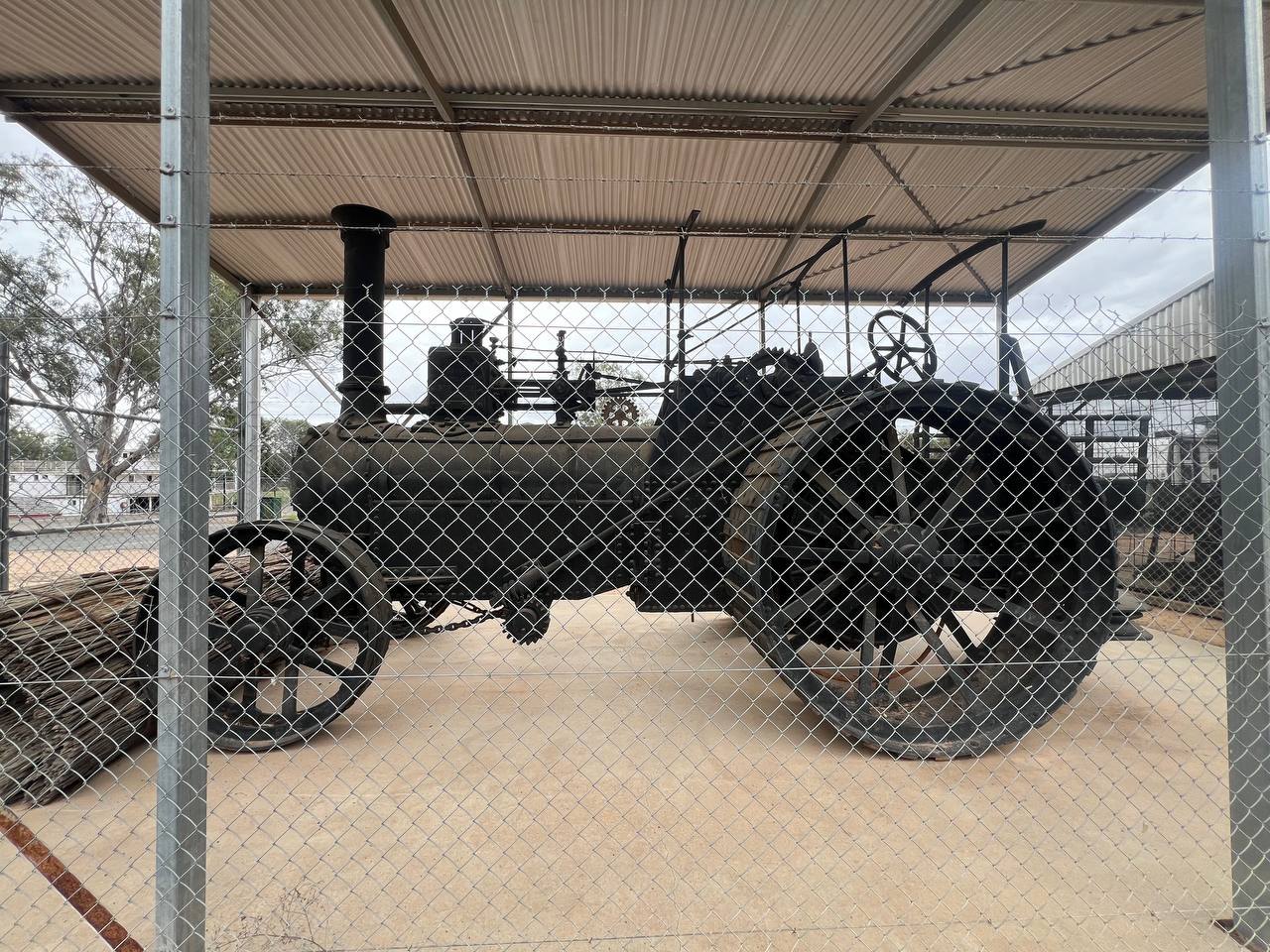 Steam power, retired.
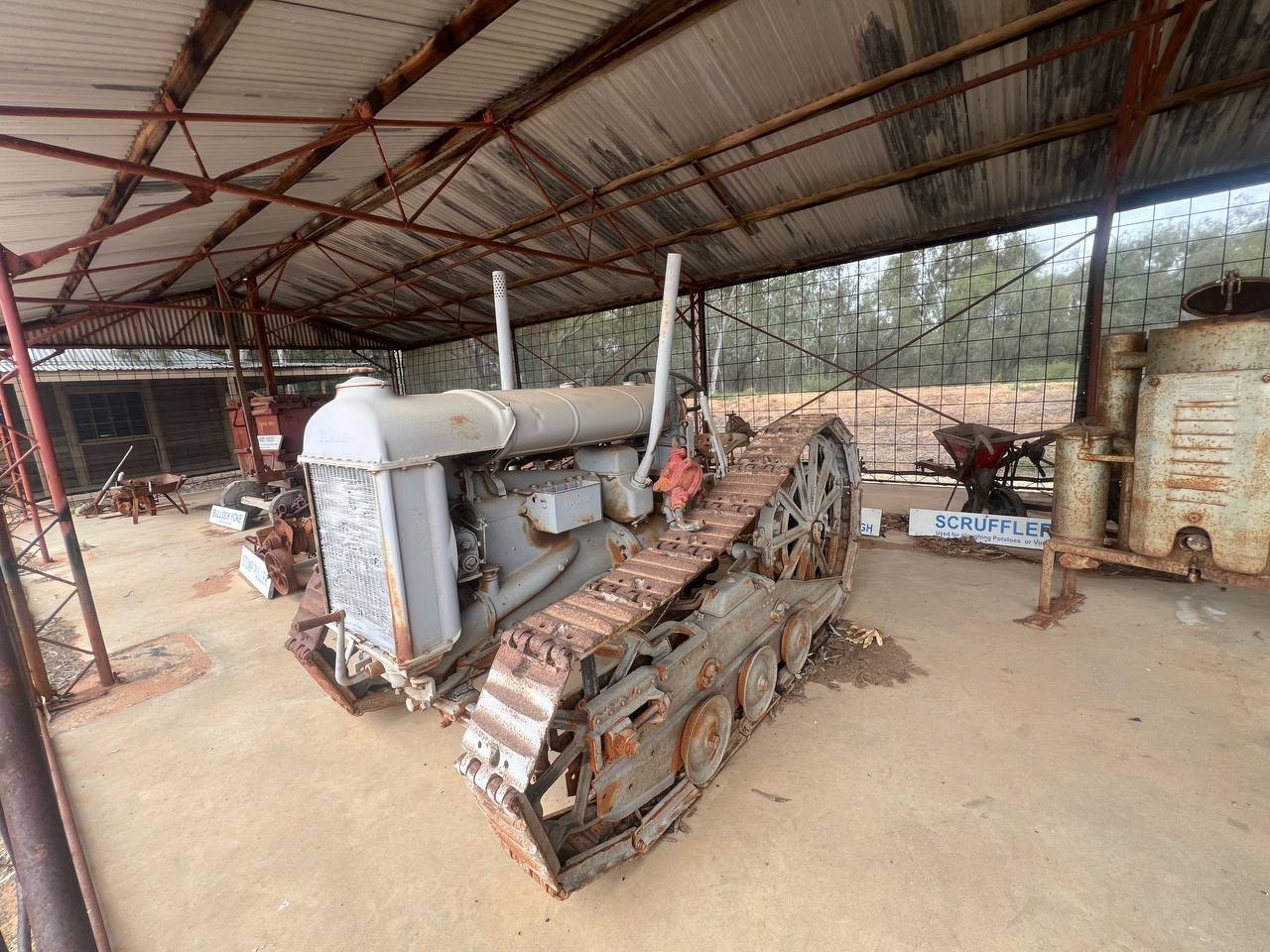 The Scruffler, and friends.
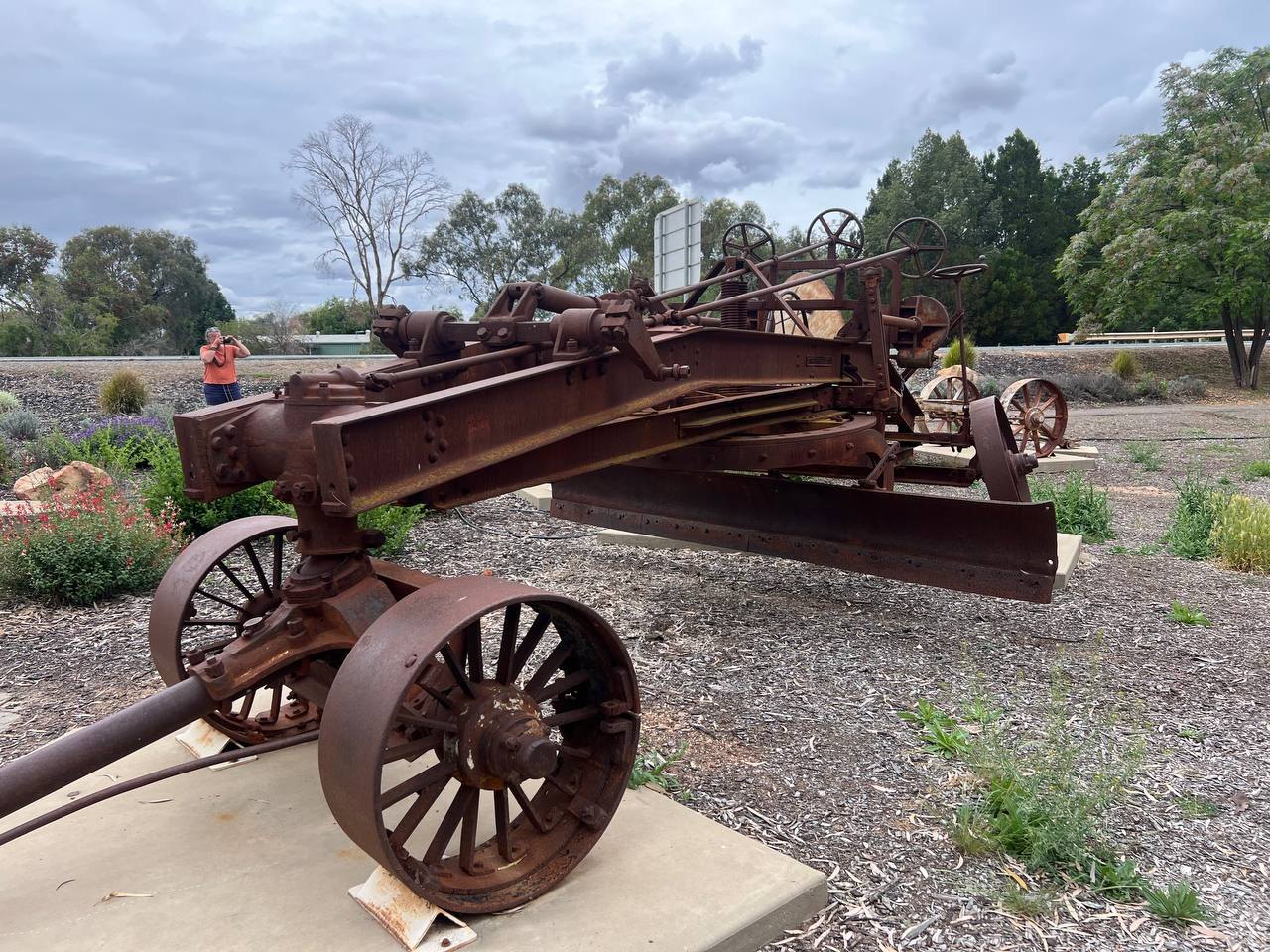 A grader that has earned its rest.
The Cheapest Diesel of the Trip
Filled up in Wentworth at 285.9 cents a litre, the cheapest we have seen all trip. $200.03 bought almost exactly 70 litres. After the prices further west, it felt like a gift.
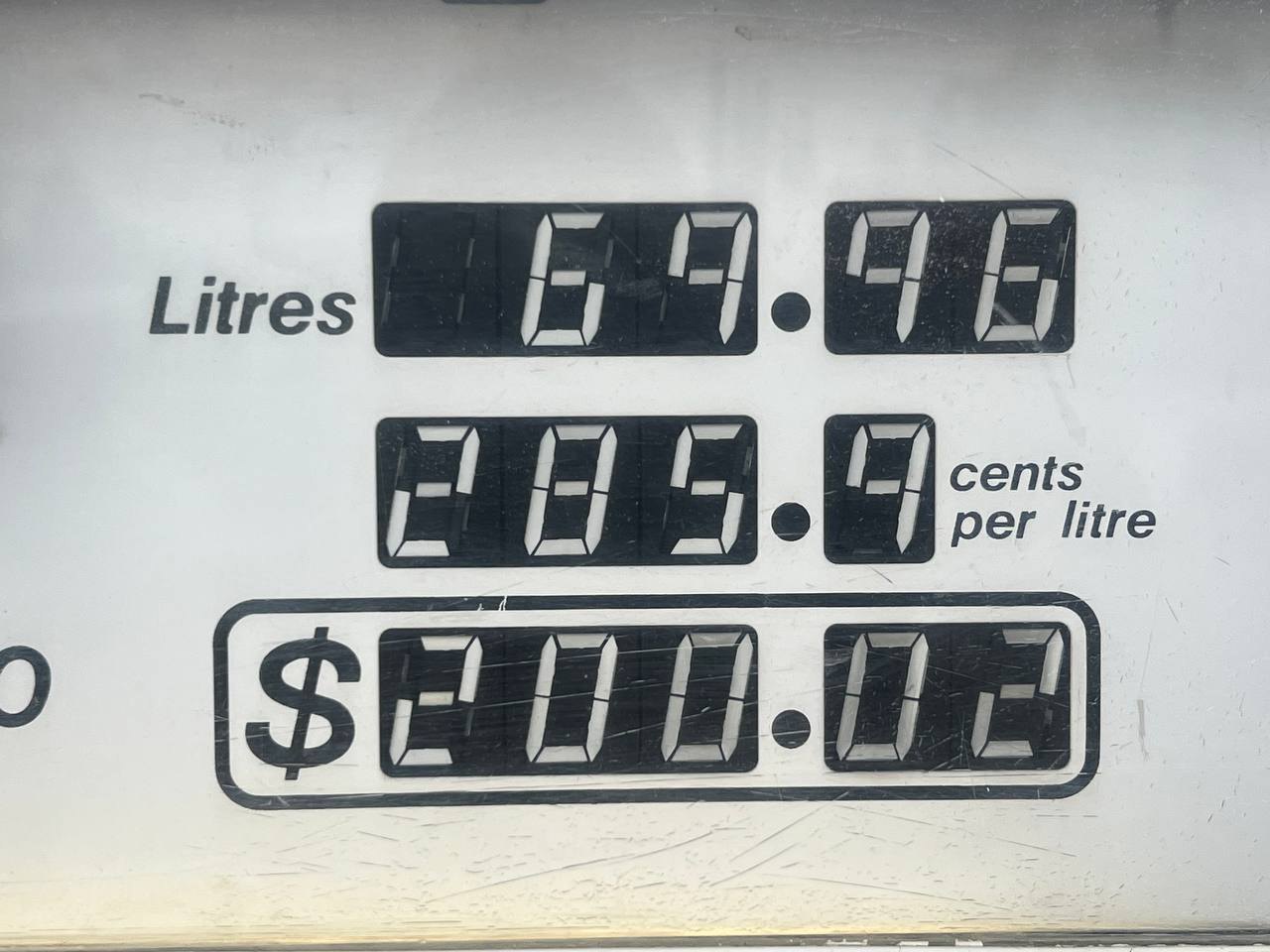 Proof. 285.9 a litre.
The Road to Mungo
From Wentworth we turned north towards Mungo National Park and checked into our Hipcamp on the outskirts of the park. The last stretch is red dirt.
The road in. Red dirt and nothing on the horizon.
The Mungo Woolshed
Once the van was set up we drove into the park to the visitor centre, and next door to it stands the Mungo Woolshed, the best kind of surprise.
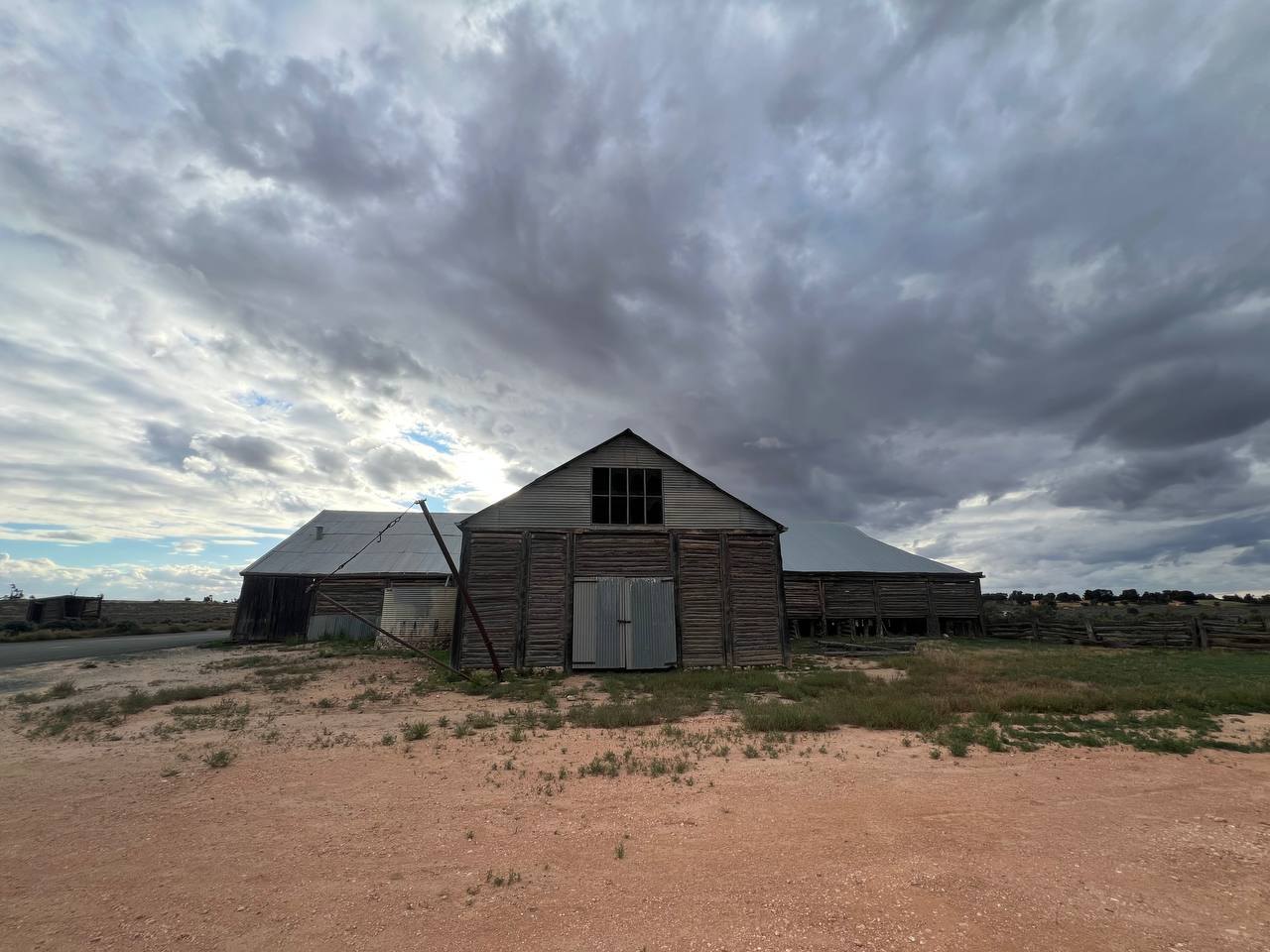 The Mungo Woolshed. Built 1869, still standing.
Mega Flocks And Bush Carpentry
The shed was built in 1869 by the Patterson brothers for Gol Gol Station, the pastoral run that covered this country before it became a national park. It is built from local cypress pine in drop-log construction: heavy logs slotted upright between horizontal beams, no fancy joinery, and it has stood in this heat and dust for more than 150 years.
In its working years the station ran mega flocks, and at its peak more than 29,000 sheep were shorn here in a single year. All of it was blade shearing, every fleece taken off by hand, in a shed with no power and no fans, through a Mungo summer. Displays inside cover the pastoralists and the Aboriginal workers who were the backbone of the shed.
It sits where it always sat, next to what is now the visitor centre, cool and dark inside and smelling faintly of lanolin.
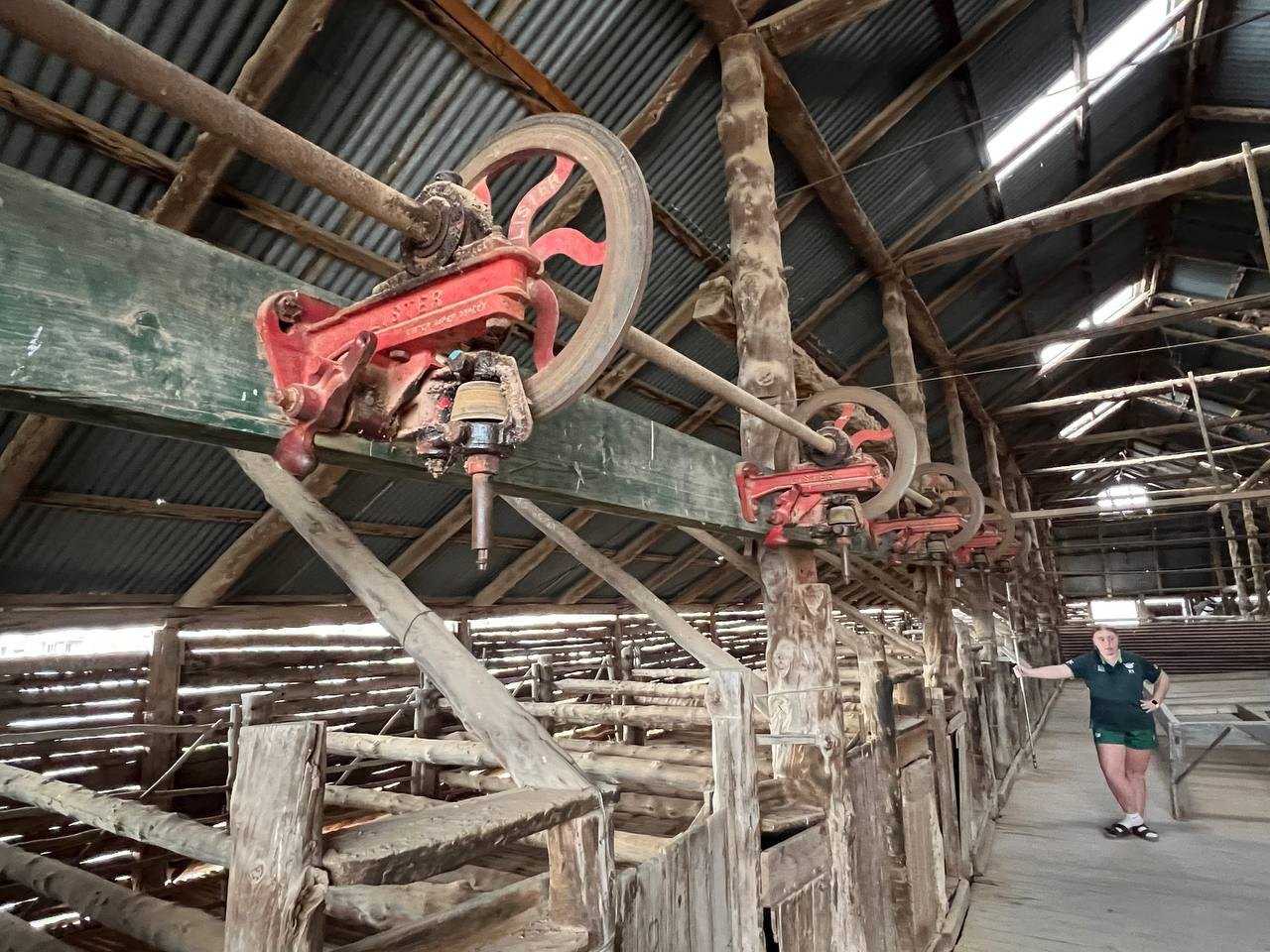 The shearing board. The Lister machines are from the mechanical era; the 29,000-sheep year was all blades.
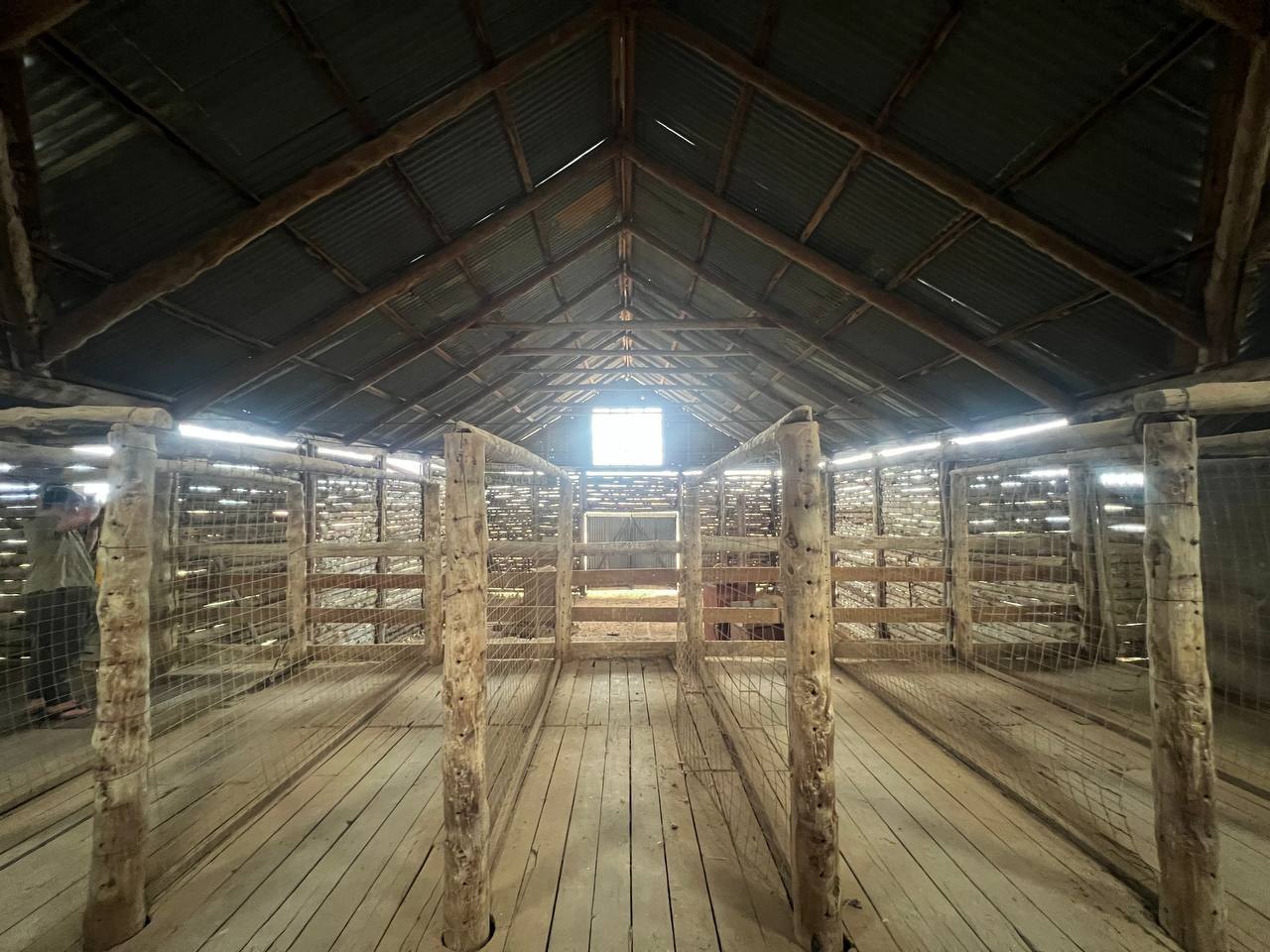 Inside the shed. Cypress pine, corrugated iron, and room for a lot of sheep.
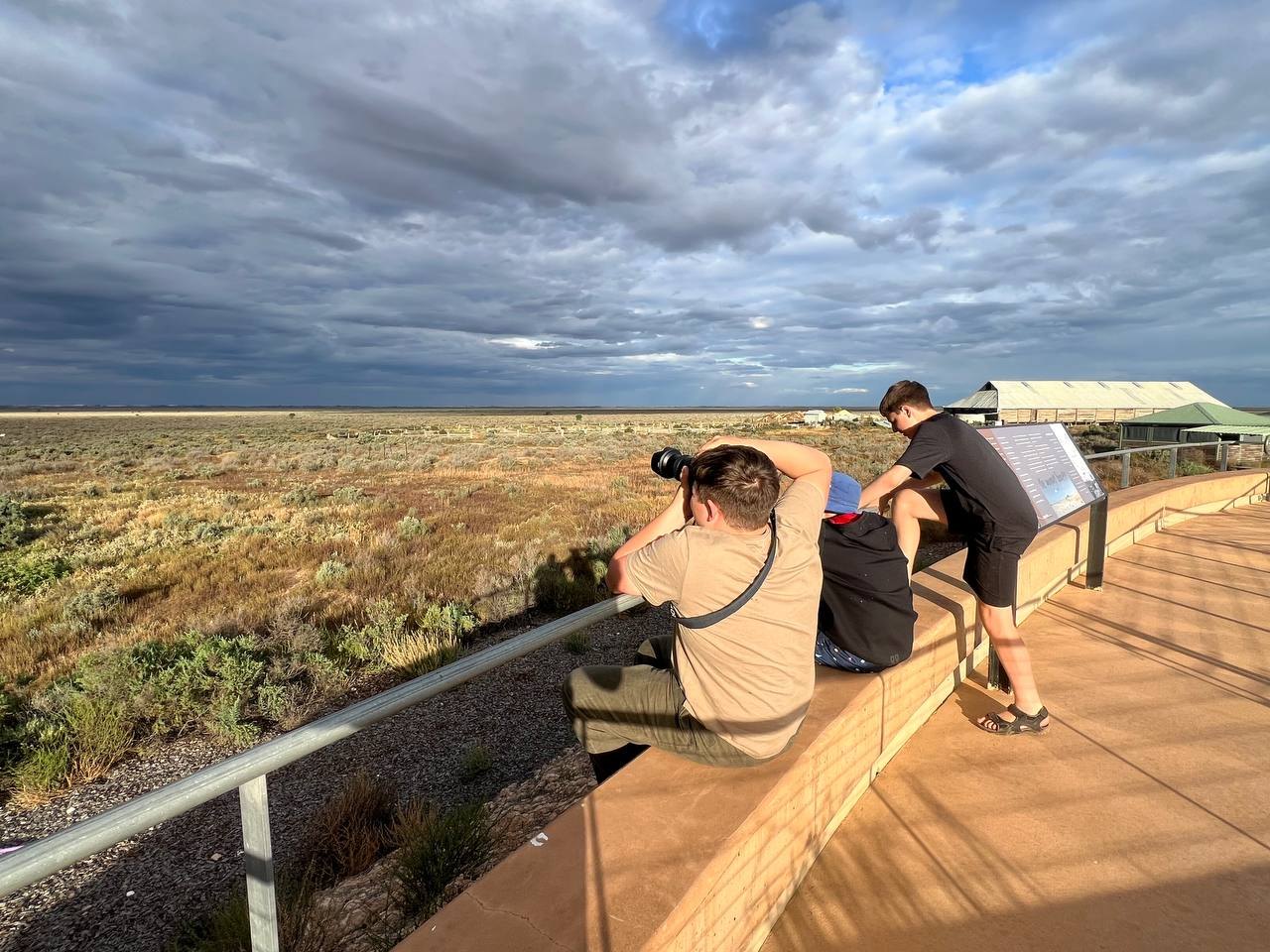 Taking in the plain from the lookout. The camera got a workout today.
Sunset On The Station
Back at the Hipcamp, the owner Tom pointed us to a spot on his property for sunset photos. His family runs over 100,000 acres, so "a spot on the property" involved a short expedition. The spot was a sandy hill that caught the last light beautifully, and the sand was a ledger of everything that had crossed it that day: emu tracks, camel tracks, lizard trails.
The station from the air at sunset. We are the small figures on the sand hill.
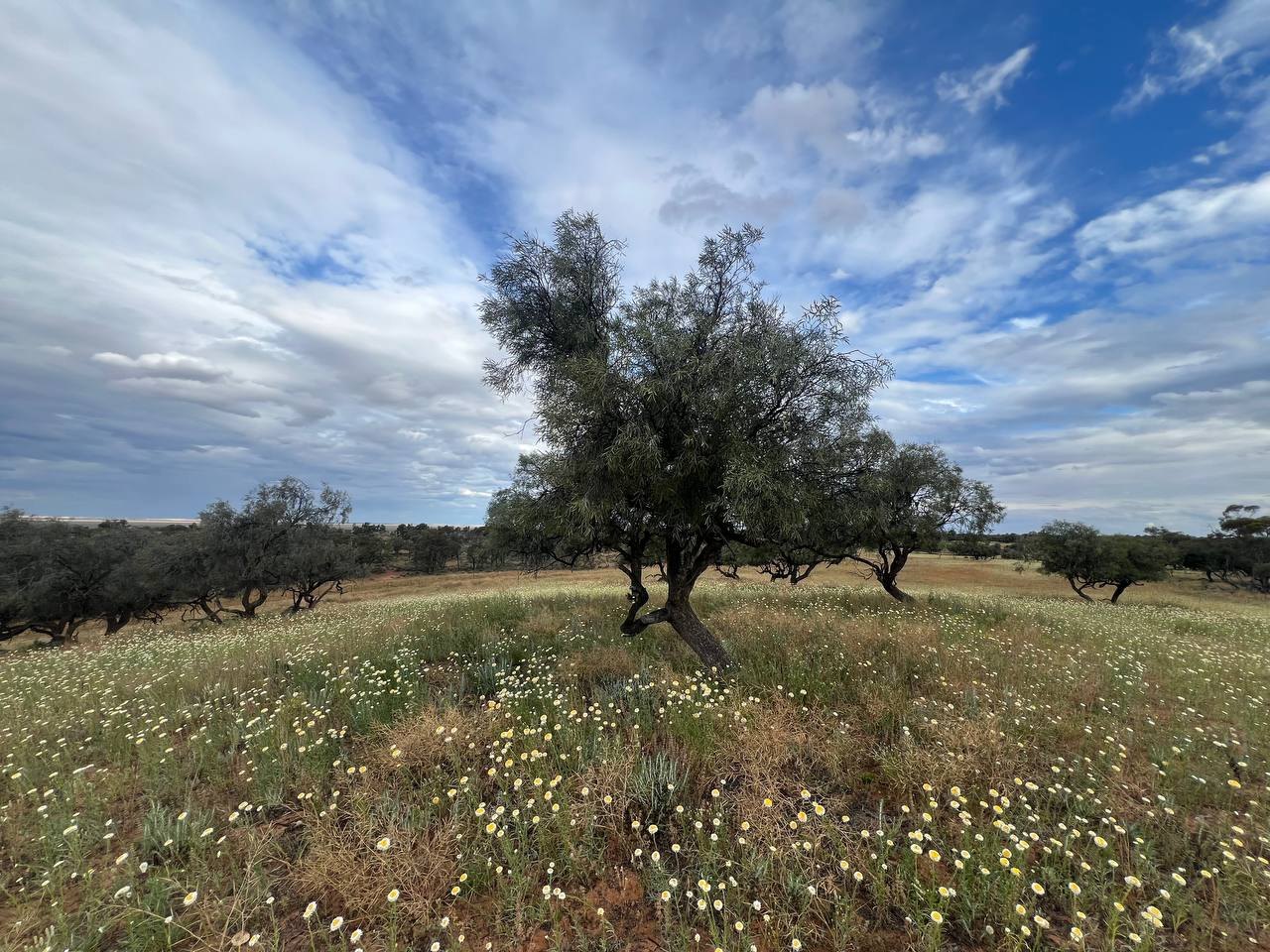 The paddocks on Tom's place do all right for scenery.
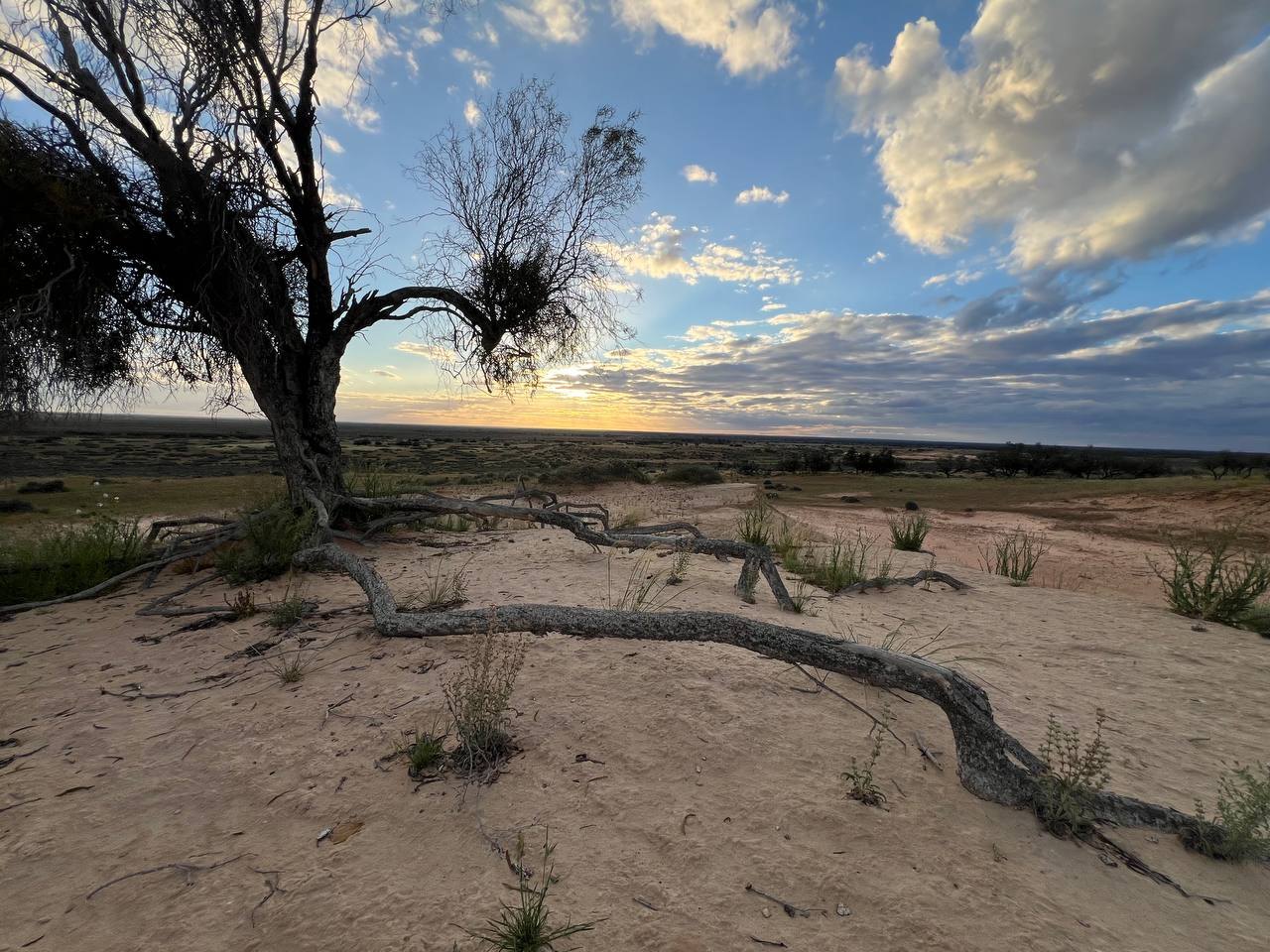 Golden hour on the plain. That tree has seen a few.
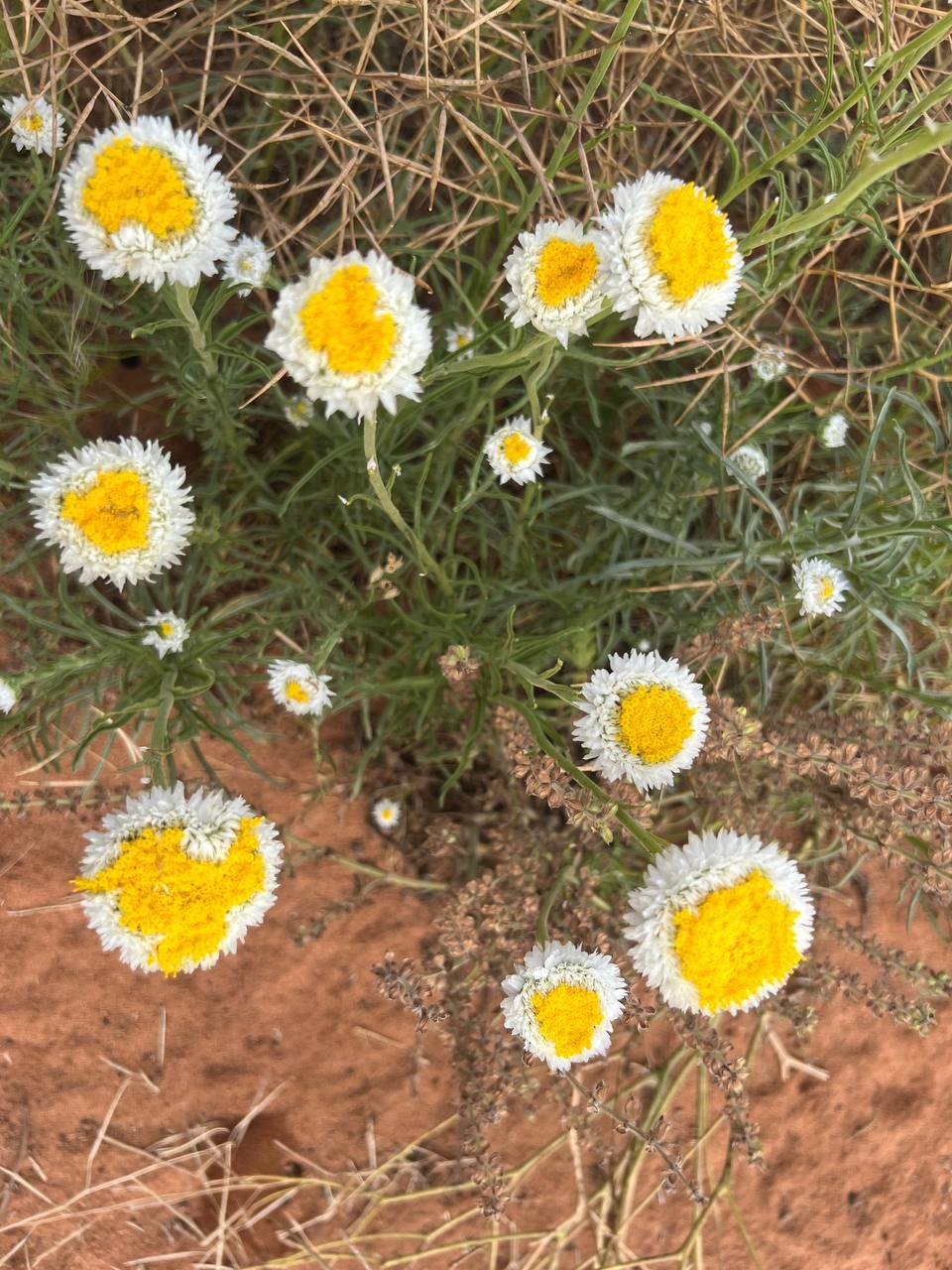 Paper daisies out on the station.
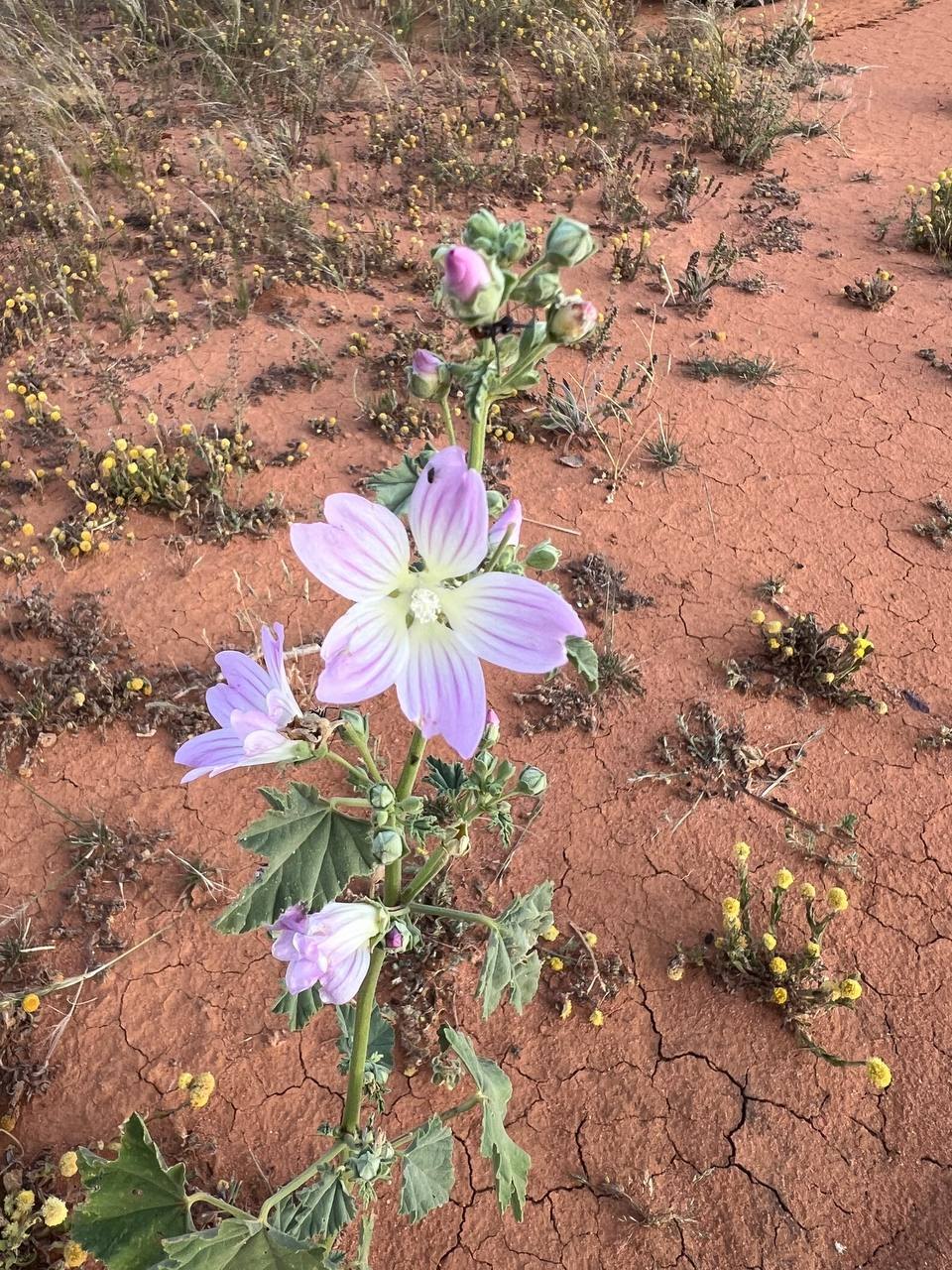 Mallow in the red dirt. Tough country, delicate flowers.
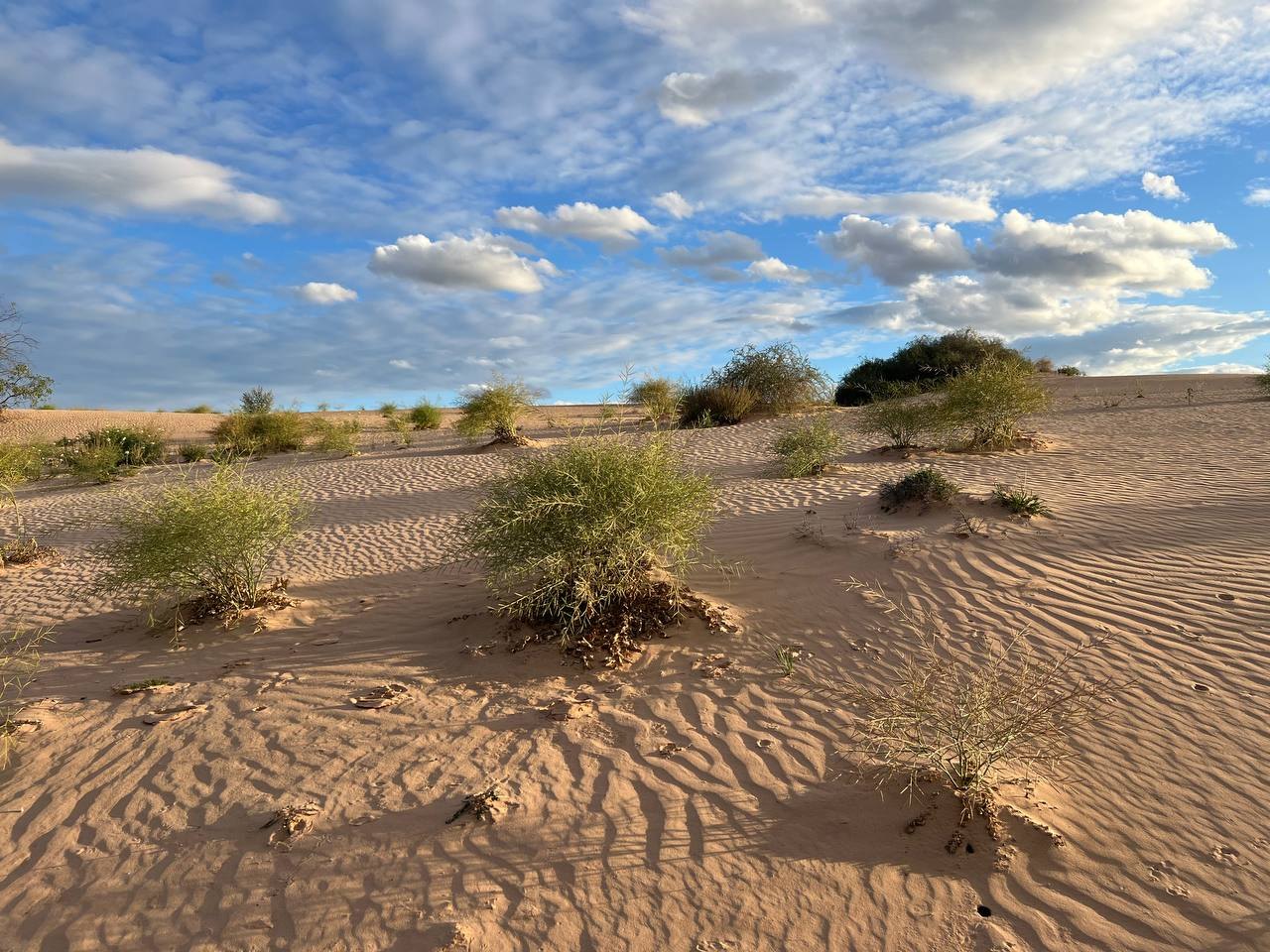 The sand hill Tom sent us to. He was right about the light.
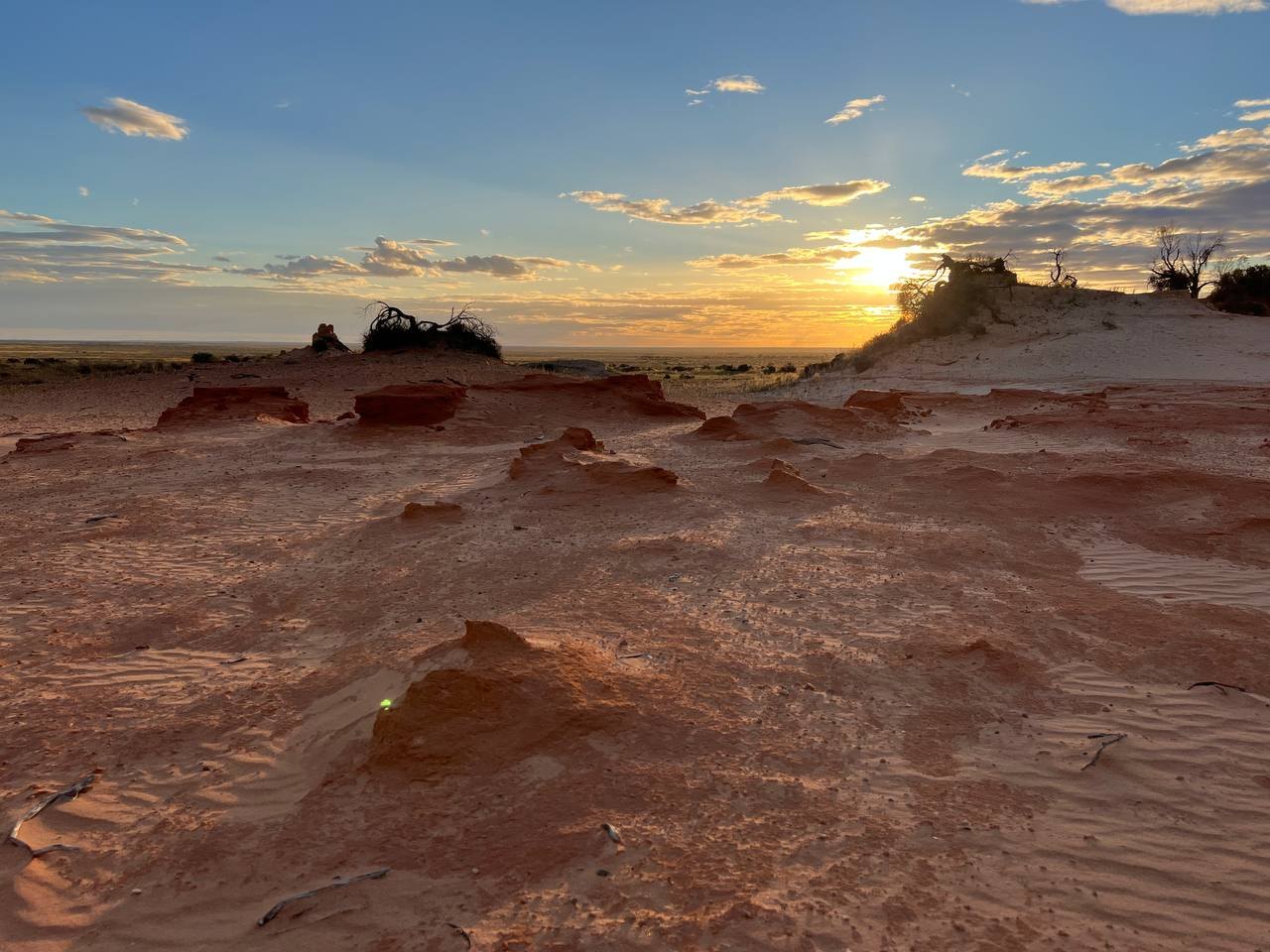 Sunset from the sand hill. Worth the expedition.
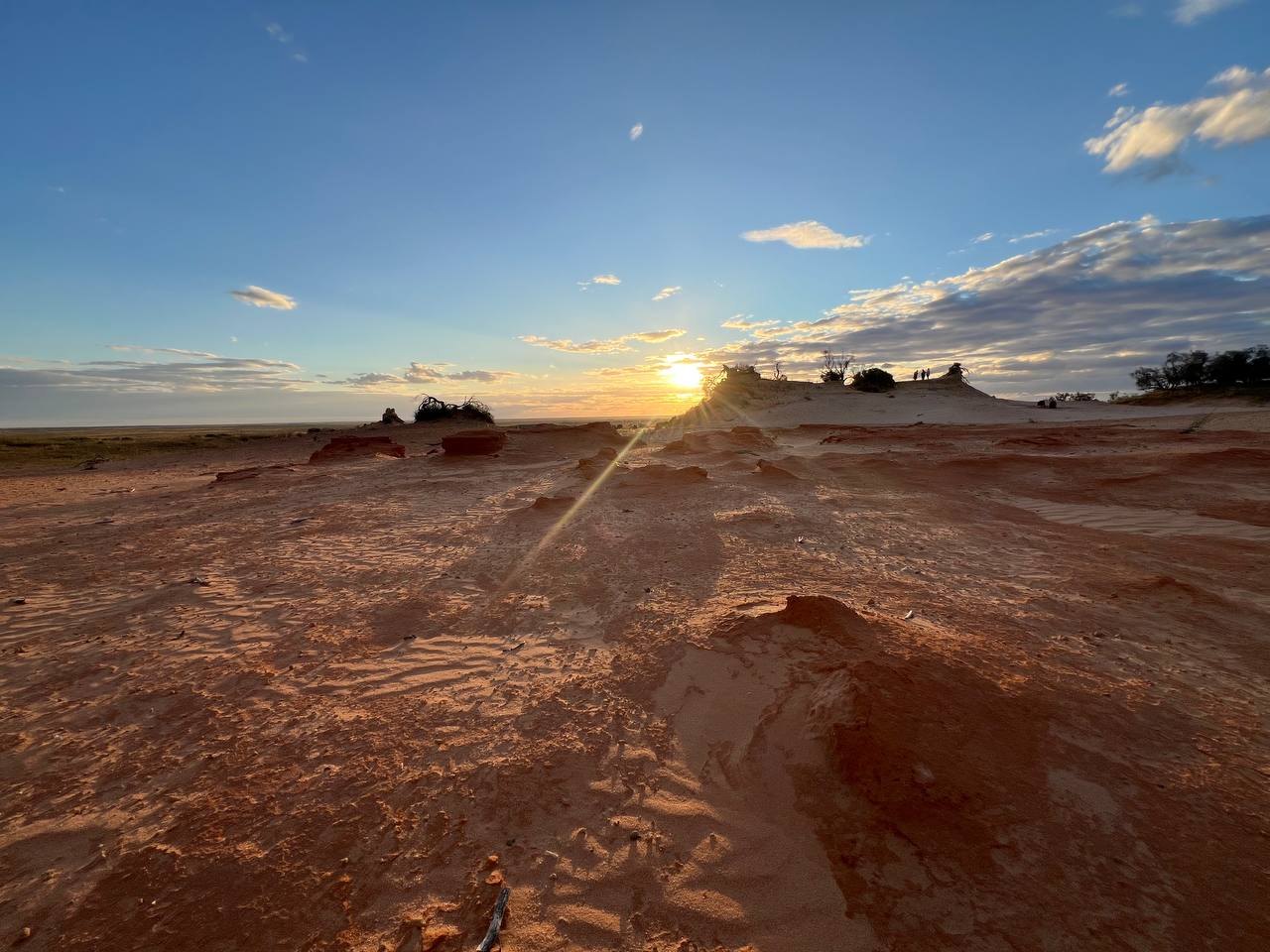 The wide view. Sun going down behind the ridge.
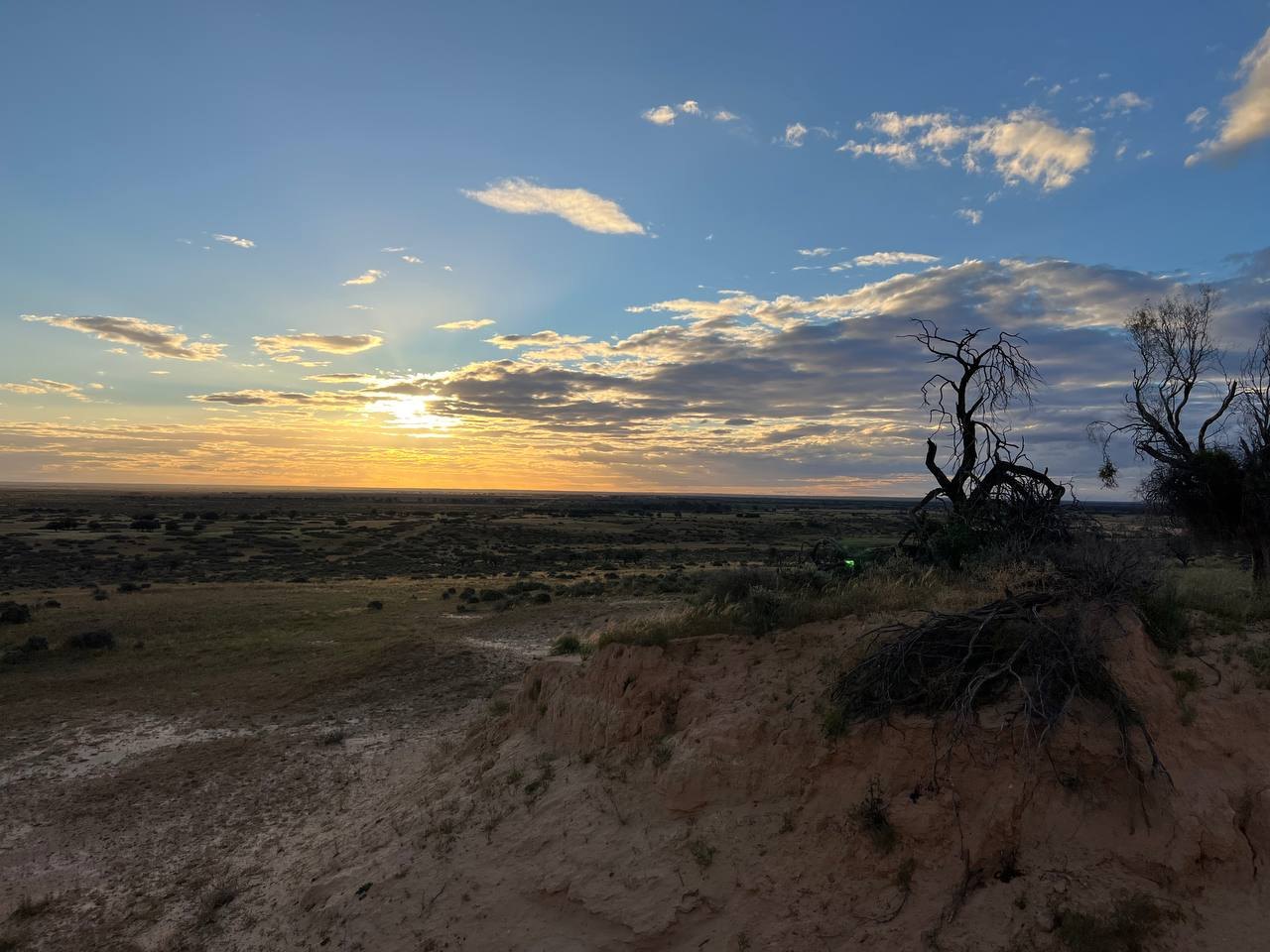 One last look from the top. The light did not disappoint.
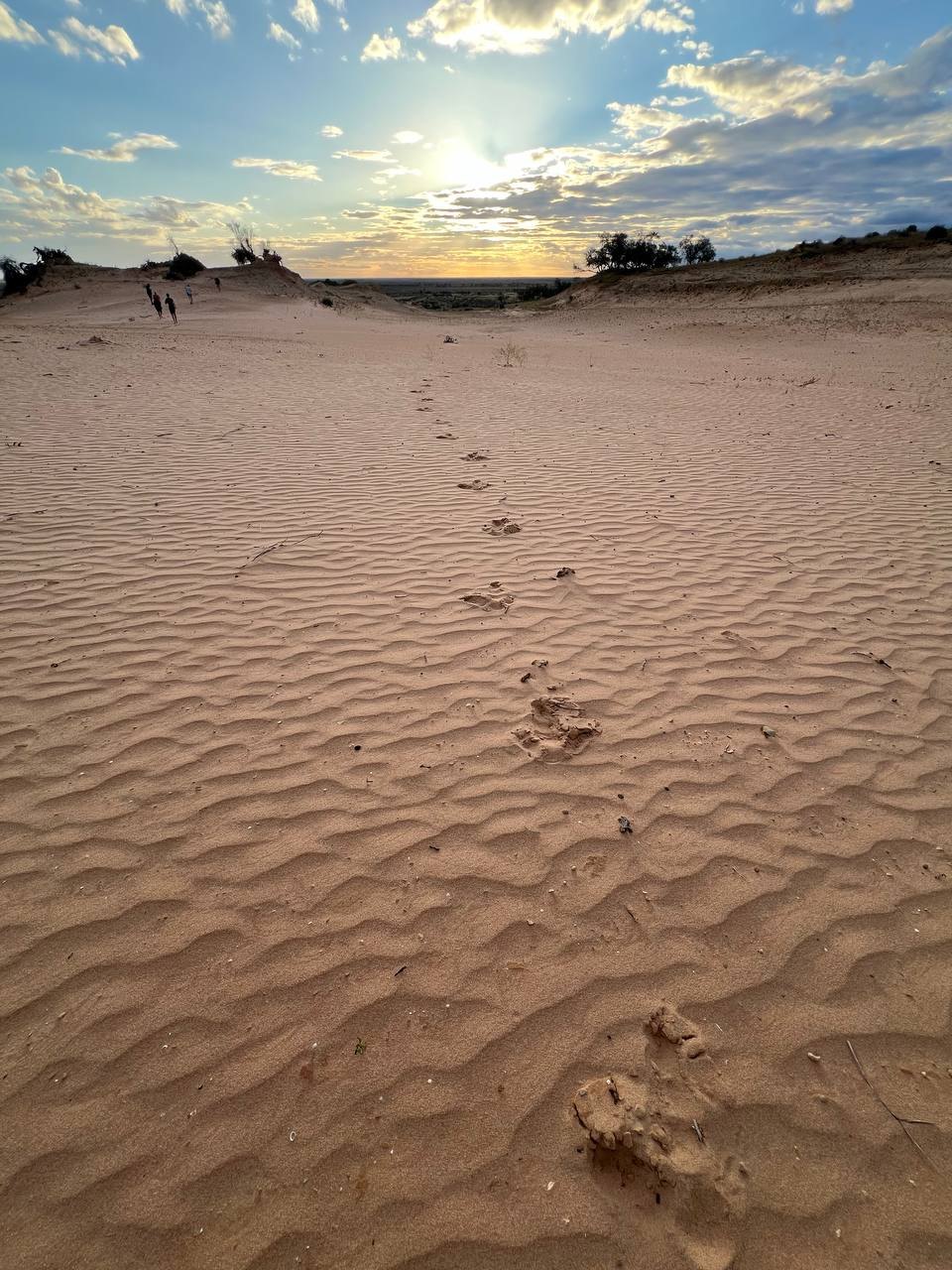 The last entry in the ledger, written by an emu.
Finished the day the right way: campfire, BBQ, and a sky full of stars. We ran out of time to explore the national park properly this trip, so the plan is an early start tomorrow and the long road home.
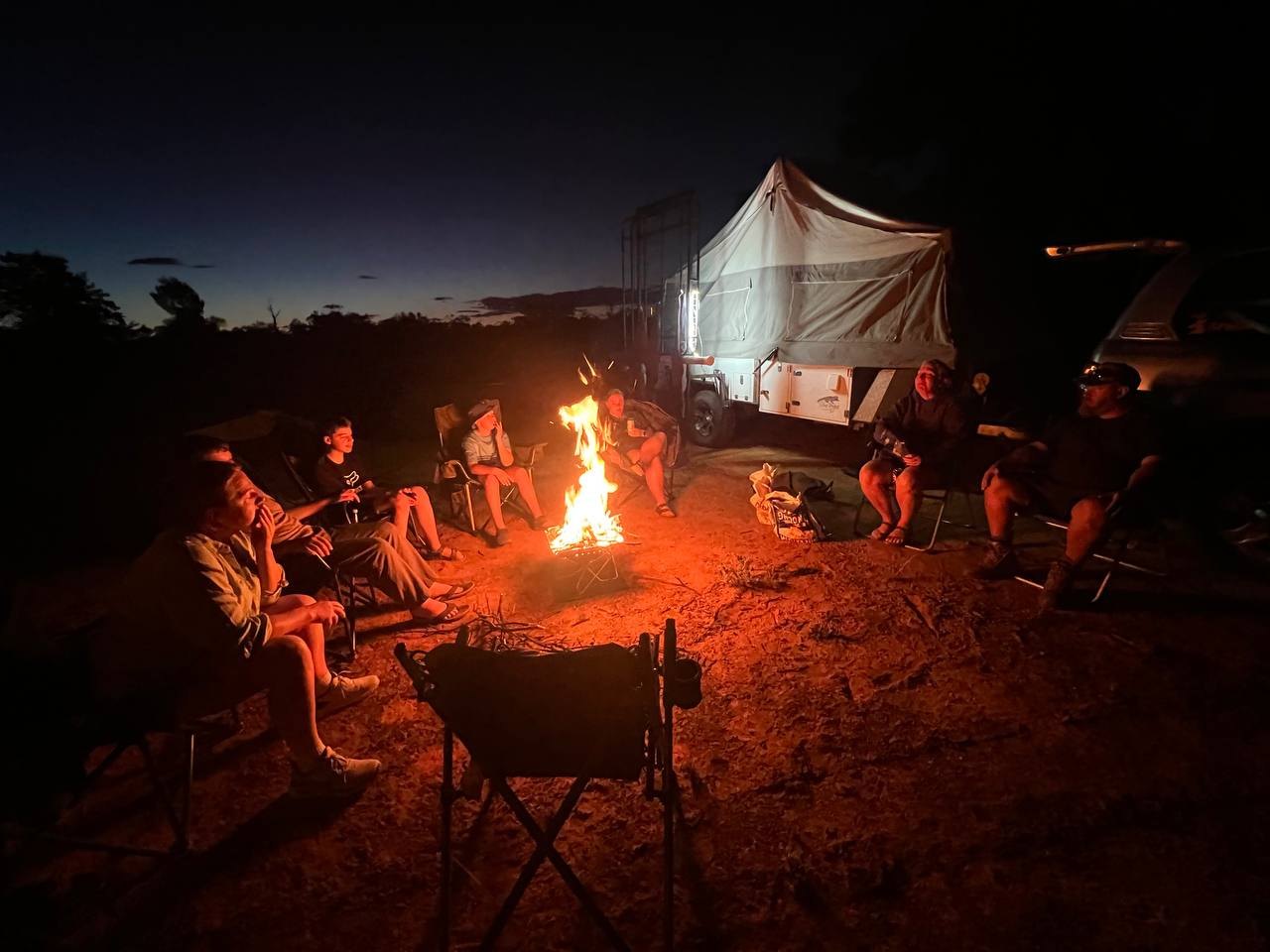 Chairs out, fire going. Day ten, done properly.